
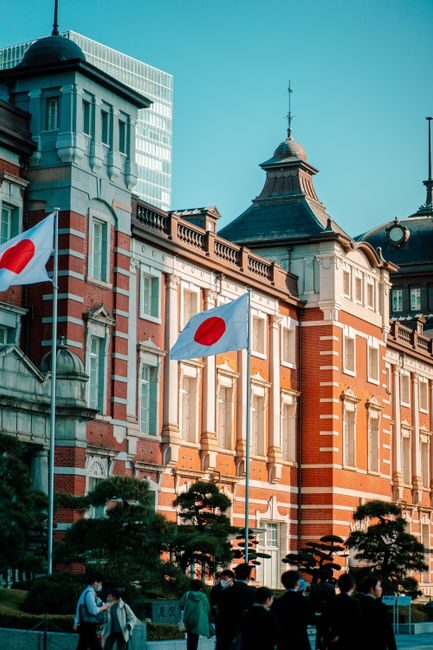
Japan flew a red sun on a white field for 145 years before any law said it was the national flag. Ships hoisted it from 1854, crowds waved it through the Meiji era, soldiers carried it to war, and an occupation army limited it. The law that finally named it, in August 1999, runs to two articles and a drawing.
Key facts Hinomaru (日章旗)
- Design
- Red disc, centered, on white
- Status
- National flag, Act of 1999
- Where you see it
- Government buildings, holidays, sports, embassies
- Abroad
- Read as the flag of Japan
Most visitors know the design before they land. The rest is less obvious: two names for one flag, a second flag with rays that reads very differently in Seoul, a long fight over the anthem at school graduations, and, since 2026, a criminal law about damaging the flag in public.

Two names, one design, written into law
In everyday Japanese the flag is 日の丸 (hinomaru), “the circle of the sun”. In law it is 日章旗 (nisshōki), “the sun-emblem flag”. Both name the same object, and you will hear hinomaru far more often. The general word for any country’s flag is 国旗 (kokki).
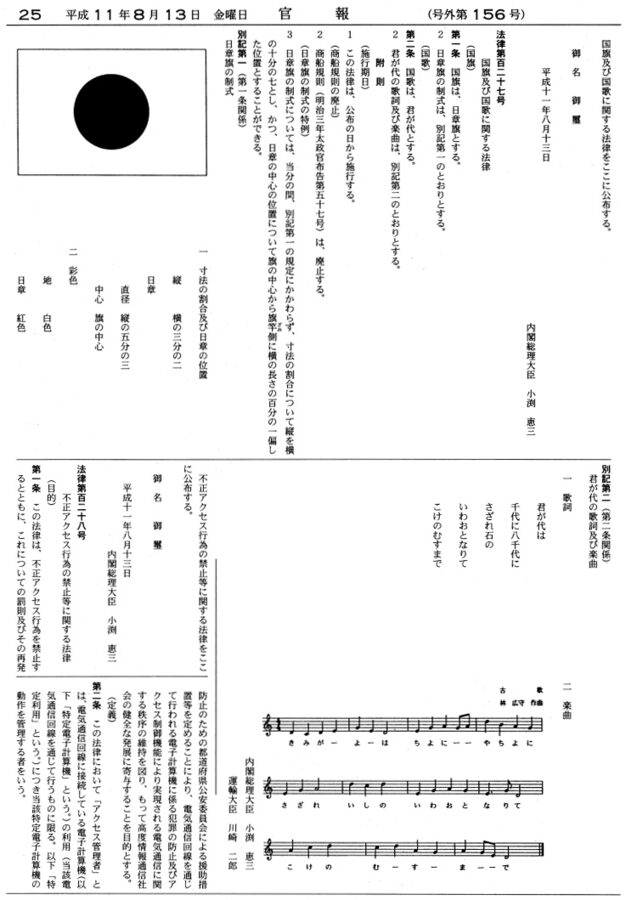
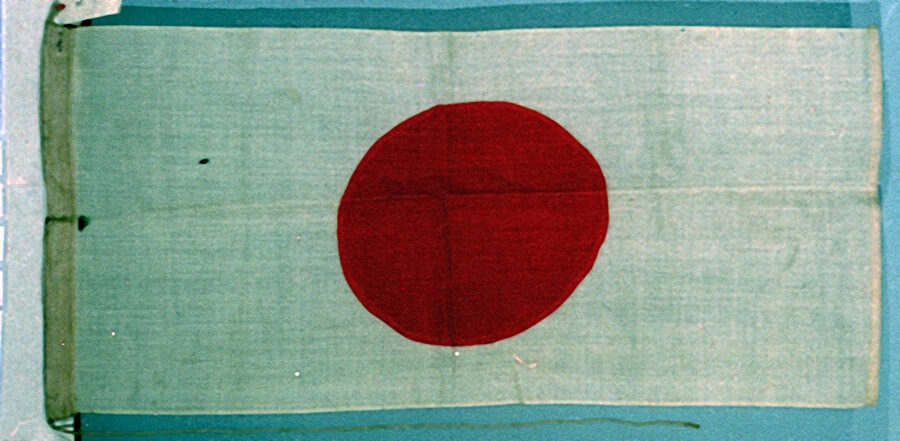
The Act on National Flag and Anthem (Law No. 127 of 1999) gives the design in a short appendix. The flag is two units high by three wide. The disc’s diameter is three-fifths of the height, and its center sits at the exact center of the flag. The field is 白色 (white) and the disc is 紅色 (beni-iro), a deep crimson red; the law names the colors in words and gives no paint or color code.
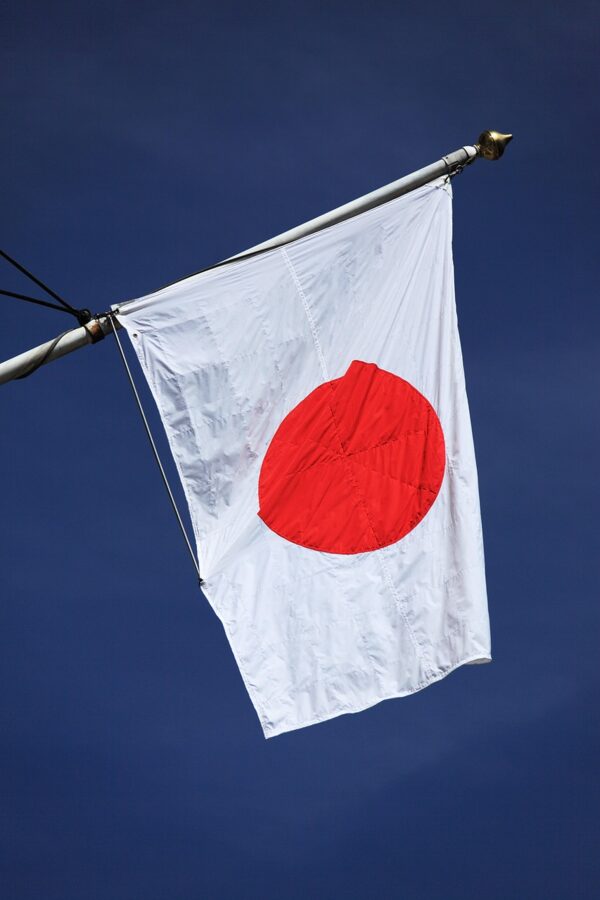
A supplementary provision lets the older Meiji pattern stand “for the time being”: a ratio of 7 to 10, with the disc shifted toward the pole by one-hundredth of the flag’s width, so two official flags side by side can differ slightly. No law gives the colors a meaning; the “white for purity, red for sincerity” readings you will see online are popular glosses.
Why a sun
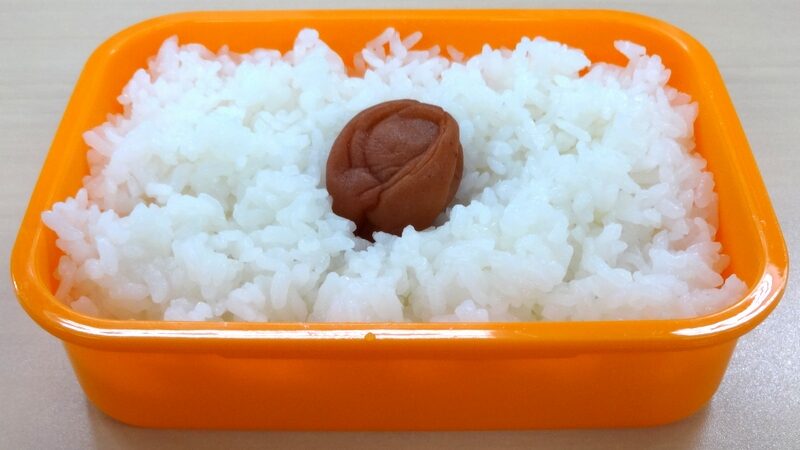
The country’s own name explains most of it. 日本 (Nihon or Nippon) is written with 日, “sun”, and 本, “origin”: the land where the sun comes up, seen from China. The imperial house traces its line to the sun goddess Amaterasu, the central deity of Shinto, so the sun was a court symbol long before it was a national one.
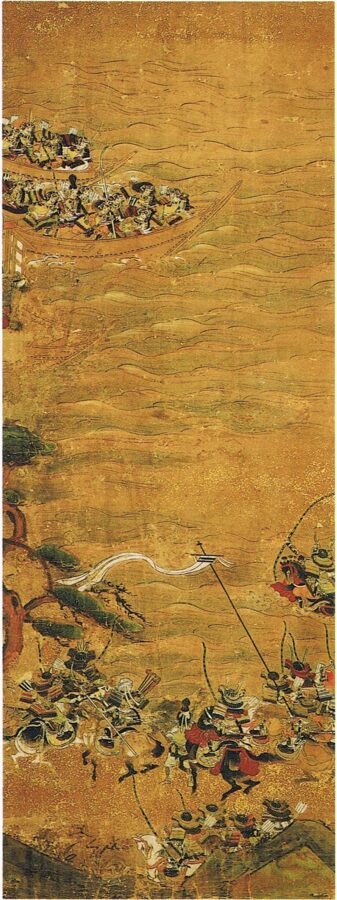
The red disc itself is old. Japanese dictionaries record it on war fans and battle standards for centuries, and the samurai epic The Tale of the Heike has its most famous archery shot aimed at a fan painted with the sun.
From a ship’s flag to the national flag
The flag became national at sea. Under the Tokugawa shogunate, ships carrying the government’s rice already flew a sun disc, and after Commodore Perry’s warships arrived in 1853, Japanese ships needed a mark that foreign captains could read. In 1854, on the advice of the Satsuma lord Shimazu Nariakira among others, the shogunate made a white banner with a red disc the common mark of all Japanese ships.
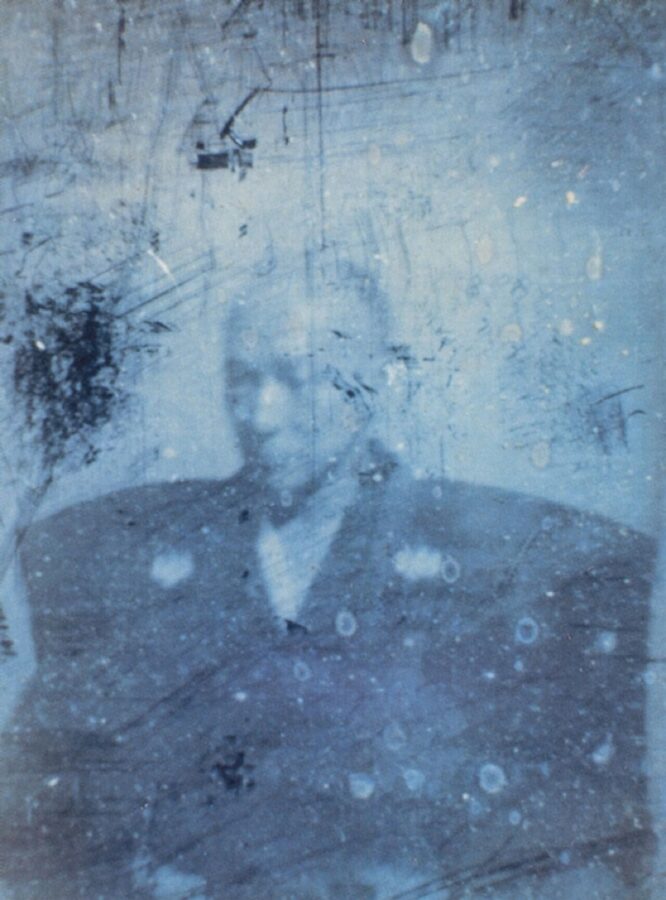
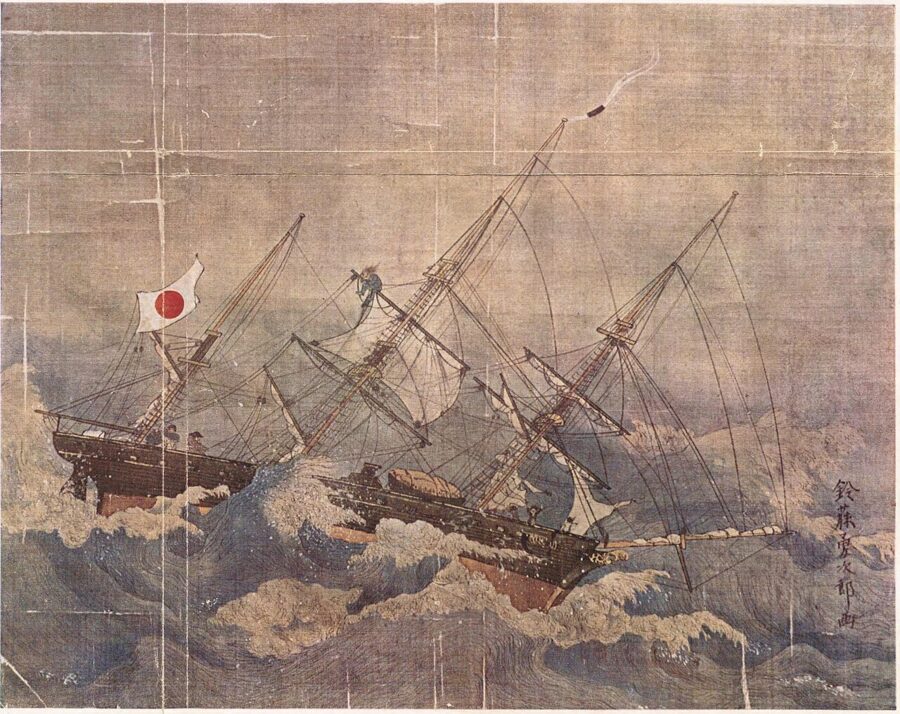
The new Meiji government kept it. A Grand Council of State proclamation in the first month of 1870 (No. 57, the Merchant Ship Regulations) told merchant ships to fly the Hinomaru as the national flag and set its proportions, and a navy version followed later that year. That 1870 rule stayed the legal basis for 129 years. Schools, holidays and the army spread it far beyond the harbor, and by the 1900s it was simply the flag of Japan.
The war years
From the 1930s the flag was everywhere the state wanted it: on shop fronts for victories, in schoolyards, on fabric. Families sent soldiers off with a 寄せ書き日の丸 (yosegaki hinomaru), a flag covered in the signatures and good wishes of relatives, neighbors and classmates. Many of them came home in Allied soldiers’ luggage as souvenirs.
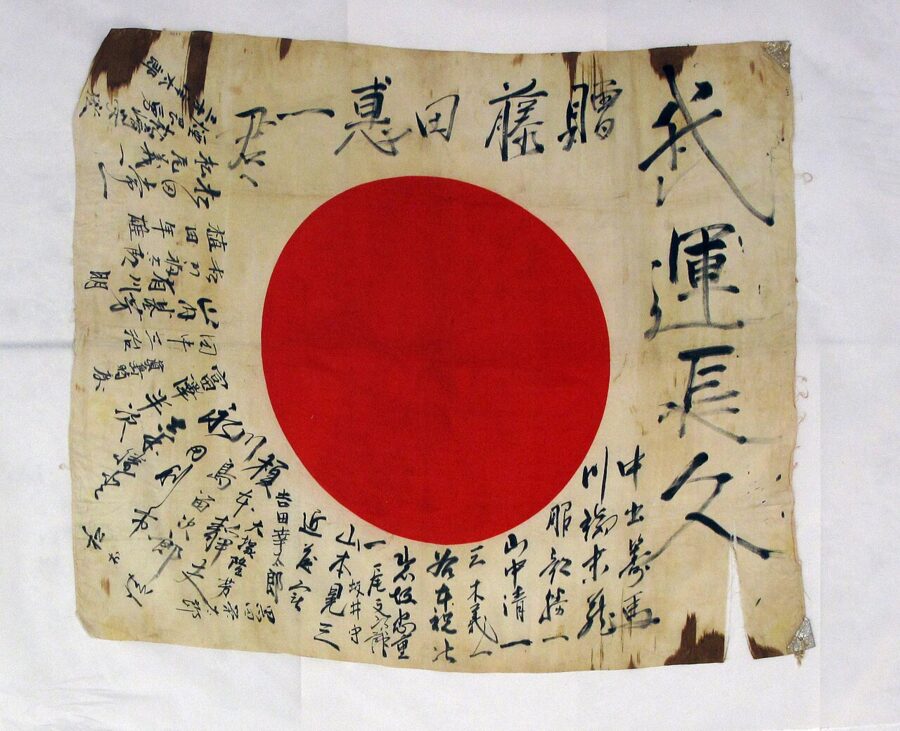

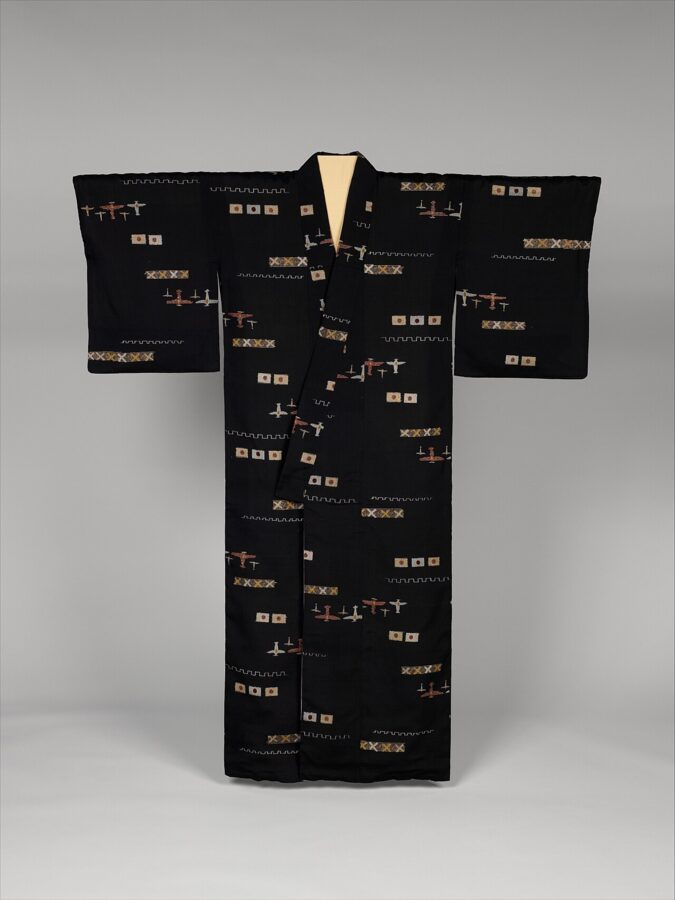
That is why the Hinomaru never became a neutral object in Japan. For many older people and many teachers it stood for the state that sent their families to war; for others it was simply the flag that came back from the ruins with them.
The Occupation, and the long wait for a law
After the surrender in 1945, the Allied occupation restricted flying the flag; at first permission was needed, and it was eased step by step. A General Headquarters memorandum in 1949 allowed unrestricted use inside Japan. From 1950 the Ministry of Education began urging schools to raise the flag and sing the anthem on national holidays, and the dispute that would shape the next half-century started there.
For decades the flag rested on custom and that 1870 shipping rule, because a law meant a vote nobody wanted to force. What forced it was a death.
On February 28, 1999, the principal of Sera High School in Hiroshima Prefecture killed himself on the eve of graduation, caught between the prefectural board, which demanded the flag and anthem at the ceremony, and teachers who refused. The Obuchi government brought in the bill that June, the Diet passed it on August 9, and it took effect on August 13, 1999. The government promised that no one would be compelled, and the law has no penalty and no duty of respect in it.
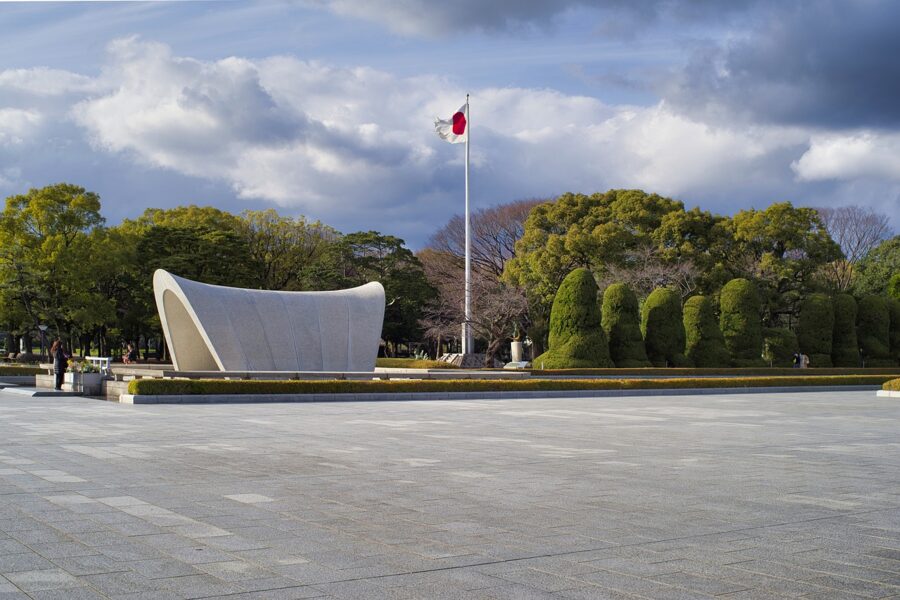
The 2026 flag damage law
That changed in 2026. On July 17, 2026, the Diet passed a law that makes damaging the Japanese flag a crime, after Prime Minister Takaichi Sanae’s governing coalition had promised one in its October 2025 coalition agreement. It punishes anyone who publicly damages, removes or defiles the national flag in a way that causes people strong discomfort or disgust, with up to two years in prison or a fine of up to ¥200,000 (about US$1,300), and it took effect on August 13, 2026.
Supporters said it matches the rule Japan already had for foreign flags. Opposition parties and rights groups called the wording vague enough to reach protest and art, and the upper house committee attached a resolution asking that political and artistic expression not be prosecuted. As of November 2026, no court has yet ruled on what “strong discomfort” means.
The rising sun flag is a different flag
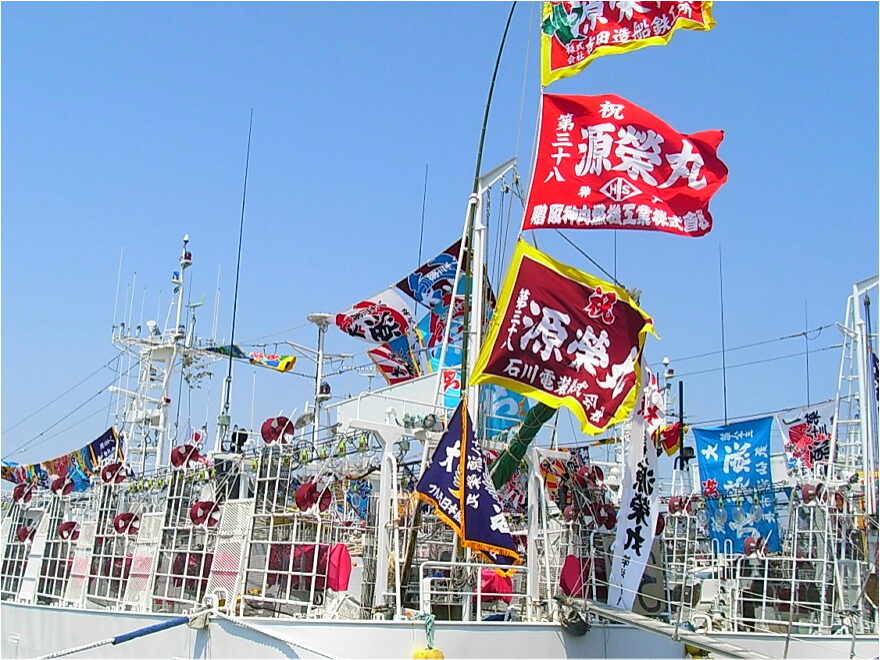
The flag with sixteen red rays is 旭日旗 (kyokujitsu-ki), the rising sun flag. It is not the national flag, and the difference matters more abroad than it does in Japan. The Imperial Army adopted it in 1870 and its regiments carried it as their colors, and the Navy took a version with the disc set toward the pole as its ensign in 1889; both carried it across Asia and the Pacific, as the standard Japanese reference works note.
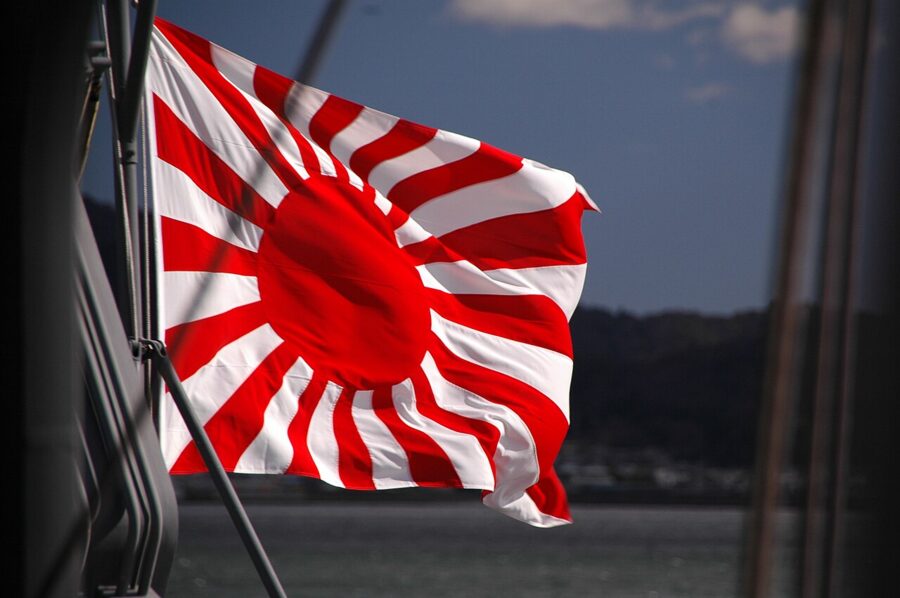

It is still an official flag. Since 1954 the Maritime Self-Defense Force has flown the old naval design, and the Ground Self-Defense Force uses an eight-ray version with a gold border.
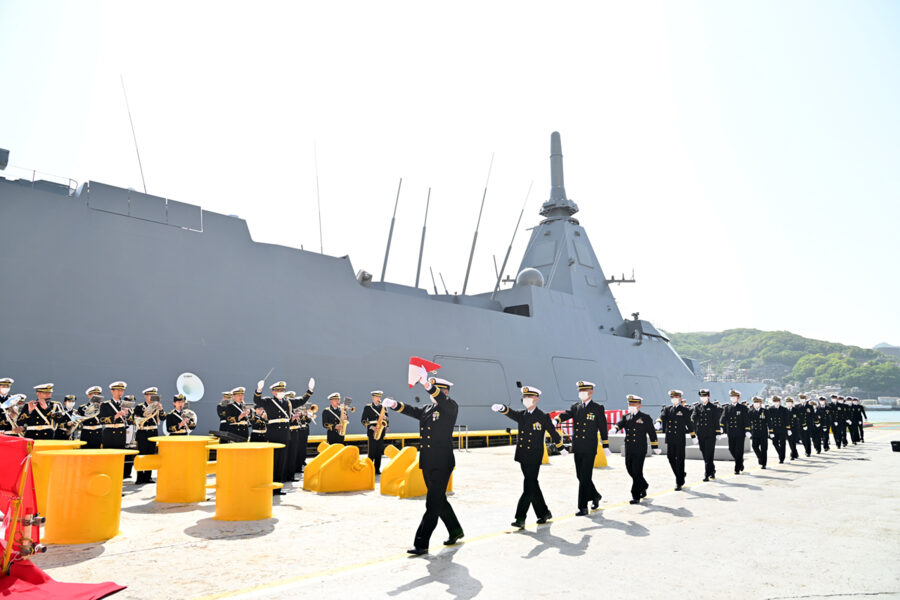

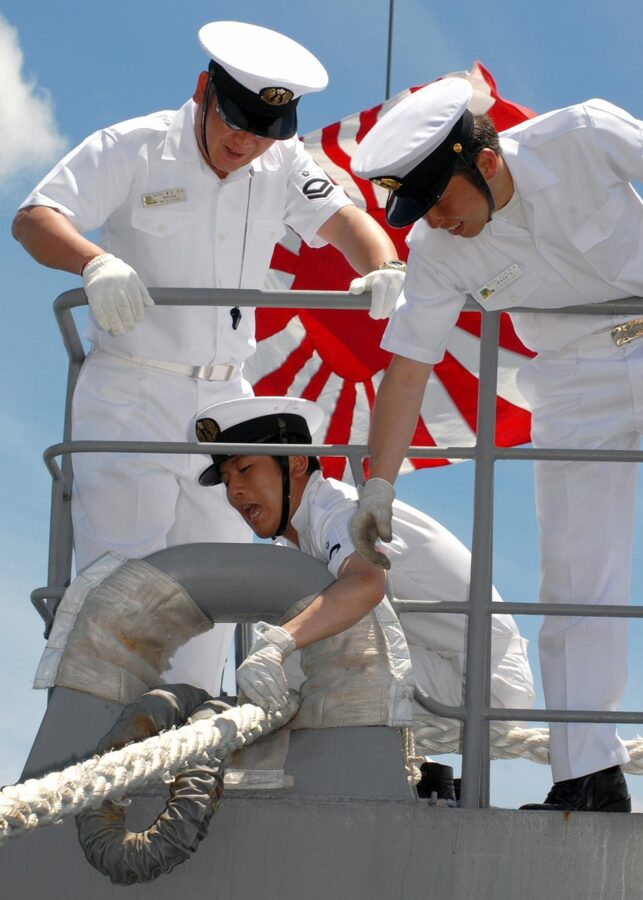
Why South Korea and China object, and what Japan says
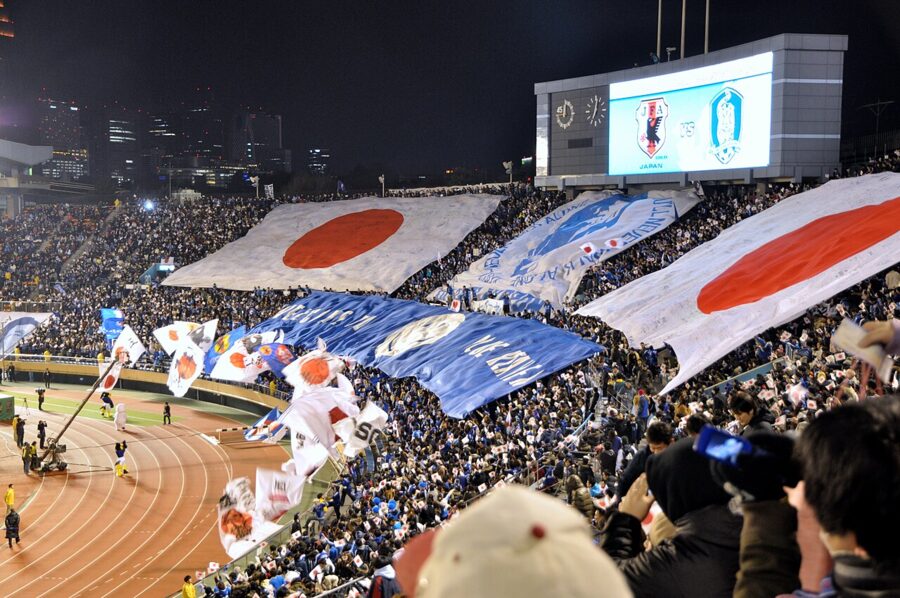
In South Korea and China the rays read as the flag of invasion and colonial rule. Korean media and officials often call it 전범기 (jeonbeomgi), “the war criminal flag”, and compare it to the Nazi swastika. In 2018 South Korea asked visiting navies to fly only their national flags at its fleet review off Jeju; Japan refused to lower its ensign and stayed away. Sports bodies have acted too: in 2017 the Asian Football Confederation fined Kawasaki Frontale after its fans showed the flag at a match in Suwon, and before the Tokyo 2020 Games South Korea asked the IOC to ban it from venues.
Japan’s government gives the opposite reading. Its Ministry of Foreign Affairs says the design is part of Japanese culture, a sun like the national flag, long used on fishermen’s flags and at births and festivals, and that calling its display a political or discriminatory statement is mistaken. Opinion inside Japan is split too, and the black sound trucks of ultranationalist groups that blare military songs in central Tokyo fly it beside the Hinomaru.

| Hinomaru (日章旗) | Rising sun flag (旭日旗) | |
|---|---|---|
| Design | Red disc, centered, on white | Red disc with red rays (16 on the naval ensign) |
| Status | National flag, Act of 1999 | Ensign of the Self-Defense Forces since 1954 |
| Where you see it | Government buildings, holidays, sports, embassies | Naval ships and bases, fishing boats, some festivals and souvenirs |
| Abroad | Read as the flag of Japan | Offensive to many in South Korea and China |
My advice is simple. A rising sun T-shirt or headband from a Tokyo souvenir shop will get no reaction in Japan, and a very different one in Seoul, Busan or Shanghai, or at a match against Korea anywhere. If your trip continues to either country, leave it in the hotel.
The flag, the anthem and Japan’s schools
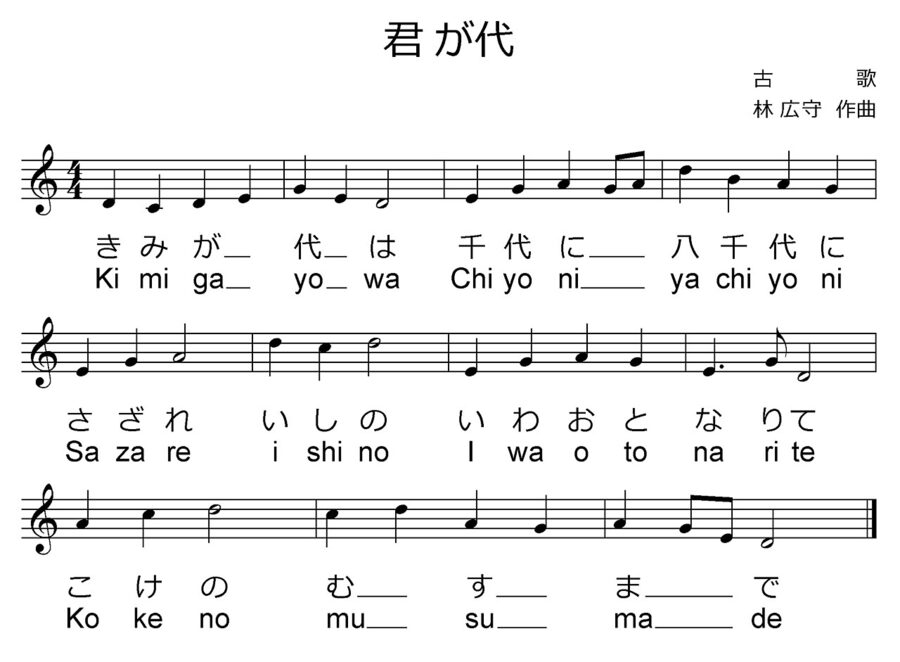
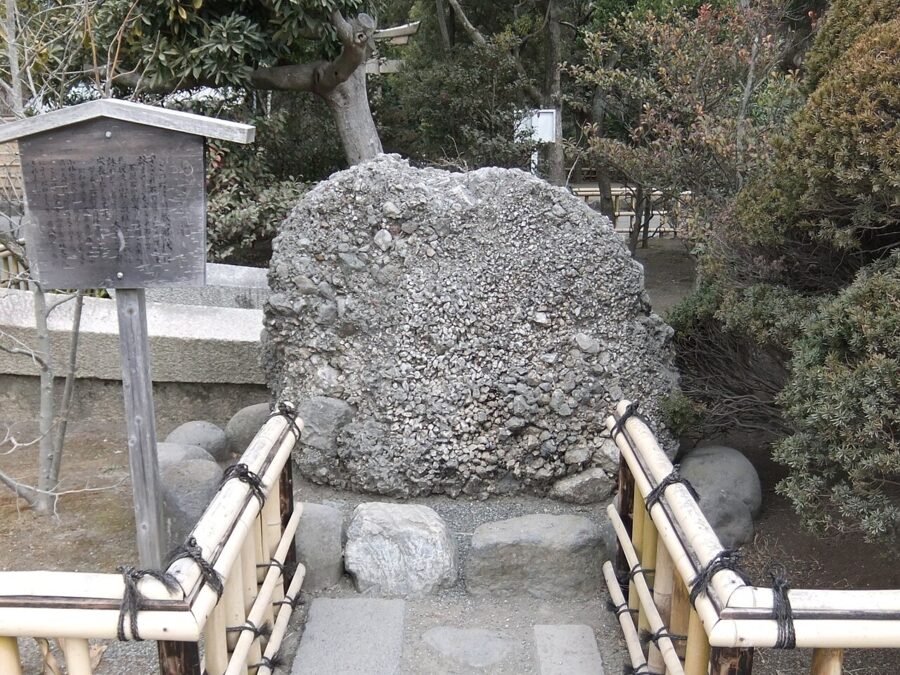
The flag’s legal partner is the anthem, 君が代 (Kimigayo), and almost every argument about the one is also about the other. The words come from an anonymous poem first collected in the early 900s, wishing someone long life, and they were set to music for the court in 1880; an earlier tune by the British bandmaster John William Fenton, written in Yokohama in 1869, was dropped. It is one of the shortest national anthems anywhere.
君が代は 千代に八千代に さざれ石の 巌となりて 苔のむすまで
May your reign last a thousand, eight thousand generations, until the pebbles grow into a boulder covered with moss.
The quarrel is over 君 (kimi, “you”, “my lord”). Before 1945 it meant the emperor as sovereign. During the 1999 debate the government said it now means the emperor as the symbol of the state and of the people’s unity under the postwar constitution, and so, in effect, Japan itself. Critics answer that a song about the emperor’s reign sits badly with popular sovereignty.
Standing for the anthem
Schools are where the flag and anthem are compulsory in practice. The national curriculum guidelines of 1989 told public schools to raise the flag and have pupils sing Kimigayo at entrance and graduation ceremonies, and after the 1999 law the education boards pressed harder. In October 2003 Tokyo’s board ordered every teacher at a ceremony to stand facing the flag and sing, and hundreds were disciplined for staying seated over the following years; in 2011 Osaka Prefecture passed an ordinance requiring the same.
The teachers went to court on freedom of thought and conscience, Article 19 of the constitution. In a ruling of May 30, 2011, the Supreme Court’s Second Petty Bench held that a principal’s order to stand and sing does not violate Article 19, because standing is a customary ceremonial act that does not force a teacher to declare a belief; other benches agreed that June. In January 2012 the court added a limit: a reprimand for staying seated is lawful, but suspending a teacher or cutting pay for that alone goes too far. Pupils and the public, the government says, cannot be forced.
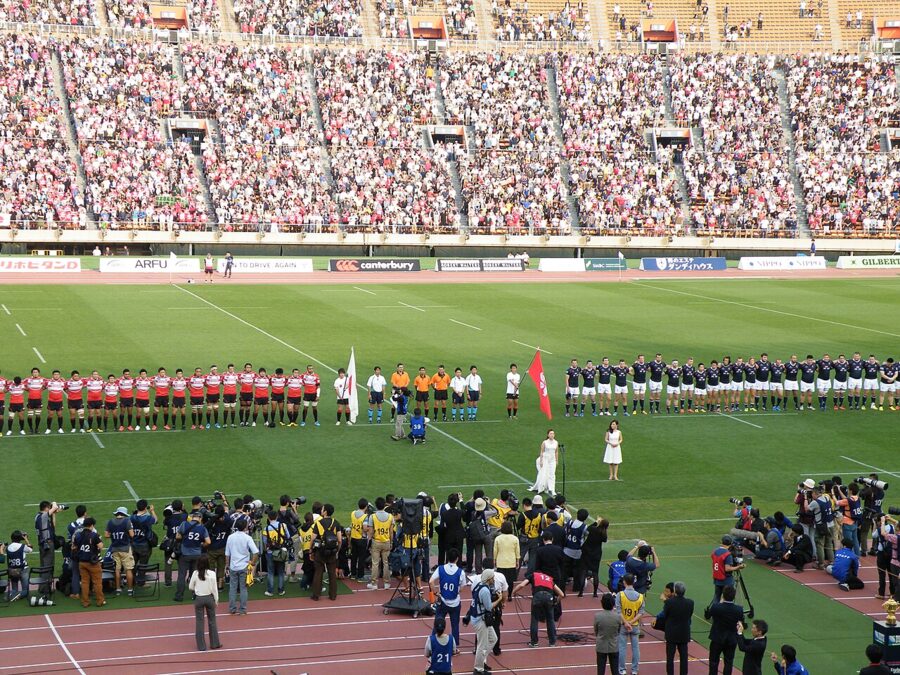

If Kimigayo plays at a ceremony or a match you are at, stand quietly; nobody expects a visitor to sing, and it is over in under a minute.
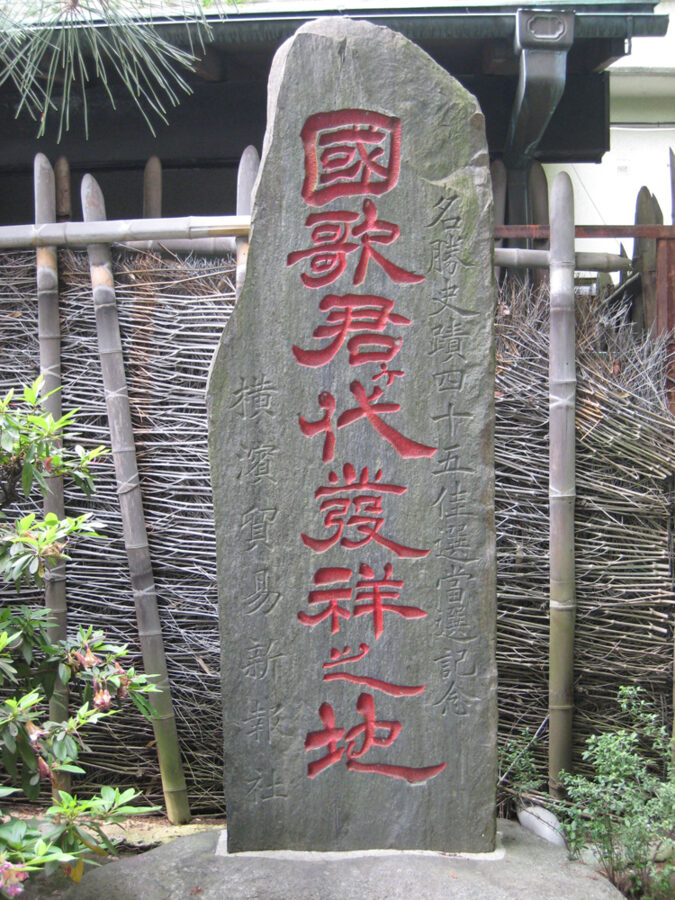
When the flag flies, and where you will see it
Japan’s sixteen national holidays are still called 旗日 (hatabi), “flag days”, from the custom of hanging the flag at the front door. Fewer households do it than a generation ago, but a residential street on a holiday morning will still have a few flags on short poles by the gates, put out in the morning and taken in before dark. The Cabinet Office holiday list has the 2027 dates, from New Year’s Day to Labor Thanksgiving Day on November 23, and the best times to visit Japan covers what each holiday does to crowds.
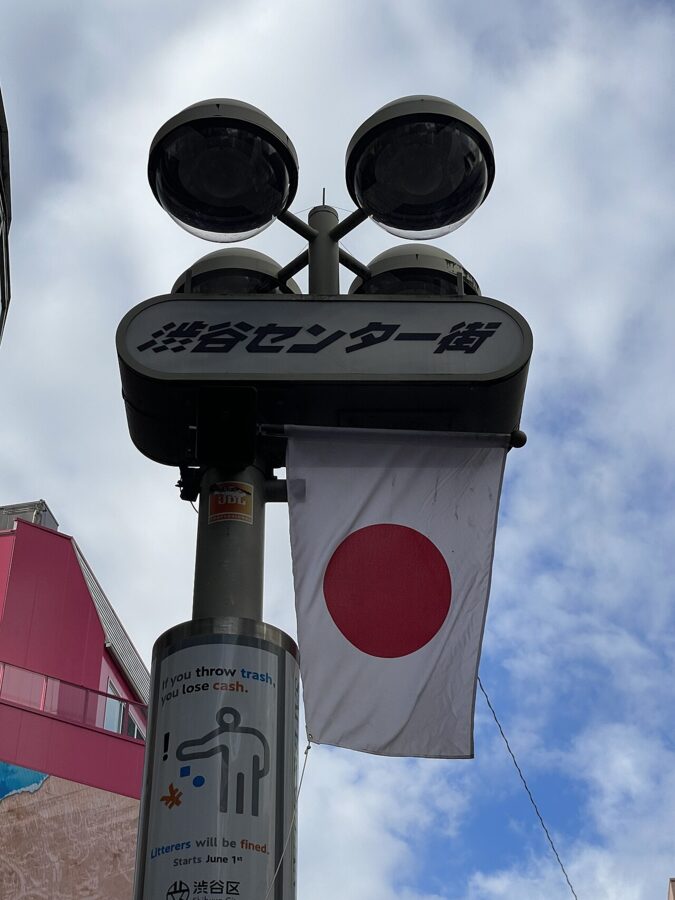

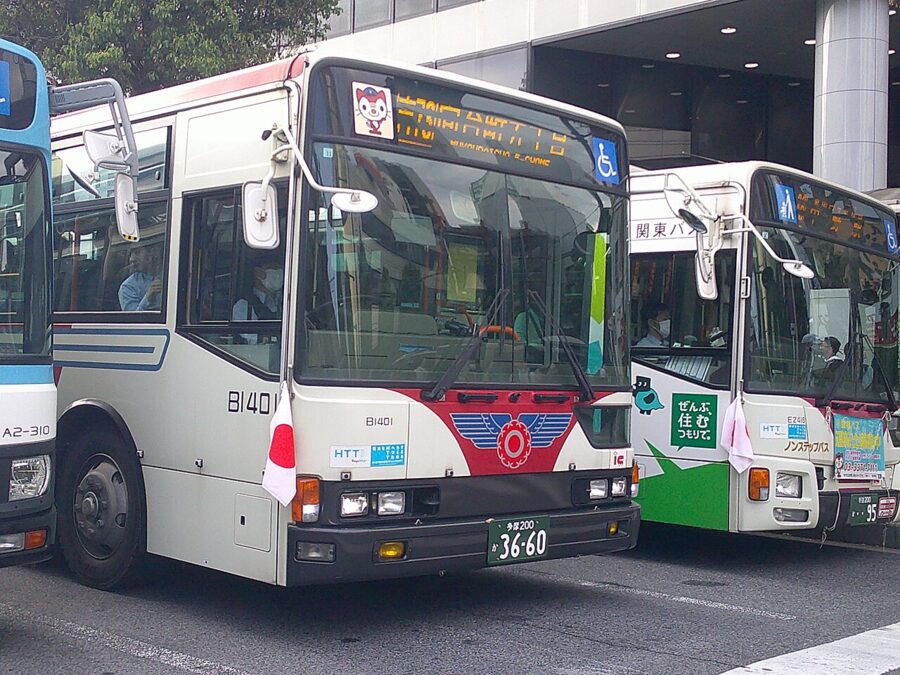
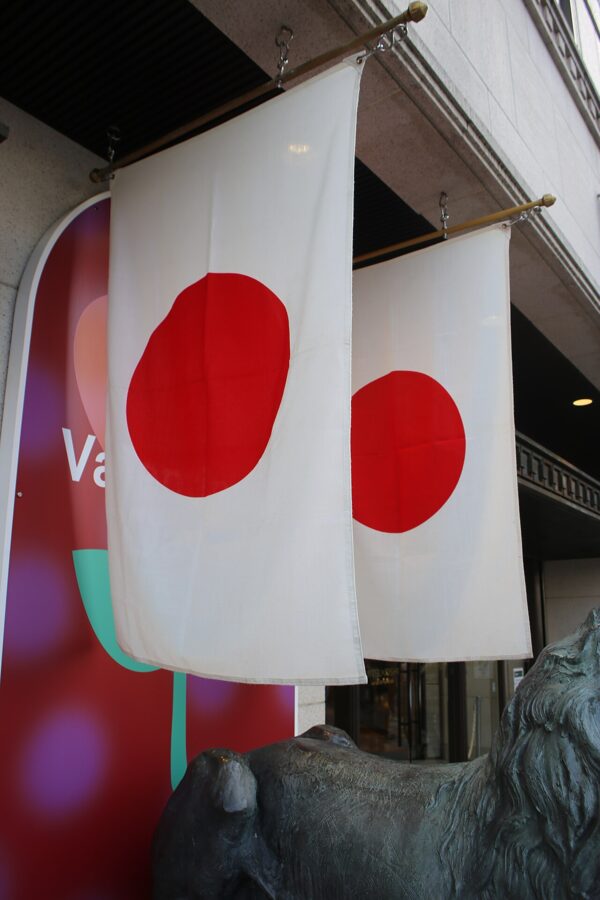
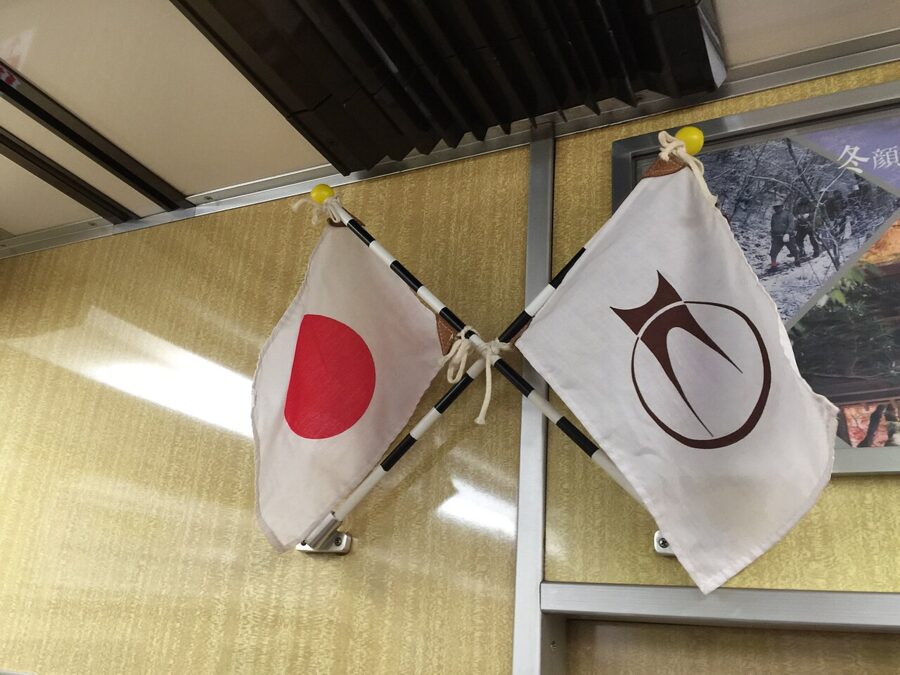
Shops and transport keep the custom better than homes do: department store entrances, station fronts, train interiors and bus bumpers all get flags. For a visitor that is useful, because holiday flags mean banks and offices are shut and trains run the weekend timetable.


The Imperial Palace on January 2
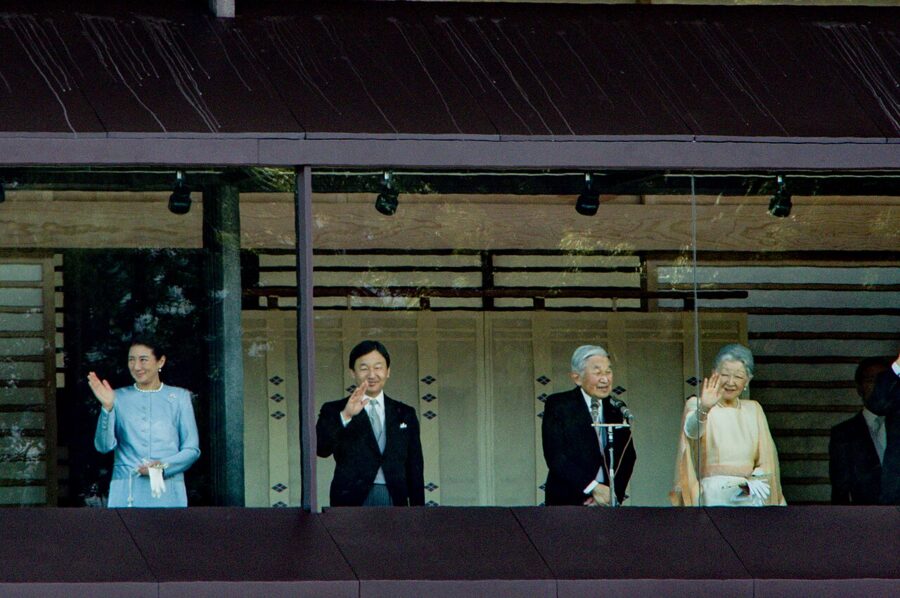
The biggest flag-waving crowd in Japan gathers at the Imperial Palace for the New Year greeting, 一般参賀 (ippan sanga). On January 2 the gates open to the public and the Emperor and the imperial family step out onto the glass-fronted balcony of the Chowaden hall several times. Most of the tens of thousands below wave small paper Hinomaru flags, handed out near the gates; bring nothing on a pole, because the Imperial Household Agency’s rules for the greeting turn away flagpoles, large bags and drones.
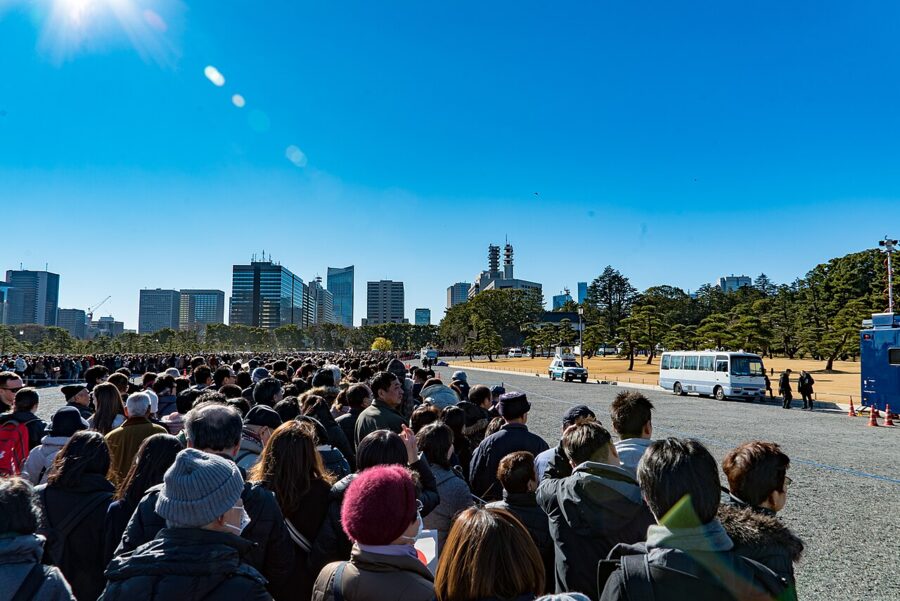

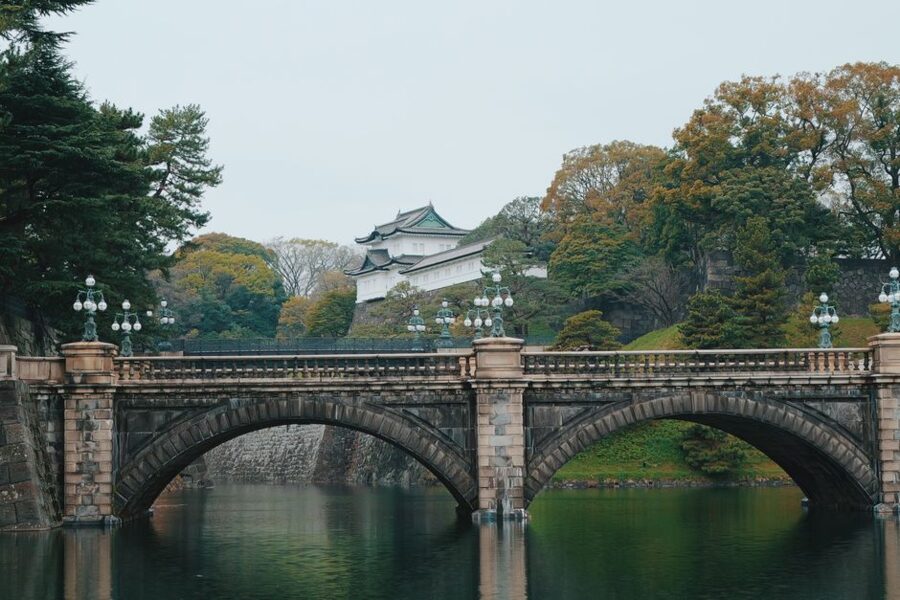
For January 2, 2026, entry ran from 9:30 a.m. to 2:10 p.m. through the Main Gate, with five balcony appearances from about 10:10 a.m. The agency posts each year’s times a few weeks ahead, and a second public greeting is usually held on the Emperor’s Birthday, February 23. Entry is free; expect a long, cold wait in a good-humored, orderly crowd.

What not to do with it
Most of the etiquette is custom rather than law, and people are relaxed about it. Fans paint the disc on their faces, athletes are sent off with signed flags, and nobody minds a visitor waving a hand flag at a parade. A few things still count.
- Do not damage it in public. Tearing, burning or defacing the Japanese flag in public, in a way that disgusts people, has been a crime since 2026. Article 92 of the Penal Code has long punished the same acts against a foreign country’s flag when done to insult that country, though only at that government’s request.
- Treat it like any national flag. Fold it, keep it off the floor, and do not use it as a rag, a doormat or a seat cover.
- Know the mourning signs. After a death of national importance, flags fly at half-mast, and a flag that cannot be lowered has a black ribbon or cloth tied at the top of its pole.
- Keep the two flags apart in your head. Do not bring the rising sun flag to a sports match, and do not use it as a stand-in for “Japan” on anything you post from South Korea or China.
For everything else about a first trip, from money to the shape of the country, general travel information is the place to start. For the flag, one word is enough. Say hinomaru, not nisshōki, and you are using the name people used for all 145 years before a law called it the national flag.