
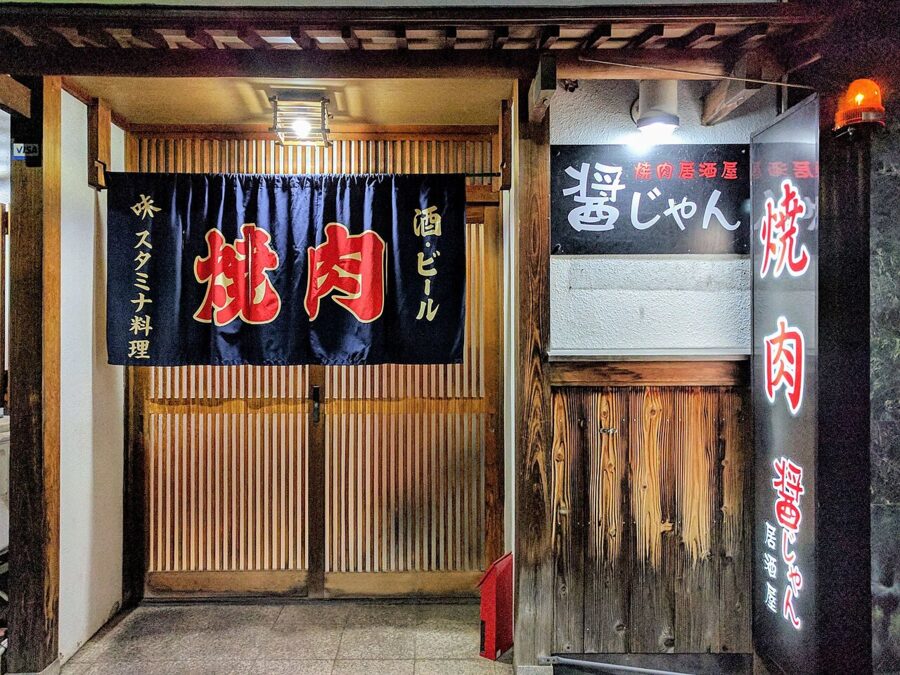

A short cloth curtain hanging over a restaurant door means the place is open. It is called a 暖簾 (noren), and when the cook takes it down at night the kitchen is closed, whatever the hours on the sign say. Duck under it and a Japanese meal follows a pattern most first-time visitors are never told about, from the glass of water that arrives unasked to the bill that never comes until you go and pay it.
Key facts A typical cheap choice
- Breakfast
- Two convenience-store onigiri
- Breakfast
- Ryokan breakfast
- Lunch
- Kake udon, Marugame Seimen
- Lunch
- Regular gyudon, Yoshinoya
- Lunch or dinner
- A standard bowl of ramen
- Dinner
- Conveyor-belt sushi, Kura Sushi
- Dinner
- Ryokan kaiseki
Every dish a first trip meets sits somewhere inside that pattern, and so do the habits around it: how you order, what you do with chopsticks, the two phrases said before and after, and what happens if you cannot eat something. Learn the shape first, and the food is easy.



Washoku: what the word covers
和食 (washoku) means “Japanese food”, as opposed to 洋食 (yōshoku, Western-style food). In December 2013 UNESCO added “Washoku, traditional dietary cultures of the Japanese, notably for the celebration of New Year” to its Representative List of the Intangible Cultural Heritage of Humanity.
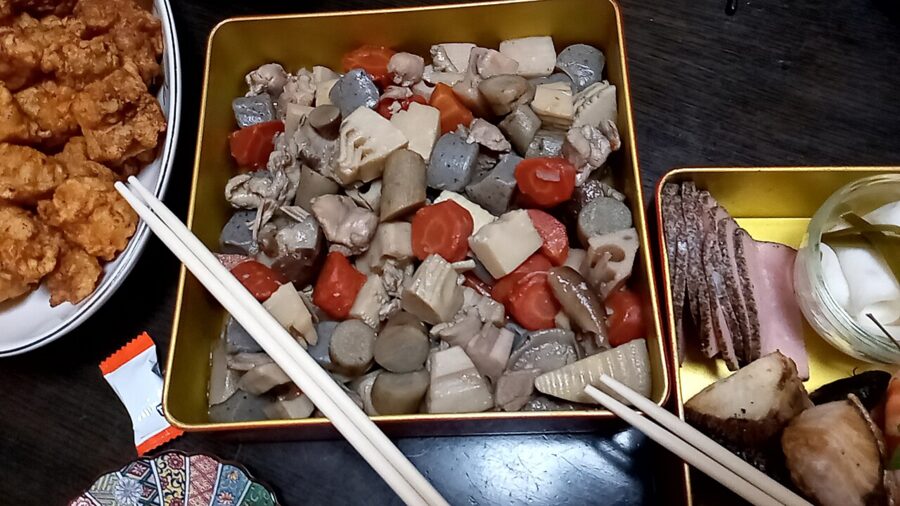
Read that title again, because it is often misreported. UNESCO did not list sushi or any single dish. It listed a social practice: the skills and customs of producing, cooking and sharing food, tied to respect for nature, and seen most clearly at New Year, when families pound rice cakes and prepare symbolic dishes to welcome the year’s deities, the 年神 (toshigami) of Shinto household custom.
Japan’s agriculture ministry, which prepared the nomination, names four features of washoku: fresh, varied ingredients cooked to keep their own flavor; a balanced meal of one soup and three sides, with umami doing the work that animal fat does elsewhere; the seasons shown on the plate; and close ties to annual events such as New Year.
One soup, three sides, rice in the middle
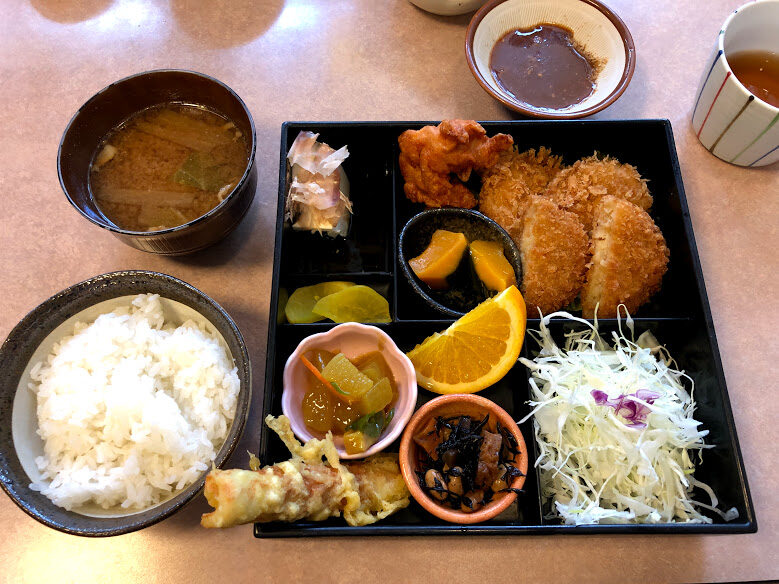
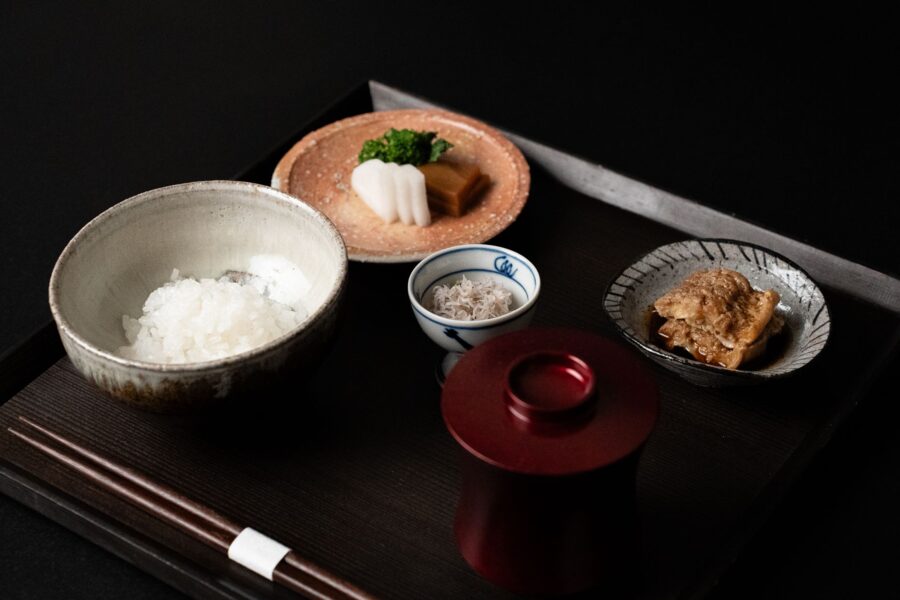
The phrase to know is 一汁三菜 (ichijū sansai): one soup, three sides. Rice, a bowl of soup (usually miso), one main dish of fish or meat and two smaller ones of vegetables or tofu, with pickles. The set meal on a restaurant tray is the same pattern in a hurry.
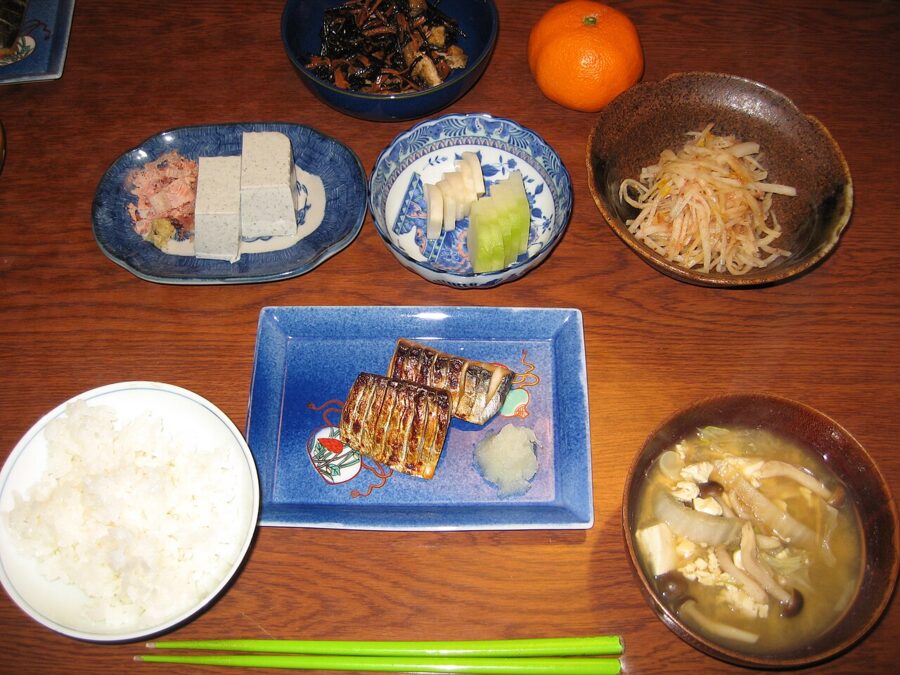

Rice is the center, so much that ご飯 (gohan) means both “cooked rice” and “a meal”. It comes plain, without soy sauce poured on, because its job is to balance the salty dishes around it. Behind almost everything else is 出汁 (dashi), a stock of kombu (dried kelp) and 鰹節 (katsuobushi, smoked, shaved bonito). Remember it: dashi is why a plate of vegetables in Japan is often not vegetarian.
The dishes a first trip meets
Japanese restaurants tend to specialize: a sushi shop serves sushi, a tonkatsu shop serves pork cutlets, so the dish you want decides the door. The exceptions are family restaurant chains, department-store food floors and the izakaya. Prices below include tax, as Japanese law requires menus to show, and are as of November 2026; chains change them often.
Sushi and sashimi
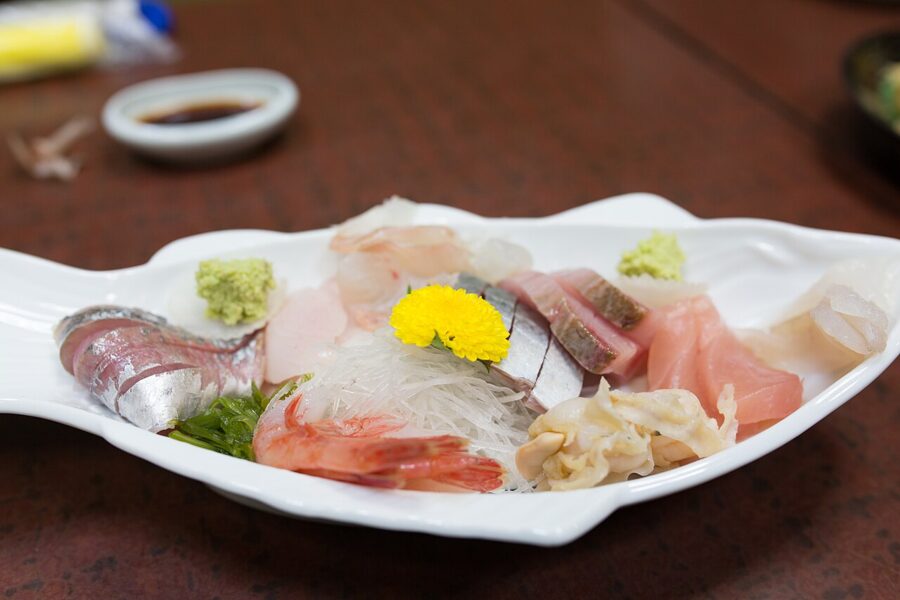
寿司 (sushi) means vinegared rice with something on it or in it, and the kind you will meet most is 握り (nigiri), a hand-pressed finger of rice topped with fish. 刺身 (sashimi) is the fish without rice. Eat nigiri in one bite, with fingers or chopsticks, and turn it over so the fish, not the rice, touches the soy sauce. The pickled ginger, ガリ (gari), clears your palate between pieces.
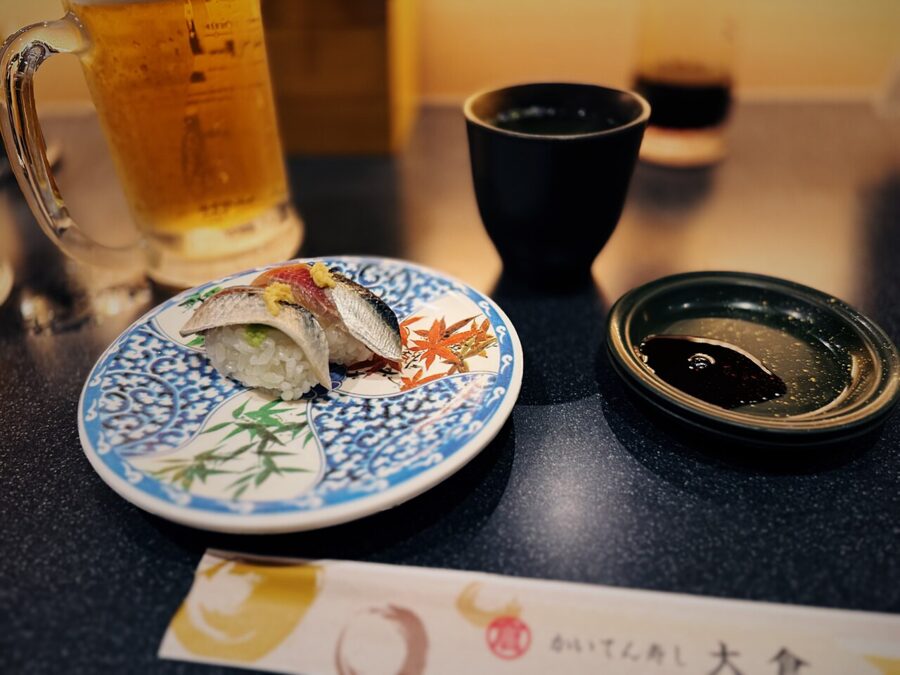

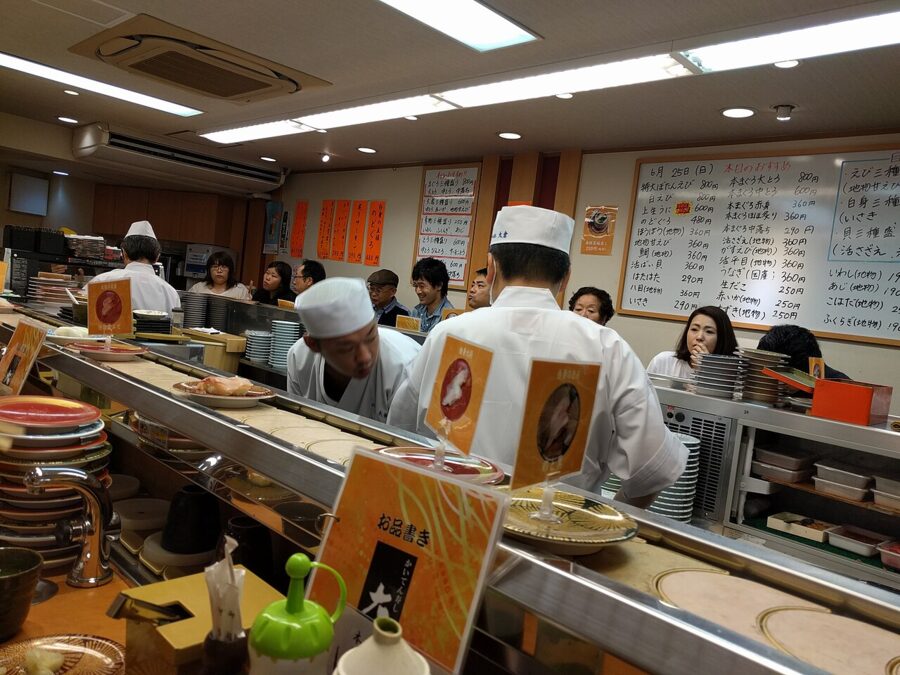
The cheapest door in is 回転寿司 (kaitenzushi), conveyor-belt sushi, ordered from the belt or a touch screen. At the chain Kura Sushi, plates start at ¥110 to ¥145 (about US$1) depending on the branch, and green tea is free from a hot-water tap at your seat. At the other end, a counter where the chef serves you piece by piece as an お任せ (omakase, chef’s choice) course is often by booking only.

Ramen
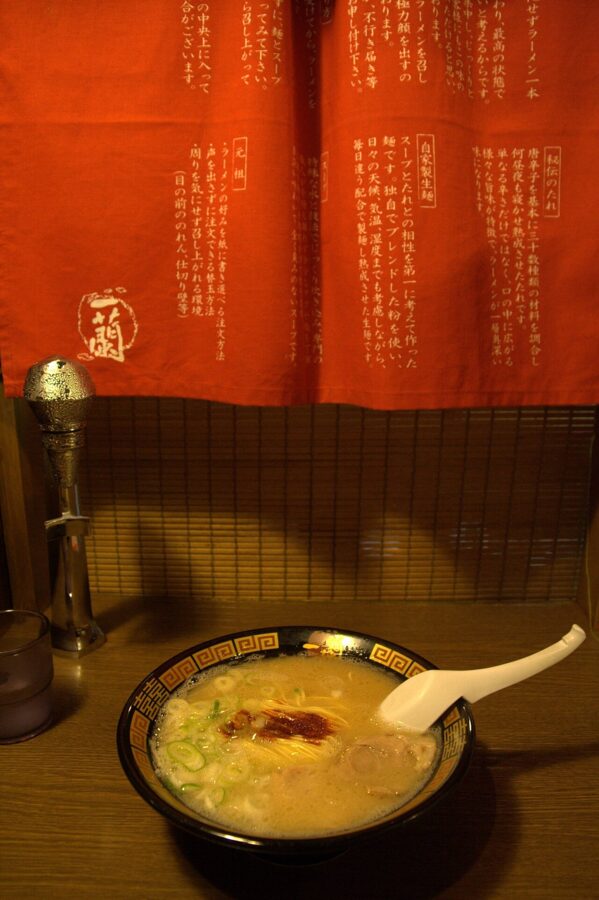
Ramen grew from Chinese wheat noodles into Japan’s own dish over the twentieth century. Bowls are sorted by seasoning: 醤油 (shōyu, soy sauce), 塩 (shio, salt), 味噌 (miso) and creamy pork-bone 豚骨 (tonkotsu). Slurp: it cools the noodles, nobody thinks it rude, and there is no need to finish the broth.
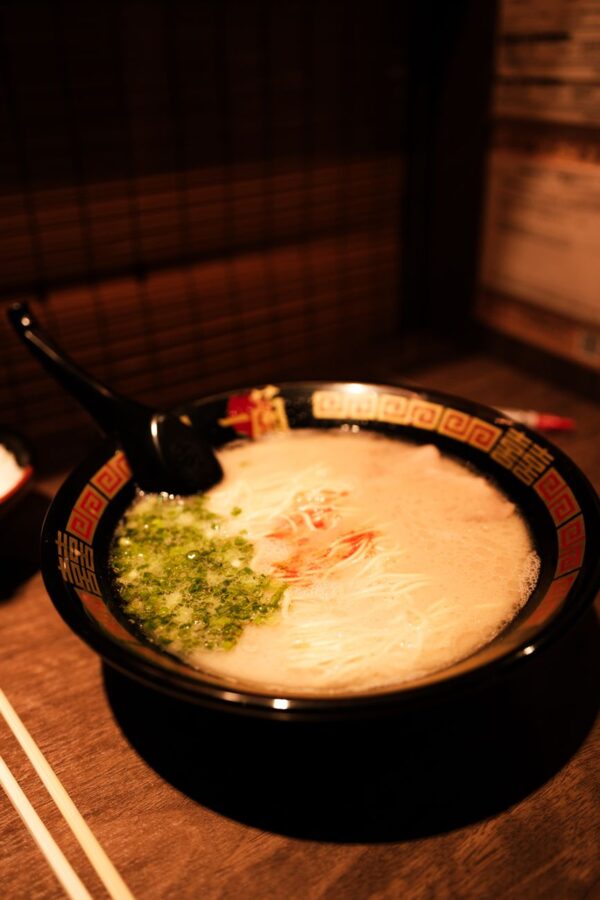
A July 2026 report on the ramen shop market by the research firm Teikoku Databank describes prices splitting into three bands: around ¥500 (about US$3.50) at cheap chains, around ¥1,000 (about US$7) for a standard bowl, and ¥1,500 (about US$10) and up at specialist shops.
Soba and udon
蕎麦 (soba) are thin buckwheat noodles, eaten hot in broth or cold as ざるそば (zaru soba), dipped in a cup of strong sauce; afterward a good shop brings the cooking water, そば湯 (sobayu), to stir into the leftover sauce and drink. 饂飩 (udon) are thick, chewy wheat noodles, served the same two ways.
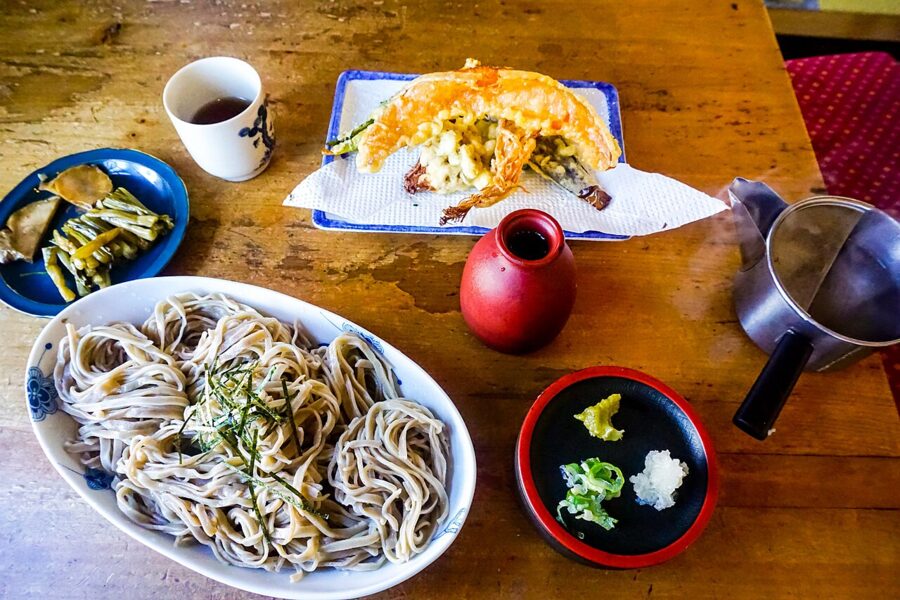

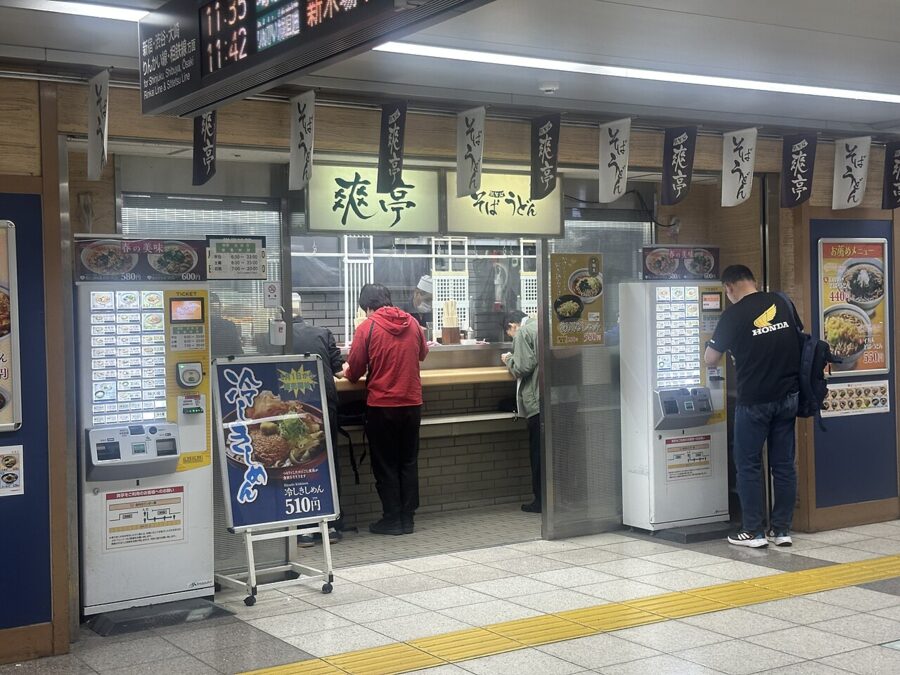
Both are cheap and everywhere, down to the standing counters on station platforms, 立ち食いそば (tachigui soba). The self-service udon chain Marugame Seimen charges ¥440 (about US$3) for a regular bowl of plain 掛けうどん (kake udon), dropping to ¥390 (about US$2.50) from November 25, 2026.

Fried: tempura, tonkatsu and karaage
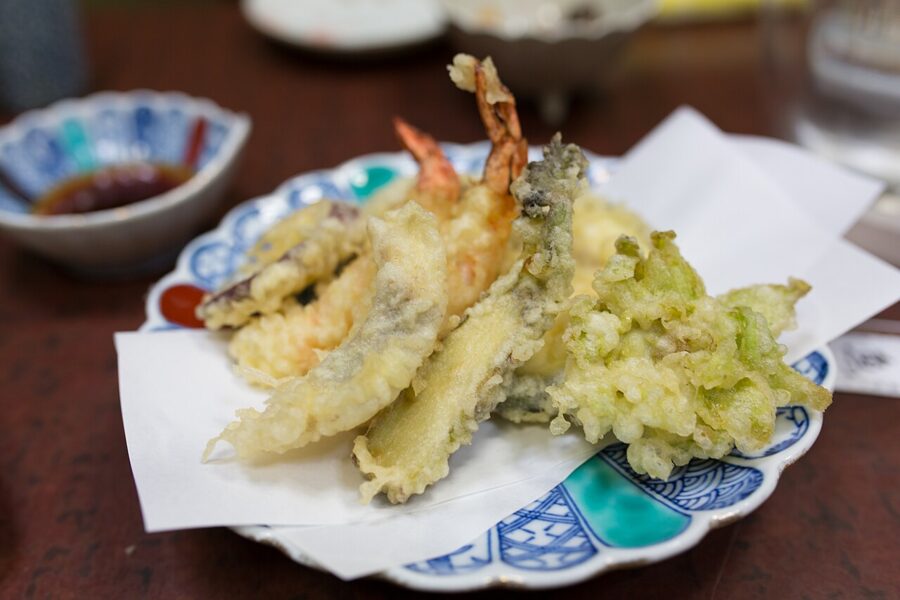
天ぷら (tempura) is seafood and vegetables in a thin batter, fried and eaten at once, dipped in warm sauce with grated daikon or touched to salt. It is usually traced to Portuguese cooks in the sixteenth century, and it was street food in Edo, old Tokyo, before it was a counter meal.

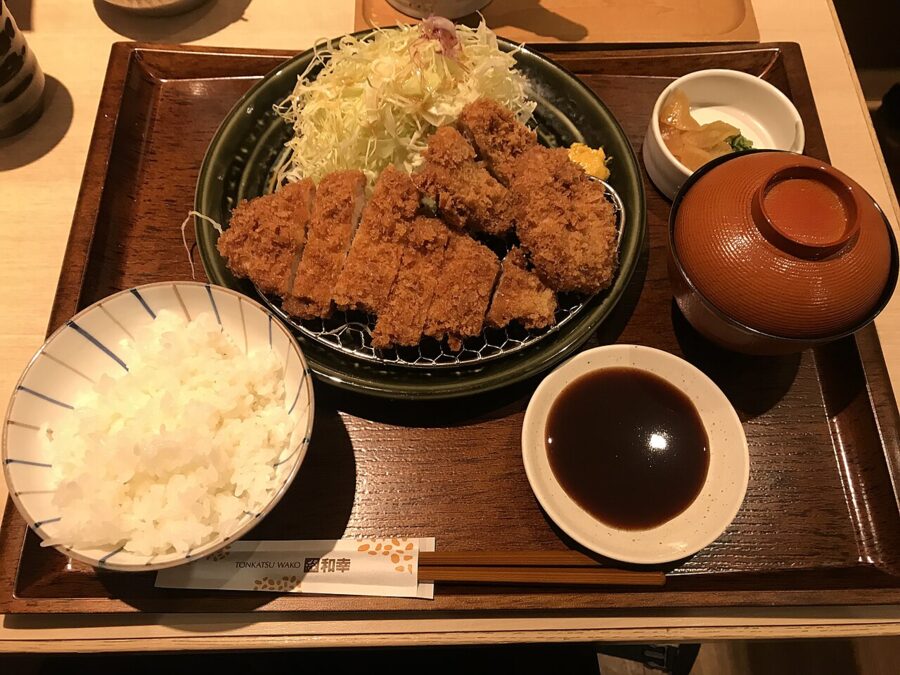
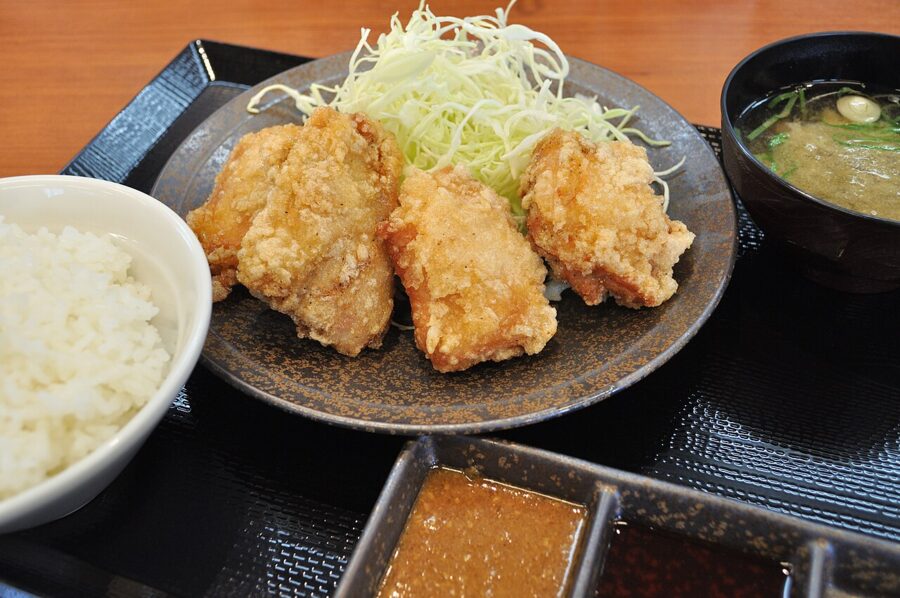
とんかつ (tonkatsu) is a breaded pork cutlet, lean fillet (hire) or richer loin (rōsu), from the Western-style cooking Japan adopted after the 1860s. It comes with thick sauce and shredded cabbage, and many shops refill cabbage, rice and soup free; ask for おかわり (okawari, a refill). 唐揚げ (karaage) is soy-and-ginger fried chicken, sold at izakaya, chains and convenience-store counters.

Grilled and griddled: yakitori, okonomiyaki and takoyaki
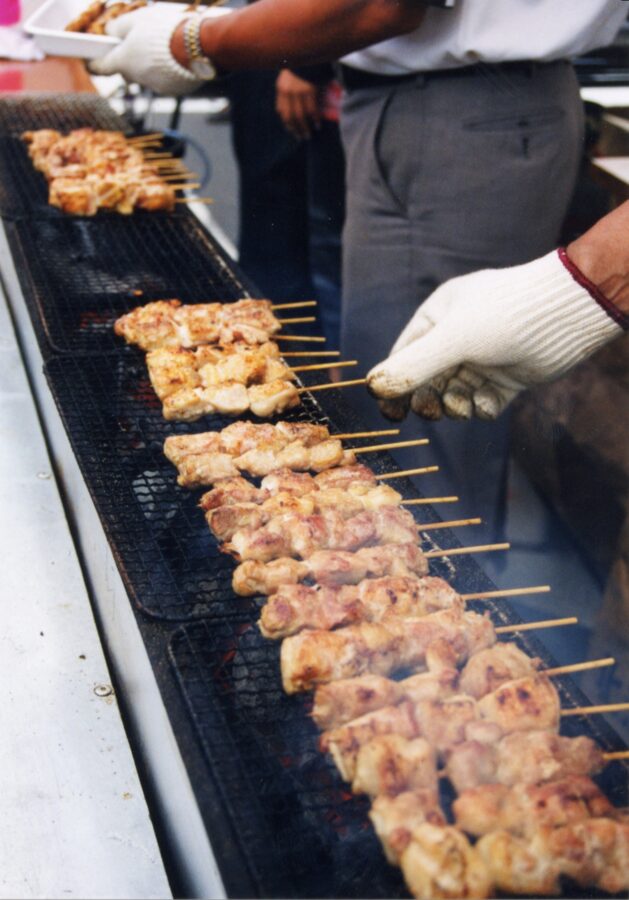
焼き鳥 (yakitori) is chicken grilled on skewers over charcoal: thigh, meatballs (tsukune), skin, liver and more, each ordered タレ (tare, sweet soy glaze) or 塩 (shio, salt). It is drinking food, ordered a few skewers at a time.

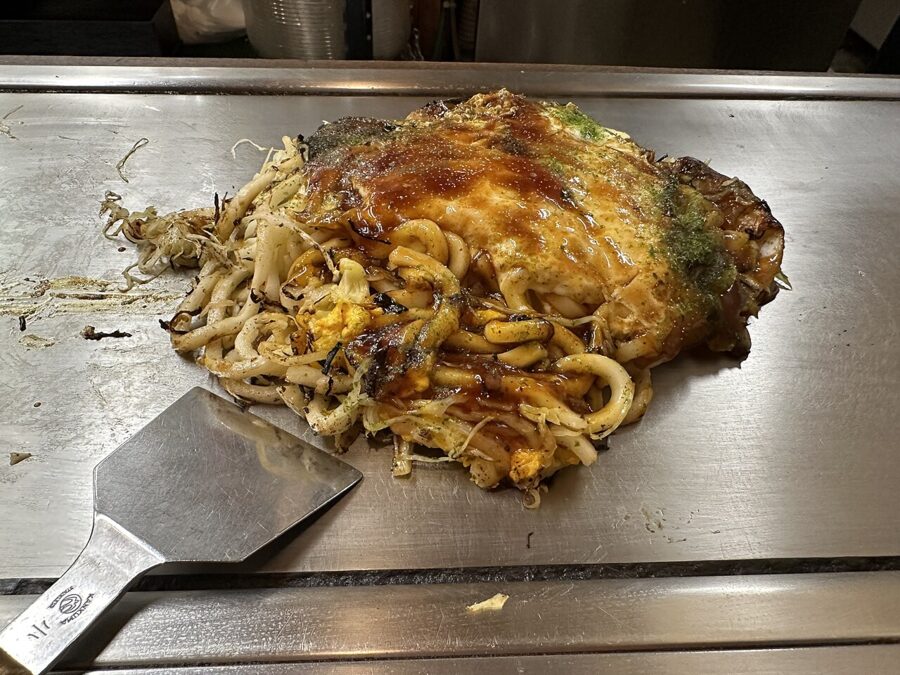
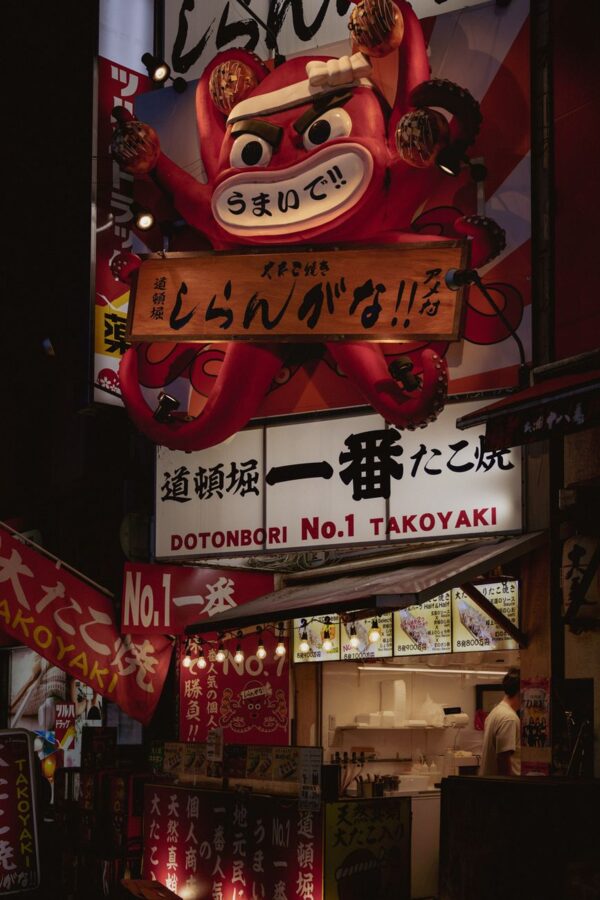
お好み焼き (okonomiyaki) is a savory pancake of batter and cabbage with meat or seafood, finished with brown sauce, mayonnaise and bonito flakes. Osaka mixes everything together; Hiroshima builds it in layers with noodles and an egg. たこ焼き (takoyaki) are batter balls with octopus inside, Osaka’s street food. Bite carefully, because the inside stays molten long after the outside cools.

Bowls and curry
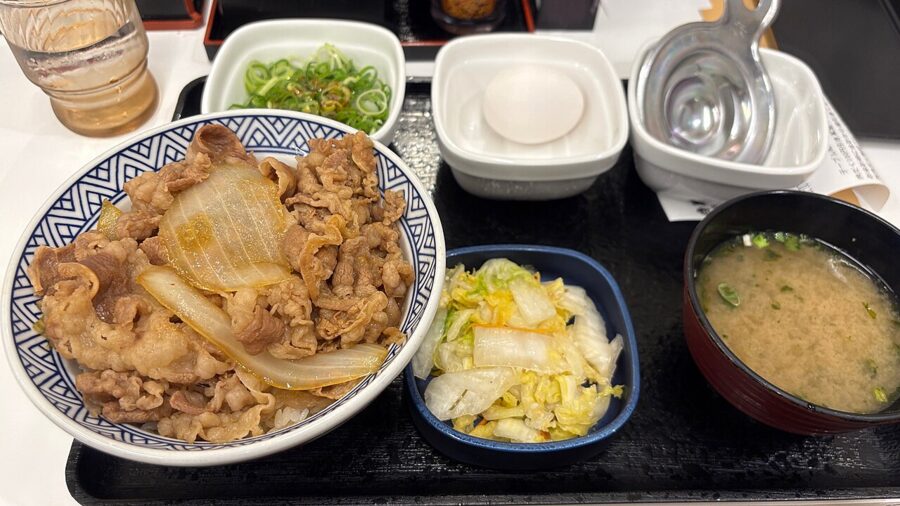
丼 (donburi) is rice with something on top, the fastest meal in Japan: 牛丼 (gyūdon, simmered beef and onion), 親子丼 (oyakodon, “parent and child”, chicken and egg), カツ丼 (katsudon, pork cutlet and egg). At Yoshinoya, the oldest beef bowl chain, a regular gyudon costs ¥498 (about US$3.50) to eat in.

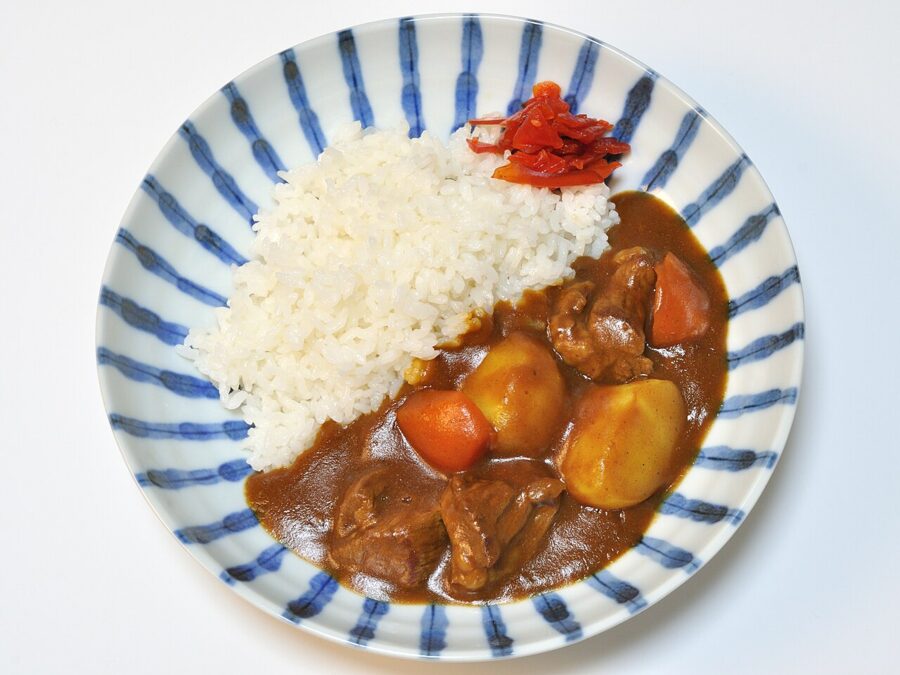
カレーライス (karē raisu) is a thick, mild curry over rice, closer to a stew than to Indian food. It arrived through British cooking in the late nineteenth century and became a school lunch staple. Add a pork cutlet and it is カツカレー (katsu karē).
Kaiseki and the ryokan dinner
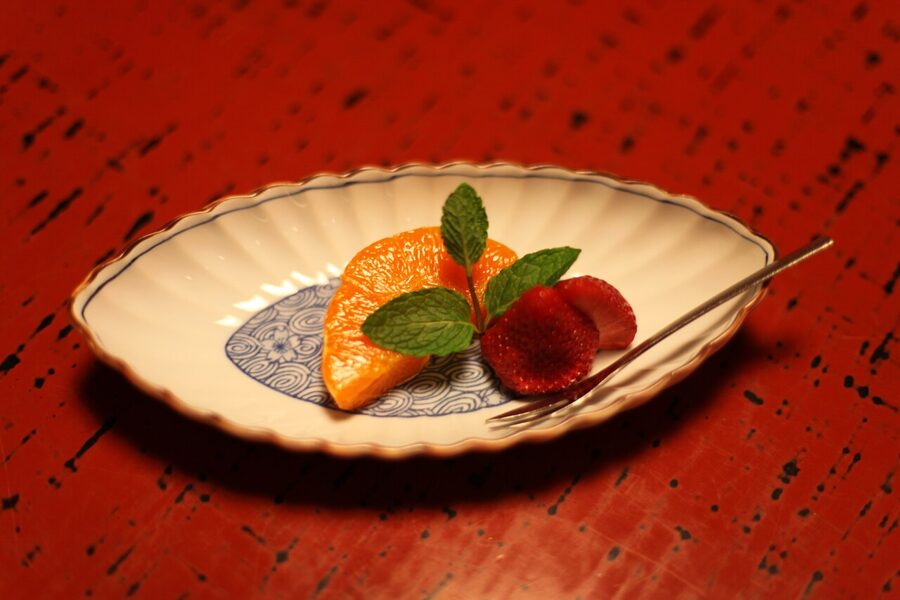
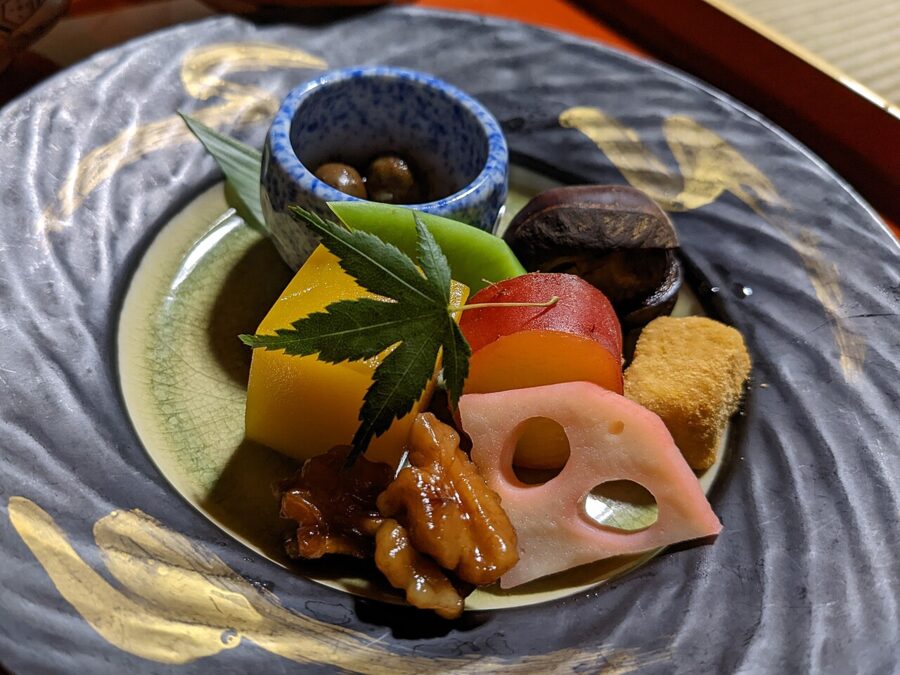
Kaiseki is the formal course meal, and the word hides two spellings: 懐石 is the light meal before a tea ceremony, 会席 the banquet course at restaurants and inns. Visitors almost always eat the second. Small dishes arrive in a fixed order (appetizer, clear soup, sashimi, a seasonal platter called 八寸, hassun, then grilled, simmered and steamed dishes) and end with rice, miso soup and pickles, then fruit. In Kyoto the room often looks onto a Japanese garden, and at grand banquets geisha may be booked.
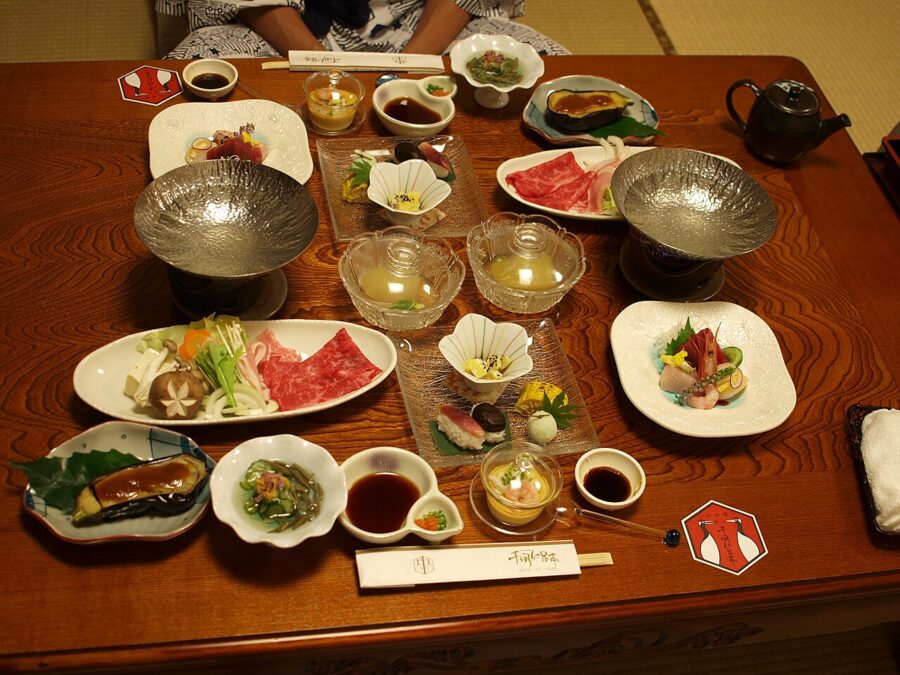

Most visitors eat kaiseki at a ryokan, the traditional inn, where the rate usually covers 一泊二食 (ippaku nishoku, one night, two meals). Dinner comes at a set time, often after a bath in the inn’s onsen. Declare allergies when you book, because the menu is bought in advance.

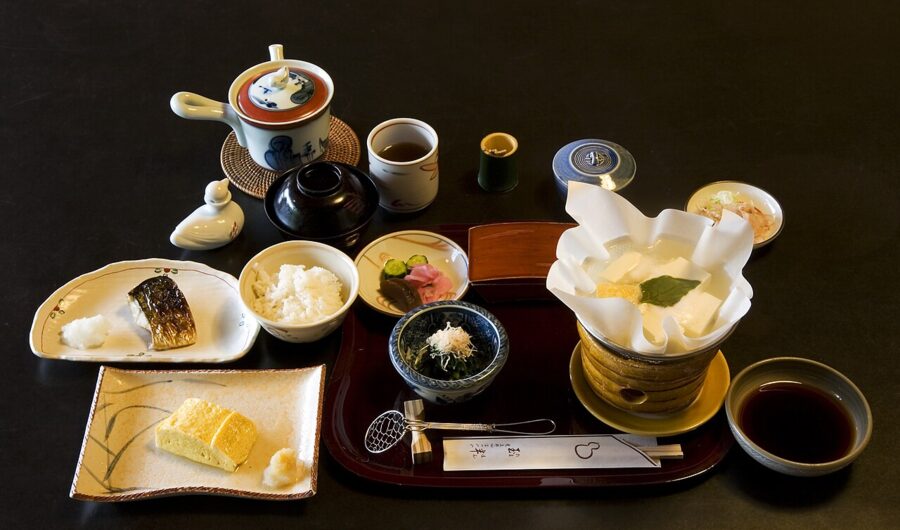
Breakfast at a ryokan
The ryokan breakfast is one soup, three sides at its fullest: rice, miso soup, grilled salmon or mackerel, rolled omelet (tamagoyaki), nori, pickles and small dishes of vegetables or tofu, often with a soft onsen egg. The inn will ask the night before what time you want it.

One small bowl will be 納豆 (nattō), sticky fermented soybeans. Stir it hard with the packet sauce and mustard, then put it on rice. Plenty of Japanese people dislike it too, so try one mouthful and decide.
Food by region and by season
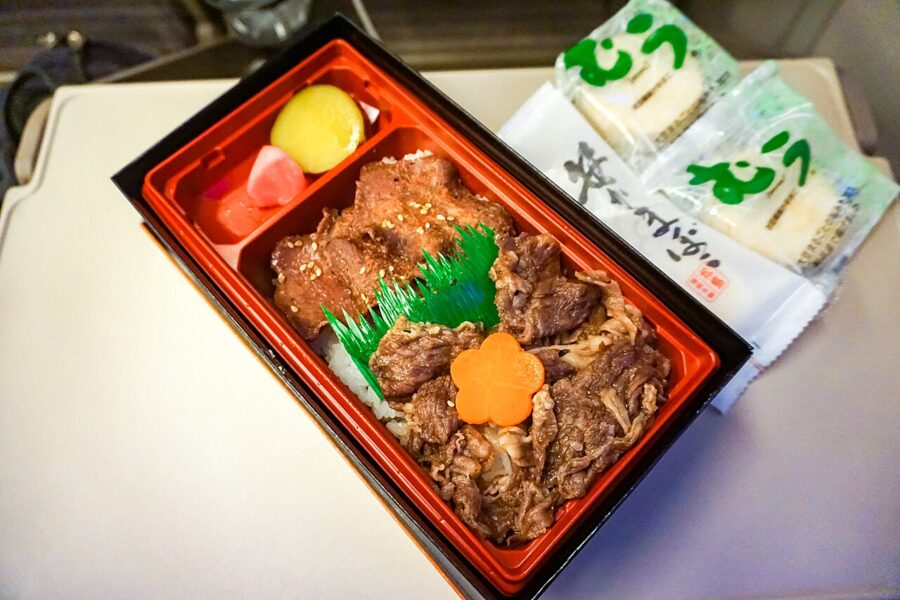
Every region has a dish it is known for, and a station’s 駅弁 (ekiben, station lunch boxes) are the quickest way to taste it. A few that a first trip passes through:
- Fukuoka: tonkotsu ramen with thin noodles; order 替え玉 (kaedama), a second helping of noodles, for the broth left over.
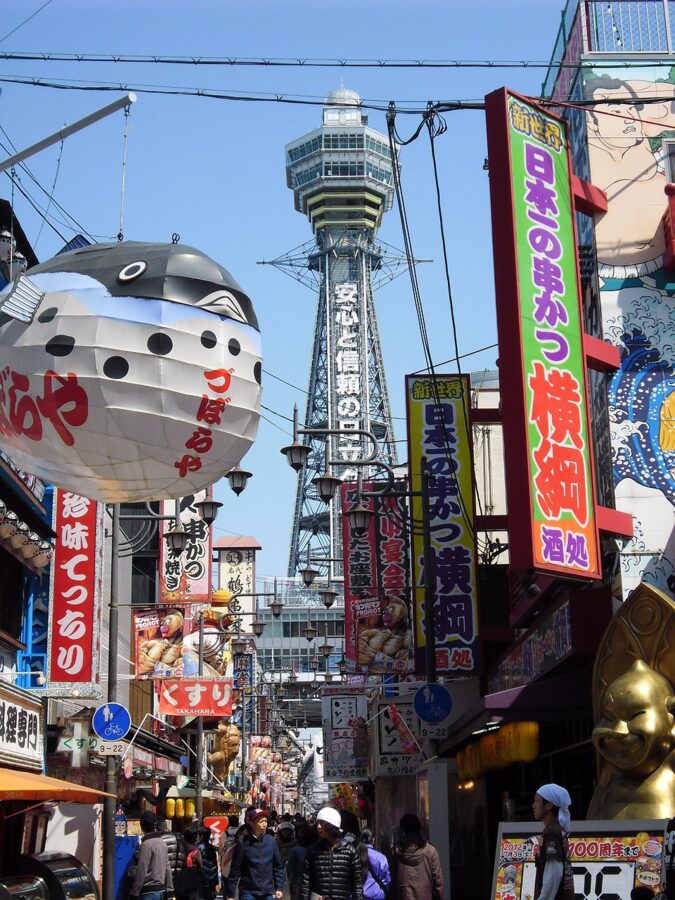
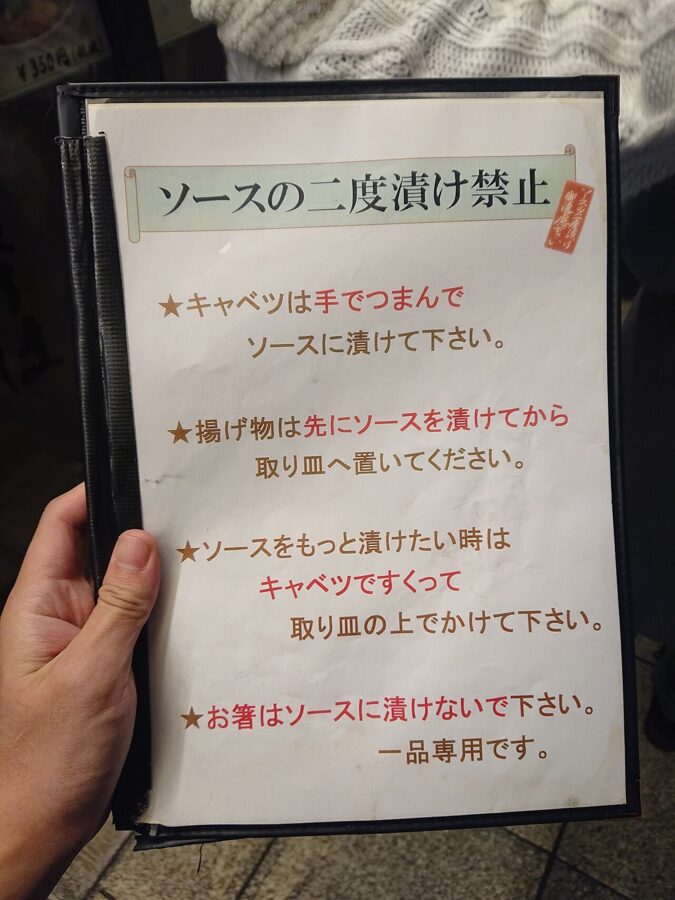
- Osaka: takoyaki, okonomiyaki and 串カツ (kushikatsu), fried skewers dipped in a shared sauce pot.
- Nagoya: ひつまぶし (hitsumabushi), grilled eel over rice.
- Sendai: grilled beef tongue, 牛たん (gyūtan).
- Kagawa: firm, square-edged Sanuki udon.
- Hokkaido: Sapporo miso ramen, crab and raw seafood over rice.
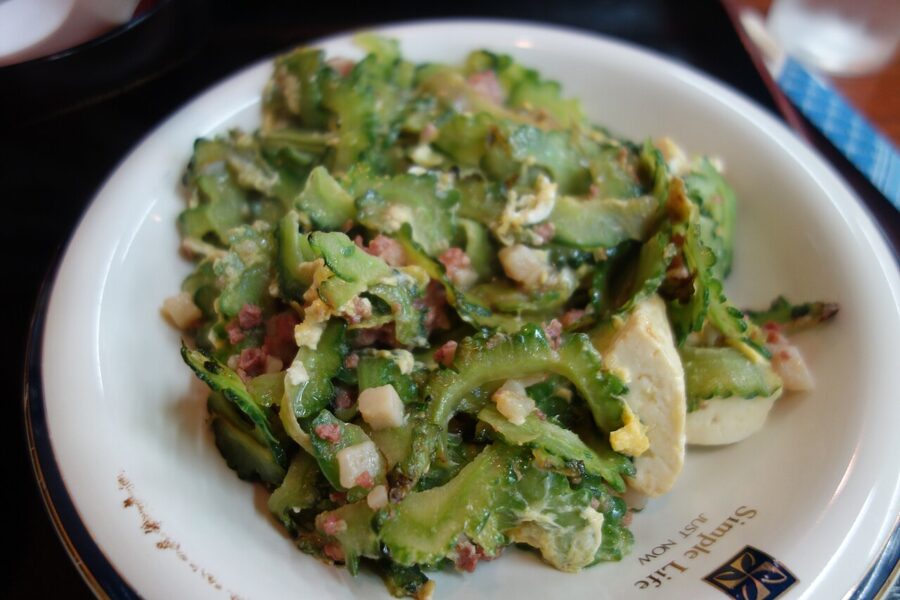
- Okinawa: goya champuru, bitter gourd stir-fried with tofu, pork and egg.
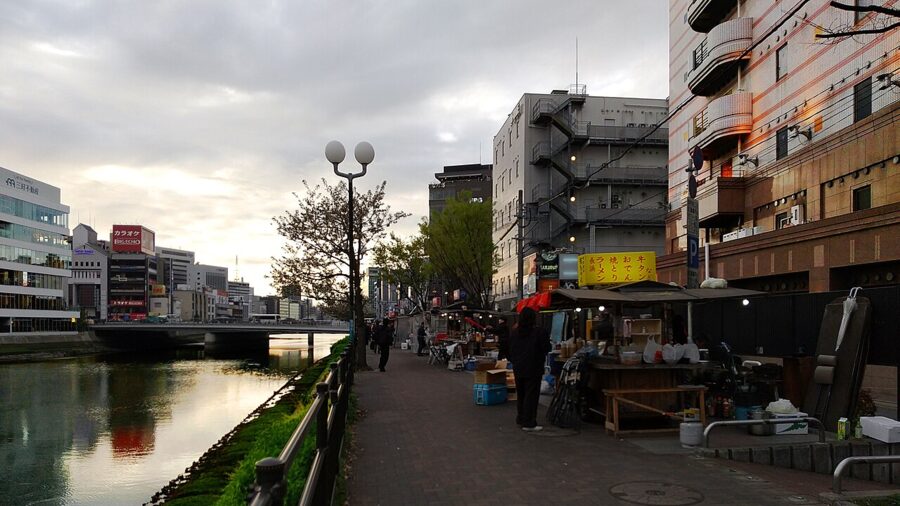

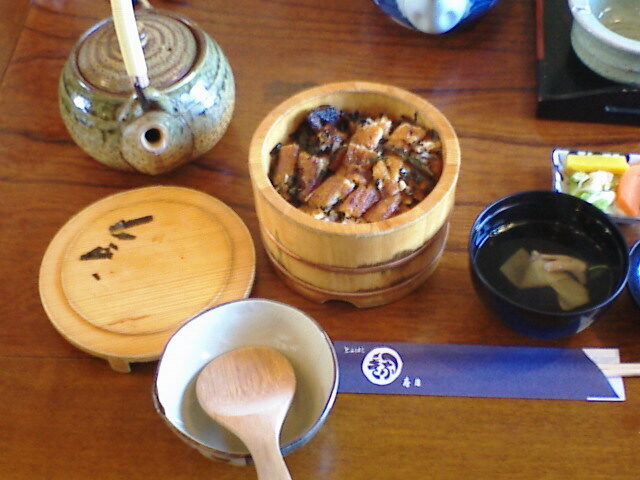

Osaka’s kushikatsu shops teach a useful sign: 二度漬け禁止 (nidozuke kinshi), “no double-dipping”. The whole counter shares the sauce pot, so each skewer goes in once, before your first bite.



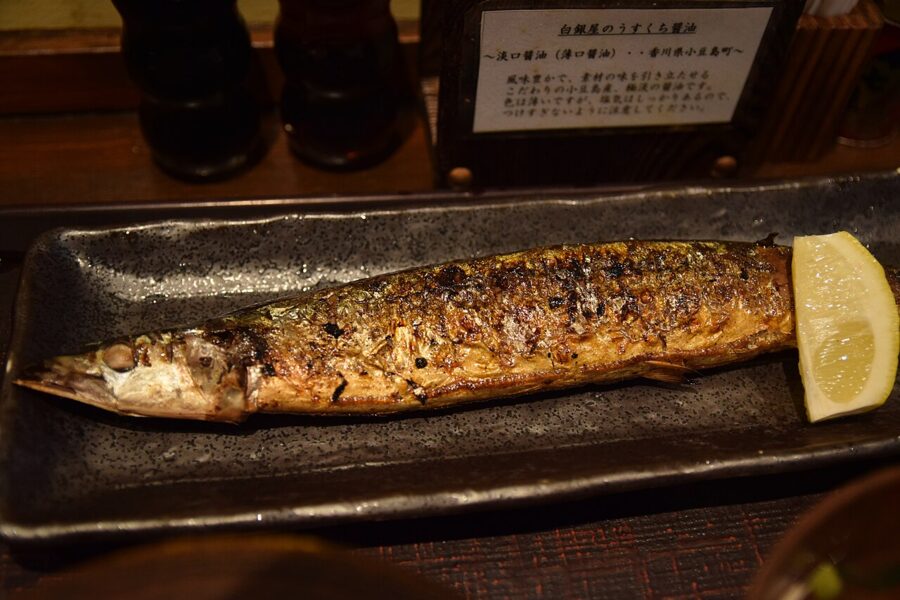
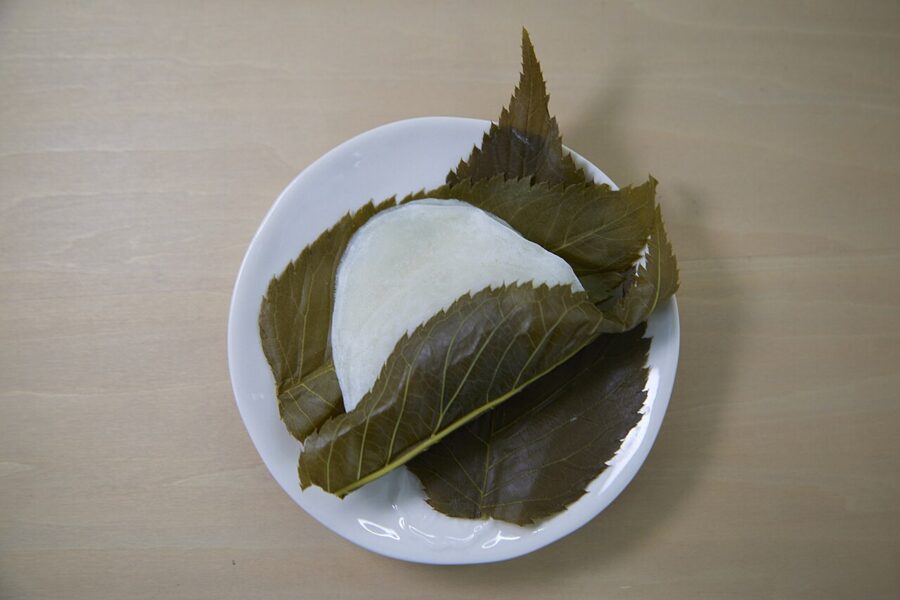
Under all of it runs 旬 (shun): the short stretch of the year when a food is at its best. If a menu writes 旬 beside a dish, order it. Spring brings bamboo shoots and cherry-leaf sweets; summer, cold noodles and grilled eel; autumn, sanma, matsutake and new rice; winter, hot pots, crab, and long 年越しそば (toshikoshi soba) on New Year’s Eve for a long life. The best times to visit Japan go season by season.


How to order
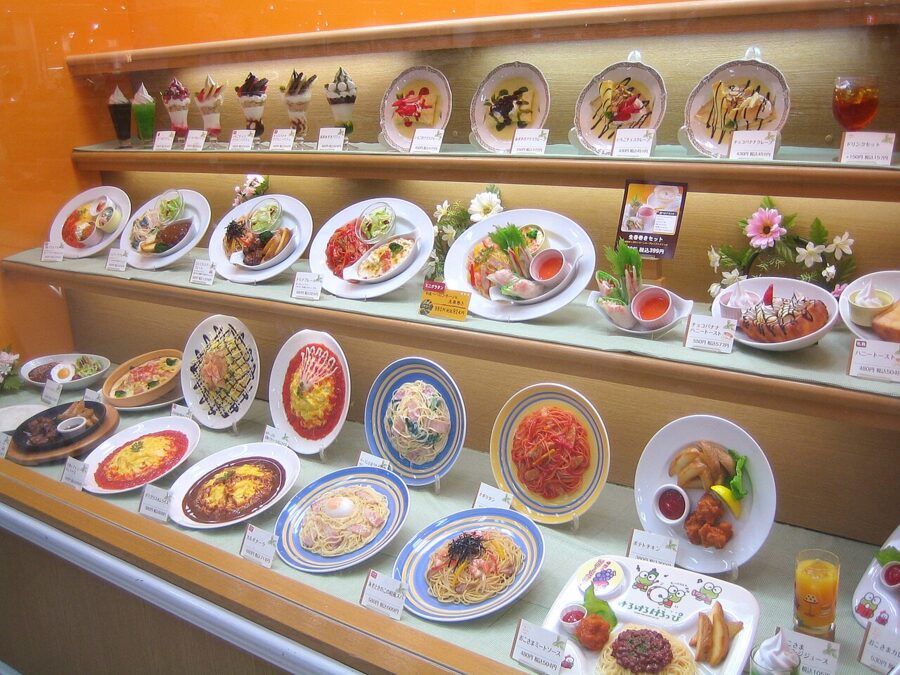
Most restaurants show the menu outside, often as 食品サンプル (shokuhin sanpuru), plastic replicas with prices, so you can point. Inside, staff call いらっしゃいませ (irasshaimase, welcome), which needs no answer, and ask how many you are; fingers are enough. Wait to be seated unless a sign or machine says otherwise.
Ticket machines
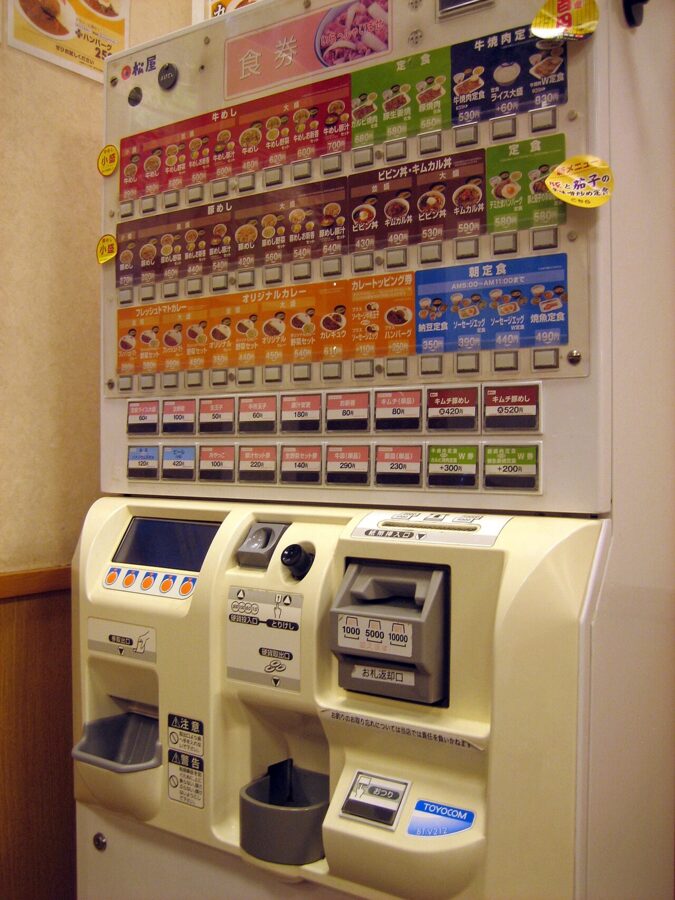
Ramen shops, beef bowl chains and station noodle counters have you order at a 食券機 (shokkenki), a ticket machine by the door: pay, press your dish, hand over the ticket. Newer machines have English and take cards and IC transit cards. Older ones take cash only and may refuse ¥10,000 notes; more on cash in Japanese currency.

Elsewhere you order from staff, a table tablet or a QR code, which brings up an English menu at most chains. To call staff, raise a hand and say すみません (sumimasen, excuse me), quite loudly.
The set meal, the towel and the free water
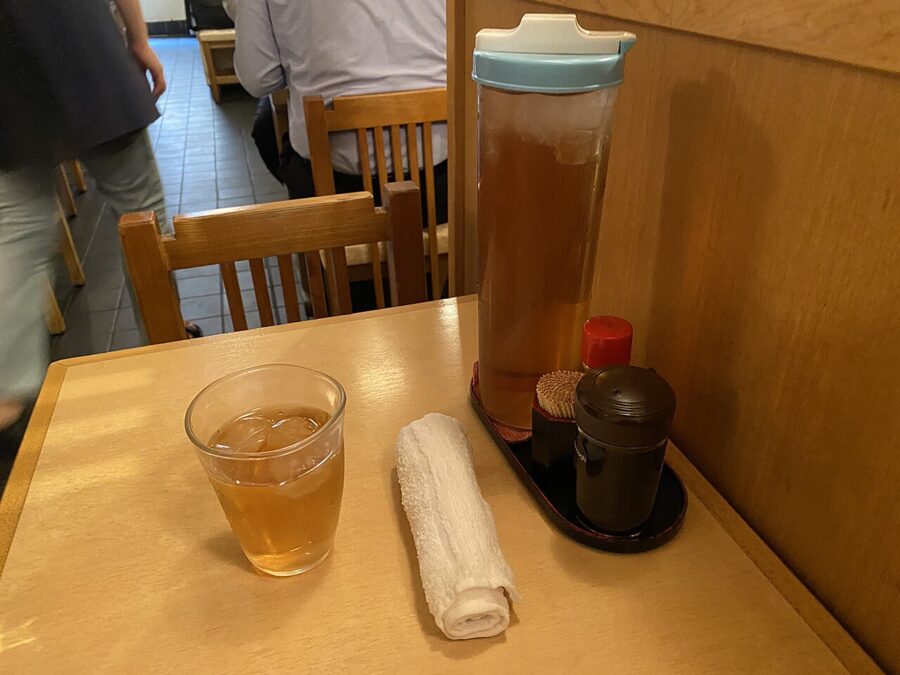
Lunch is the best value in Japan: many restaurants that are expensive at night serve a set lunch, ランチ (ranchi) or 定食 (teishoku), for a fraction of the price. First comes an おしぼり (oshibori), a wet towel for your hands, not your face or the table. Water, お冷 (ohiya), or green tea follows, free and refilled.

Paying
Nobody brings the bill unasked, because hurrying a guest is rude. Take the slip left on your table, 伝票 (denpyō), to the register by the door, or say お会計お願いします (okaikei onegaishimasu, the bill, please). Do not tip. Izakaya usually add a small seat charge with a little dish called お通し (otōshi) you did not order; that is normal.
Table manners in brief
Say いただきます (itadakimasu, “I humbly receive”) before you eat, and ごちそうさまでした (gochisōsama deshita, thank you for the meal) to the staff as you leave. The two chopstick rules that matter most come from funerals:
- Never stand chopsticks upright in rice. A bowl of rice with chopsticks stuck in it is set beside the dead at a Buddhist funeral.
- Never pass food from chopsticks to chopsticks. After a cremation, family members pass the bones that way into the urn. Put food on the other person’s plate.
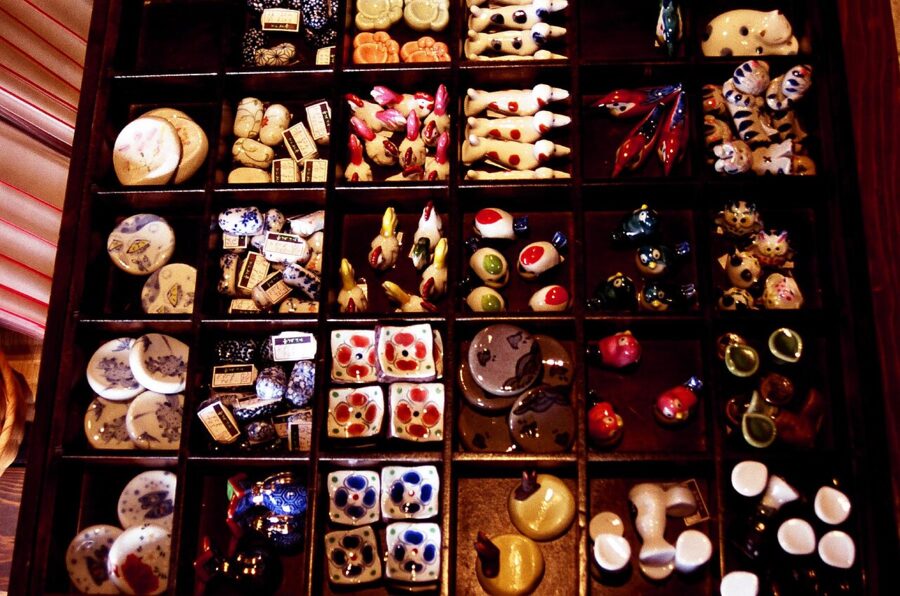
- Do not point or wave with them, and rest them on the 箸置き (hashioki), not across your bowl.
- Use serving chopsticks, 取り箸 (toribashi), for shared dishes when they are provided.

Lift your rice and soup bowls toward you as you eat, and drink miso soup straight from the bowl. Do not pour soy sauce on plain rice. Few Japanese people eat while walking, and some shopping streets ask visitors not to, so eat beside the stall you bought from.
Allergies, vegetarian and halal eating
Japan labels allergens strictly on packaged food and much less strictly in restaurants. As of April 2026, nine allergens must be labeled on packaged, processed food: shrimp, crab, walnut, cashew (the newest), wheat, buckwheat, egg, milk and peanut. Twenty more, including soybeans, sesame, beef, pork and gelatin, are recommended but voluntary. Restaurants are outside those rules, though many chains publish allergen charts.
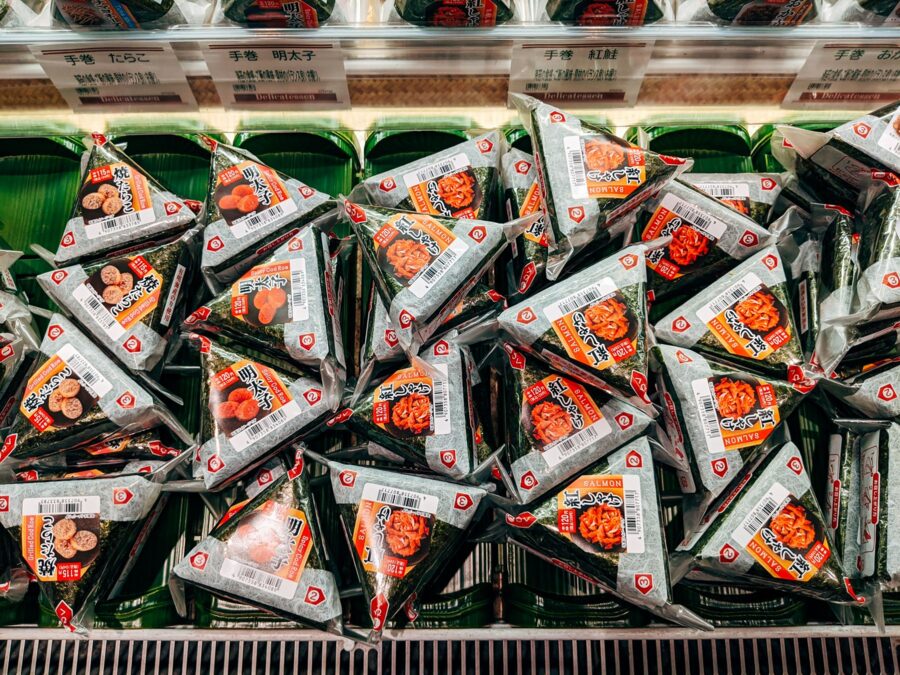
Buckwheat needs a warning: many noodle shops boil udon and soba in the same water. Fish hides in stock and wheat in soy sauce. For a serious allergy, show a card in Japanese before ordering; the sentence is 〇〇アレルギーがあります (… arerugī ga arimasu, I have a … allergy). The ambulance number is 119, as covered in traveler safety.
For vegetarians, the problem is dashi, which is in soups, broths and sauces. Japan’s tourism organization notes in its vegetarian and vegan guide that “vegetarian” is understood loosely, so name what you avoid: 肉、魚、出汁が食べられません (niku, sakana, dashi ga taberaremasen, I can’t eat meat, fish or fish stock). The surest meal is 精進料理 (shōjin ryōri), Buddhist temple cooking, found in Kyoto and on Mount Koya, both in Japanese vacation spots.

Japan has no single halal certification body, and JNTO’s guide for Muslim travelers points to several separate guides and restaurant directories. In ordinary cooking, watch for pork in ramen broth and gyoza, and alcohol in mirin and sake, both standard seasonings. A translation app helps with all of this; see phones and data.
What a meal costs
Consumption tax is 10% on food eaten in and 8% on takeout, which is why chains show two prices. A bill to cut the takeout and grocery rate to 1% from April 2027 had passed the lower house of the Diet by November 2026 and awaited the upper house.
| Meal | A typical cheap choice | Price, as of November 2026 |
|---|---|---|
| Breakfast | Two convenience-store onigiri | About ¥400 to ¥750 |
| Breakfast | Ryokan breakfast | Usually in the room rate |
| Lunch | Kake udon, Marugame Seimen | ¥390 from November 25 (¥440 before) |
| Lunch | Regular gyudon, Yoshinoya | ¥498 |
| Lunch or dinner | A standard bowl of ramen | Around ¥1,000; specialists ¥1,500 and up |
| Dinner | Conveyor-belt sushi, Kura Sushi | ¥110 to ¥145 a plate, by branch |
| Dinner | Ryokan kaiseki | Usually in a two-meal room rate |
Breakfast and lunch are cheap and quick; the money goes on dinner. You can eat well on noodle shops and beef bowls, or spend more on one counter sushi dinner than on a hotel room, and most people do both. For trip basics beyond the table, start with general travel information, and for the cotton robe worn to a ryokan dinner, see kimono.
Back to the doorway, then. If the noren is out, go in, say itadakimasu when the tray arrives, and gochisōsama deshita on your way past the register. Those two phrases and that curtain will carry you through more meals than any list of dishes.