
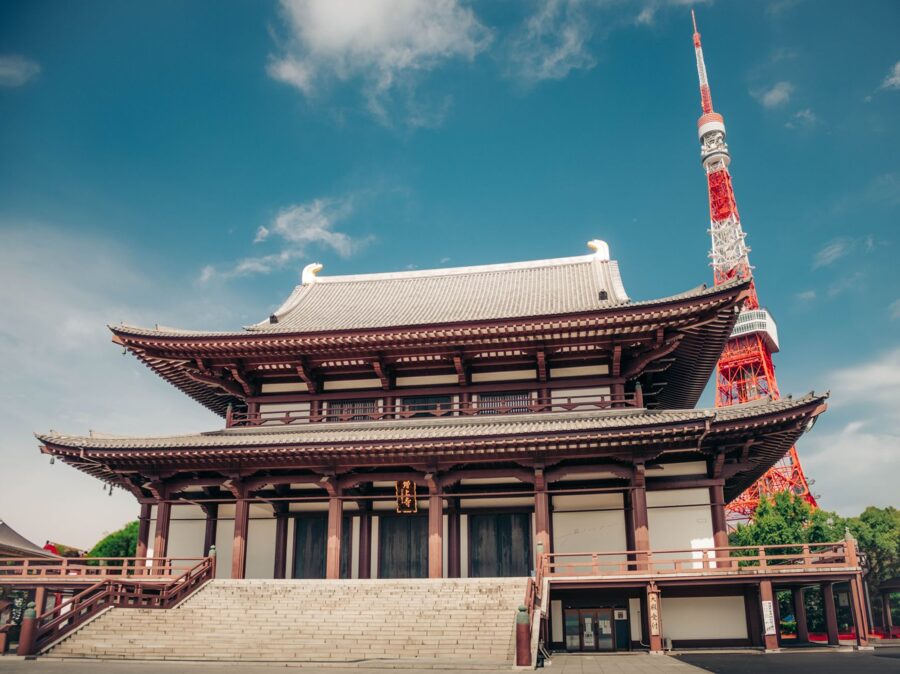
Tokyo Tower is orange and white because the law says it has to be. Japan’s aviation rules require any structure that tall to wear warning colors by day, so the tower is repainted by hand, with brushes, in the early-morning hours before it opens. The result is the most recognizable shape on the Tokyo skyline, and for ¥1,500 (about US$10) it still puts you 150 meters above the city.
Key facts Hours
- Main Deck (150 m)
- 9 a.m. to 11 p.m., last entry 10:30 p.m.
- Top Deck Tour (150 m and 250 m), online
- 9 a.m. to 10:45 p.m., last tour 10:15 p.m.
- Top Deck Tour, at the counter
- Same
- Tokyo Diamond Tour (both decks and a lounge)
- Departs on the hour, noon to 6 p.m.
On this page
- Why Tokyo Tower was built, and why it is 333 meters
- Going up: tickets, hours and the two decks
- The 600 outdoor stairs
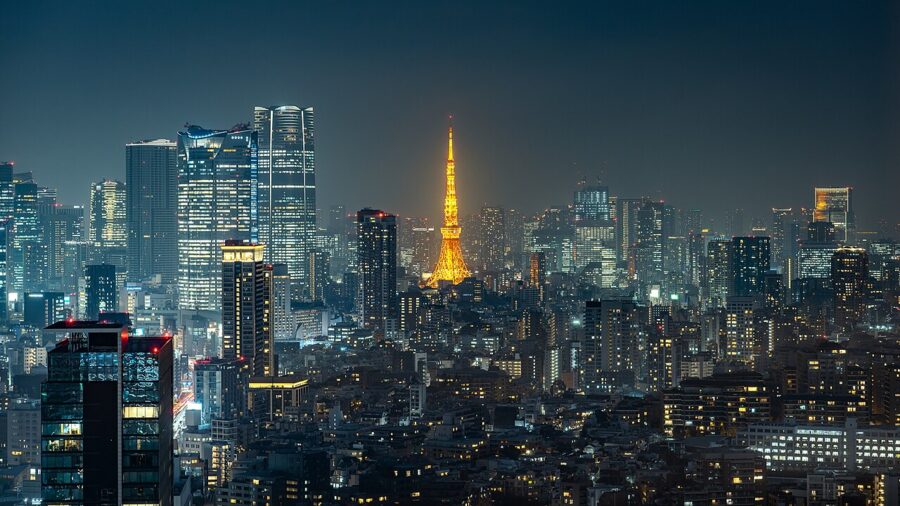
- Tokyo Tower at night
- Foot Town, the building under the legs
- Zojo-ji, the temple below
- Shiba Park
- The best places to see Tokyo Tower from the ground
- Tokyo Tower or Tokyo Skytree?
- Getting to Tokyo Tower
Its everyday name is 東京タワー (Tōkyō Tawā), the English word written in katakana. Its official name, 日本電波塔 (Nippon Denpatō, the Japan Radio Tower), says what it was built for. It no longer broadcasts television, but it has two decks, about 600 outdoor steps you can climb on weekends, a light show every night and a 600-year-old temple below.


Why Tokyo Tower was built, and why it is 333 meters
Television reached Tokyo in the 1950s, and the city needed one tall mast that every station could share. Maeda Hisakichi, a publisher known as Osaka’s newspaper king, founded Nippon Denpato in May 1957 to build it in Shiba Park. Work began that June, and the tower opened on December 23, 1958, after 543 days of construction.
The height came from a calculation. To reach the whole Kanto Plain, from Mito in the north to Numazu in the south, the mast needed to be 333 meters; that it opened in Showa 33 (1958) was a coincidence. Maeda also wanted it taller than the Eiffel Tower, and it was.
Steel, earthquakes and the 543-day build
The design came from Naito Tachu, remembered in Japan as the father of earthquake-resistant building, with the firm Nikken Sekkei. Each leg stands on deep concrete piers, and the legs are tied together underground with steel rods so their weight cannot spread them apart. It was built to flex with Japan’s earthquakes and to stand winds of about 90 meters per second.
About 4,000 tonnes of steel went into it. The best-known story is that part of the upper section was rolled from American tanks scrapped after the Korean War, when good steel was scarce in Japan. It comes from the scrap dealers of the day and is told in most Japanese histories of the tower, though the operator does not repeat it.
Orange and white by law
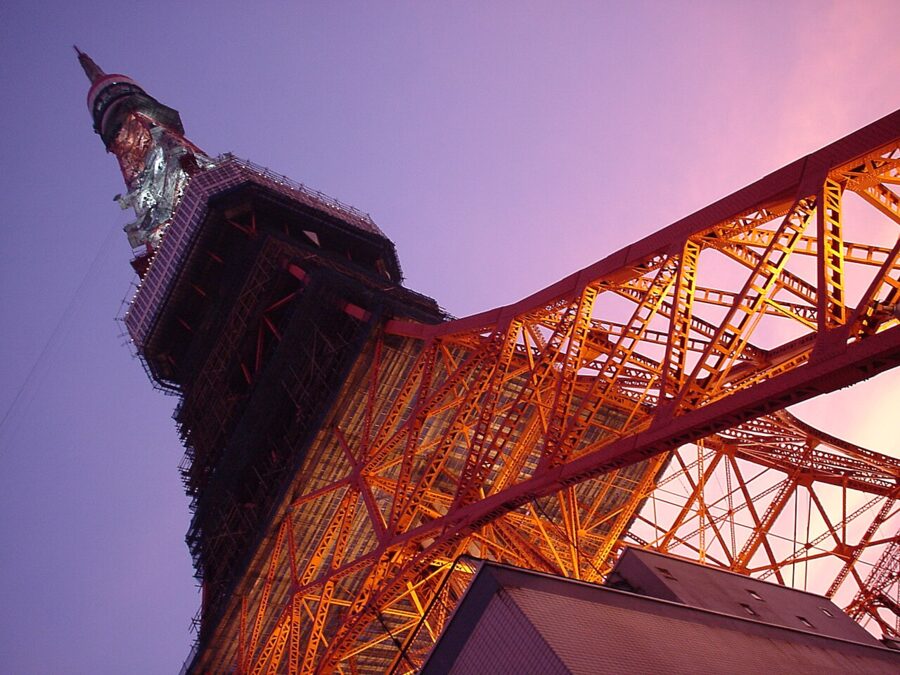

The colors are not red and white, as most people say, but international orange and white. Japan’s Civil Aeronautics Act requires structures above a set height to carry these daytime markings so pilots can see them. Above the Main Deck the tower is split into seven bands; until 1986 there were eleven.
Salt wind off Tokyo Bay fades the paint, so the tower is repainted roughly every seven years, a job that takes about a year. Painters work only from sunrise until the decks open at 9 a.m., which is why you rarely see them.
From broadcasting tower to backup
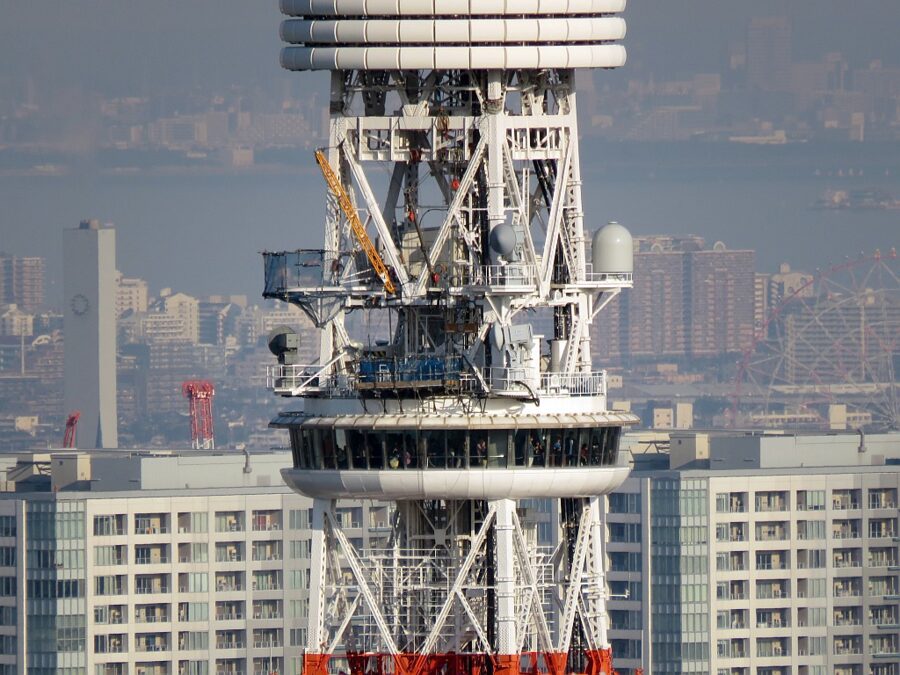

As Tokyo grew taller, the tower could no longer send a clean digital signal over all the new buildings, so the broadcasters built Tokyo Skytree, which opened in May 2012. The TV transmitters moved there on May 31, 2013. Tokyo Tower kept FM radio and a role as emergency backup, and the same year it was registered as a national Tangible Cultural Property.
Going up: tickets, hours and the two decks
There are two observation decks, or 展望台 (tenbōdai): the Main Deck at 150 meters and the Top Deck at 250 meters, reached only on a timed tour. The Top Deck Tour, which includes the Main Deck, costs ¥3,300 (about US$21) online or ¥3,500 (about US$23) at the counter. These are the official fees and hours as of November 2026:
| Ticket | Hours | Adult | High school | Child | Age 4 to school age |
|---|---|---|---|---|---|
| Main Deck (150 m) | 9 a.m. to 11 p.m., last entry 10:30 p.m. | ¥1,500 | ¥1,200 | ¥900 | ¥600 |
| Top Deck Tour (150 m and 250 m), online | 9 a.m. to 10:45 p.m., last tour 10:15 p.m. | ¥3,300 | ¥3,100 | ¥2,100 | ¥1,500 |
| Top Deck Tour, at the counter | Same | ¥3,500 | ¥3,300 | ¥2,300 | ¥1,700 |
| Tokyo Diamond Tour (both decks and a lounge) | Departs on the hour, noon to 6 p.m. | ¥7,000 | ¥6,500 | ¥4,700 | ¥3,300 |
The child rate covers elementary and junior high school students, and children under 4 go free. The Diamond Tour, at ¥7,000 (about US$45) for an adult, is limited to 70 people a day.
The Main Deck at 150 meters
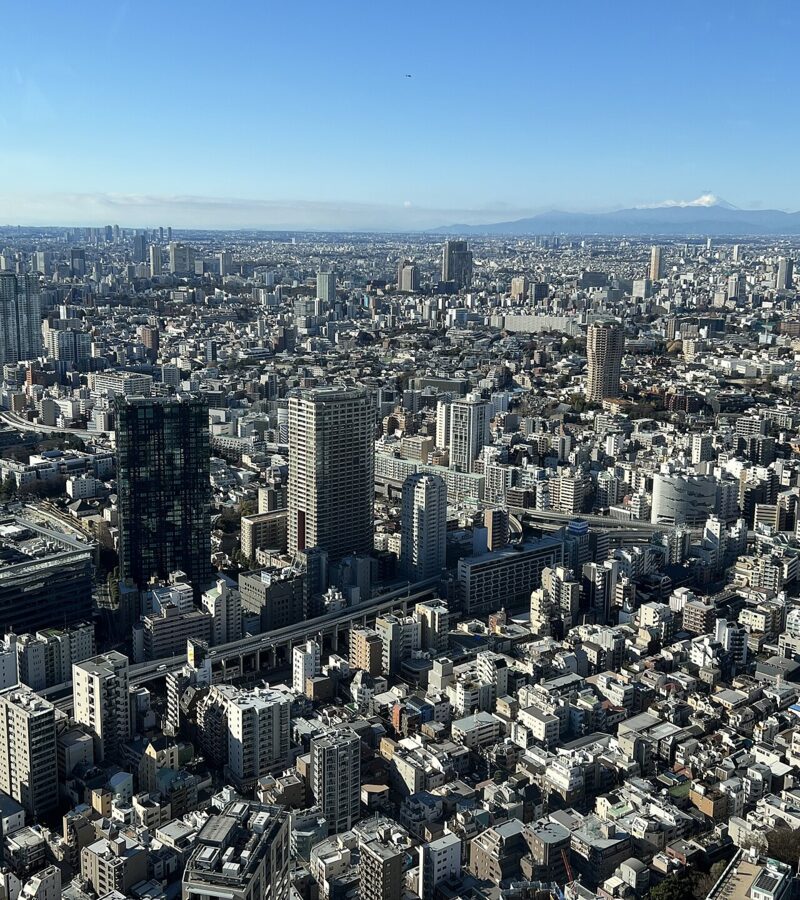
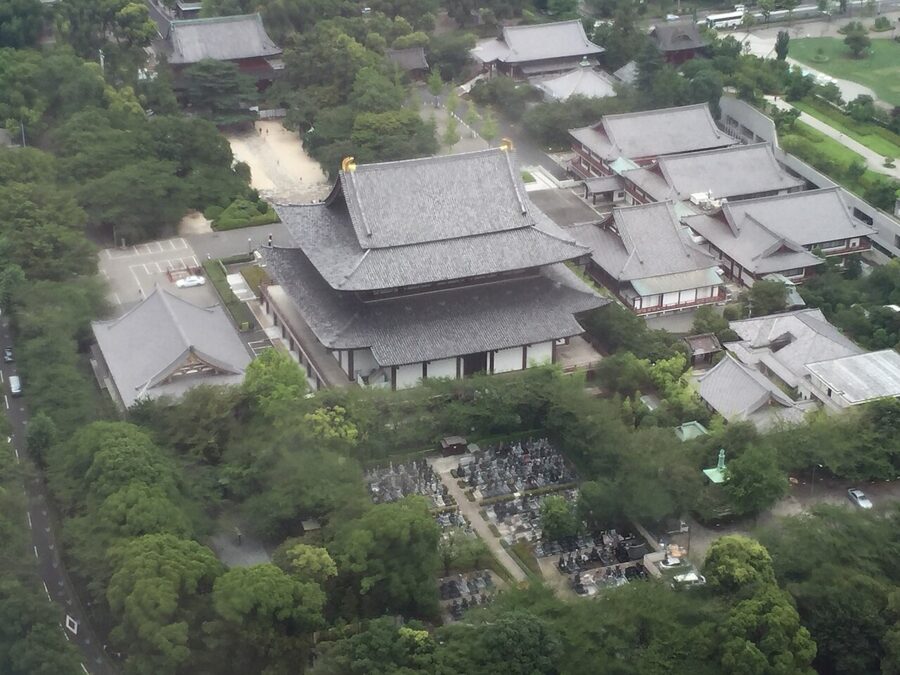
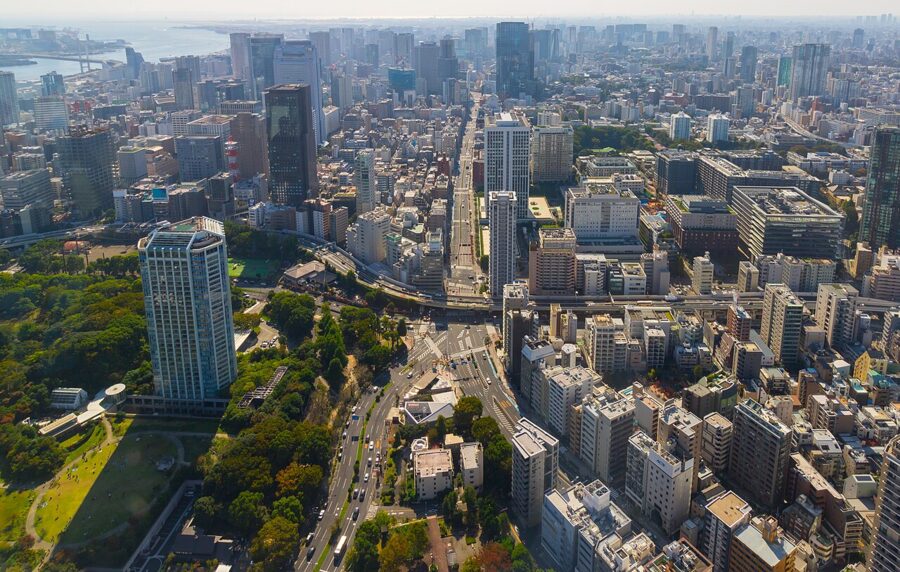
The elevator lets you out on the upper level of the two-story Main Deck. The view has real depth: across the towers of Shiodome and Toranomon, down onto the temple roofs of Zojo-ji, and on a clear morning west to Mount Fuji and east to the Boso Peninsula. Fuji shows most often in winter, worth knowing when you choose among the best times to visit Japan.


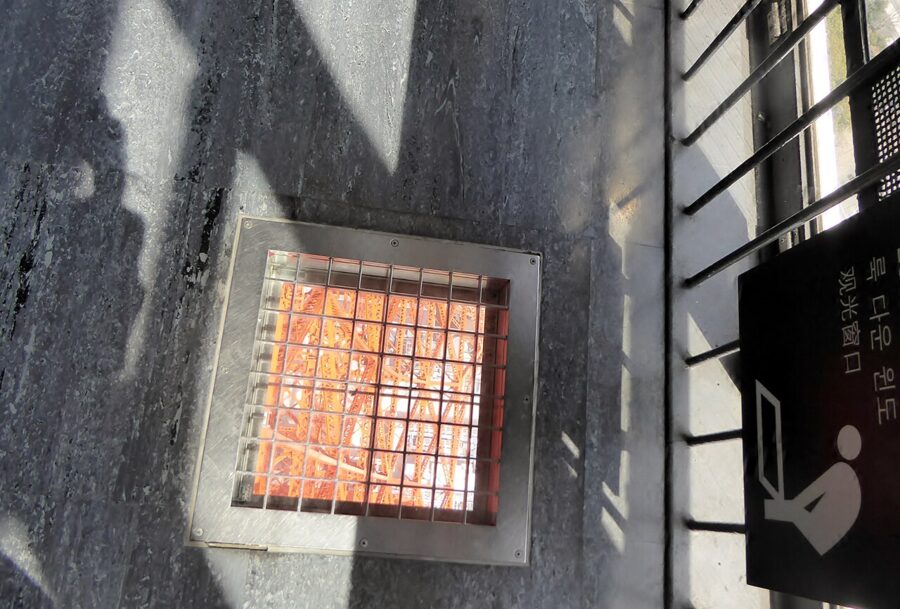
The lower level holds the Skywalk Window, a glass floor panel over a 150-meter drop, along with Café La Tour and the down elevators. The upper level has the official shop, the gate for the Top Deck and Tower Daijingu, a small Shinto shrine 150 meters off the ground.
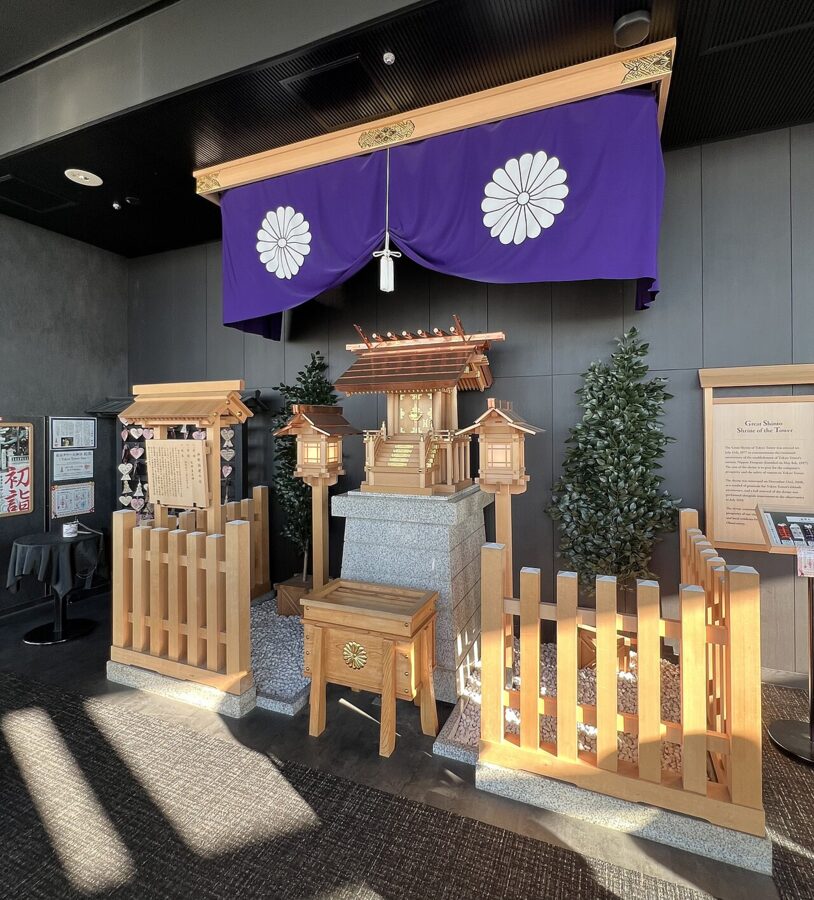

The Top Deck Tour at 250 meters
The Top Deck began as a maintenance platform for the antennas and opened to the public in 1967. Today the Top Deck Tour runs in 15-minute slots from 9 a.m., with the last group going up at 10 to 10:15 p.m. You ride to the Main Deck, show your ticket at the Top Deck gate at your slot time and change elevators.
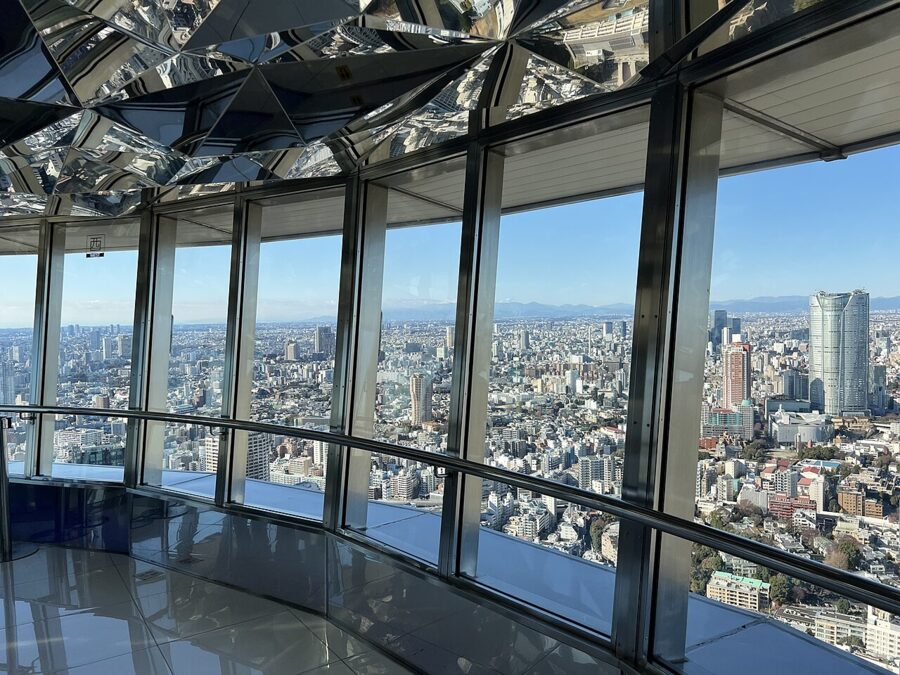

Up top, geometric mirrors and LED lights wrap a 360-degree window, and the tour includes a drink and a souvenir photo card. I think the Top Deck is worth the extra money on a clear evening and not on a hazy afternoon, when the Main Deck gives nearly the same view.

Buying tickets
Every ticket is sold at the counter on the first floor of Foot Town, the building between the legs, and online. Online tickets take credit cards only; pay at the counter if you want cash, and see the Japanese currency guide for how far yen notes and IC cards go elsewhere. A Main Deck ticket is good for one entry.
For both a day and a night view, the 1DAY Pass costs ¥2,700 (about US$17) and lets you return to the Main Deck as often as you like that day. It is sold at the counter from 9 a.m. to 7:30 p.m., and staff stamp the back of your hand.
The 600 outdoor stairs
On Saturdays, Sundays and national holidays you can walk up instead. The open-air stairs, or 外階段 (sotokaidan), climb about 600 steps from the roof of Foot Town to the Main Deck in 12 to 13 minutes. As of November 2026 the way up is open from 9 a.m. to 4 p.m.
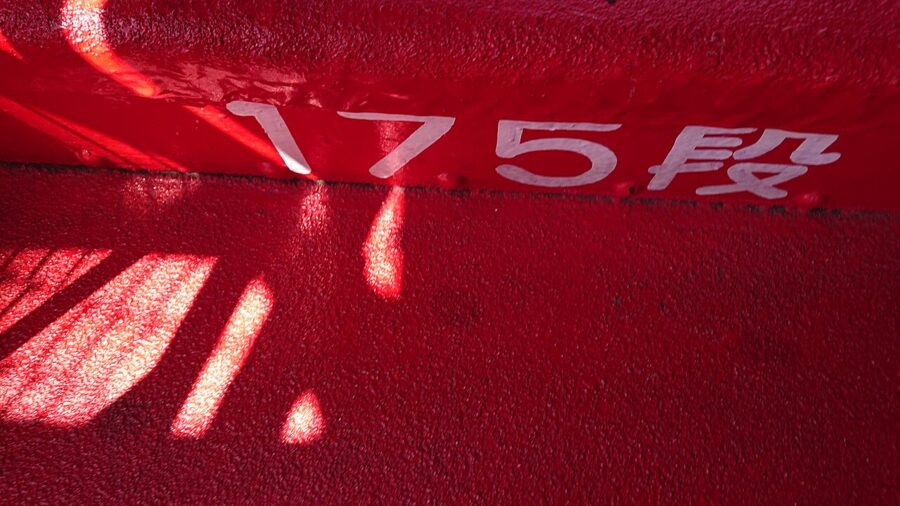

The climb needs a normal Main Deck ticket. What you get for the effort is the view opening out through the steel and, at the top, a “Noppon Official Stair Climber Certificate” that is not sold anywhere. Noppon is the tower’s mascot, twin brothers in blue and red overalls.
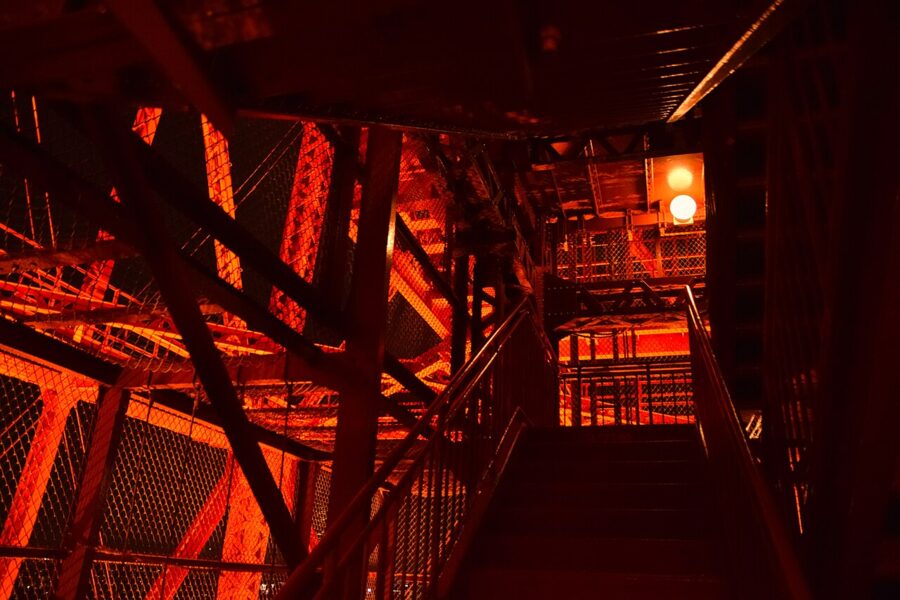

The way down is a separate staircase, open daily from 9 a.m. to 8 p.m. Both close in rain and storms and when a heatstroke alert is in force, common in summer. You cannot switch to the elevator halfway, so carry water.
Tokyo Tower at night
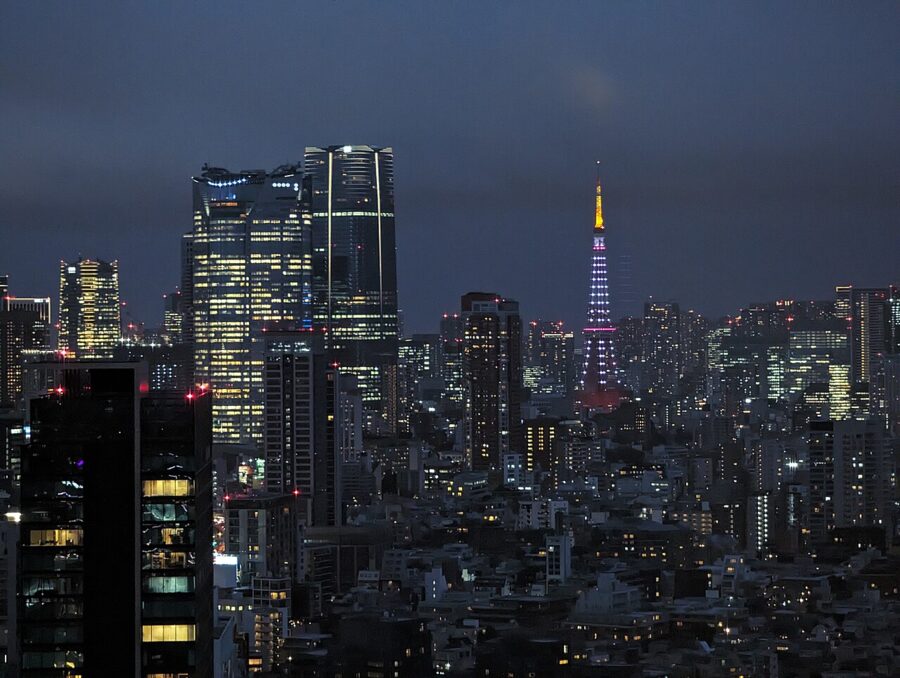
The tower is lit from sunset to midnight in one of two schemes, the Landmark Light and the Infinity Diamond Veil. A Japanese story says couples who watch the lights go out at midnight together will be happy, and people gather under the legs to try it.
The Landmark Light
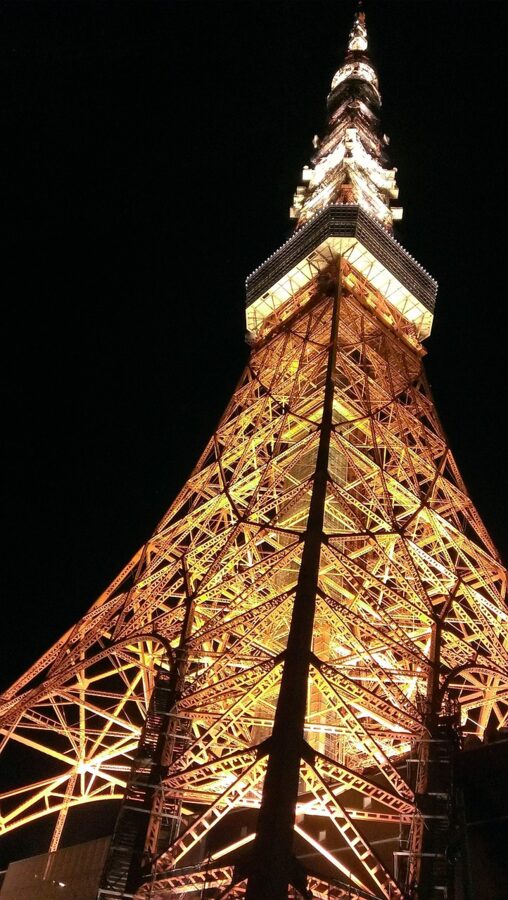
The Landmark Light has used the same 180 floodlights since January 1, 1989. From July 7, the Tanabata star festival, white metal halide lamps give a cool summer look; from early October warm orange sodium lamps take over for the rest of the year.
The Infinity Diamond Veil and special colors
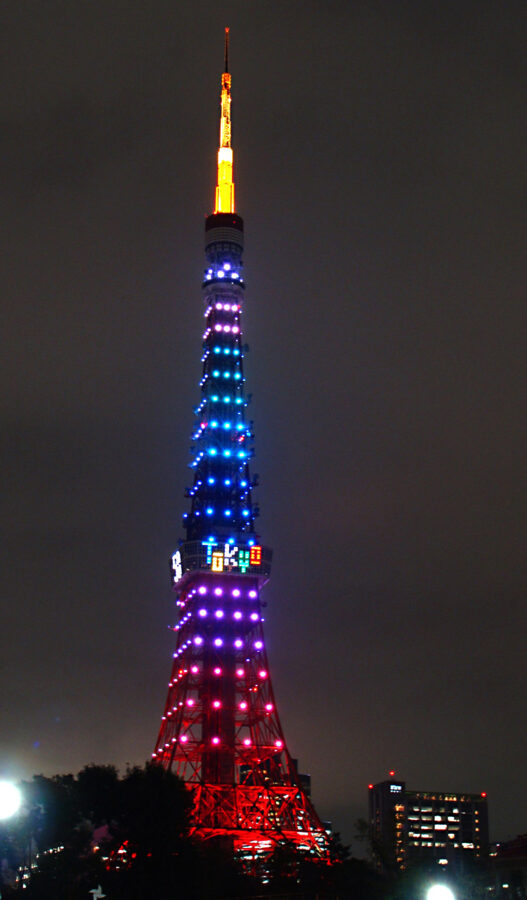

The Infinity Diamond Veil, running since 2019, uses 268 LED lights on 17 levels. It comes on every Monday and Thursday from 8 to 10 p.m. in that month’s color, with two designs swapping every 30 minutes. It also lights up for events and national days, so you may see colors not on this list:
| Month | Color | Month | Color |
|---|---|---|---|
| January | Reborn Yellow | July | Sea Blue |
| February | Lovely Red | August | Mountain Green |
| March | Cherry Pink | September | Autumn Purple |
| April | Fresh Green | October | Sunset Orange |
| May | Sky Blue | November | Maple Red |
| June | Wisteria Violet | December | Forever Green |
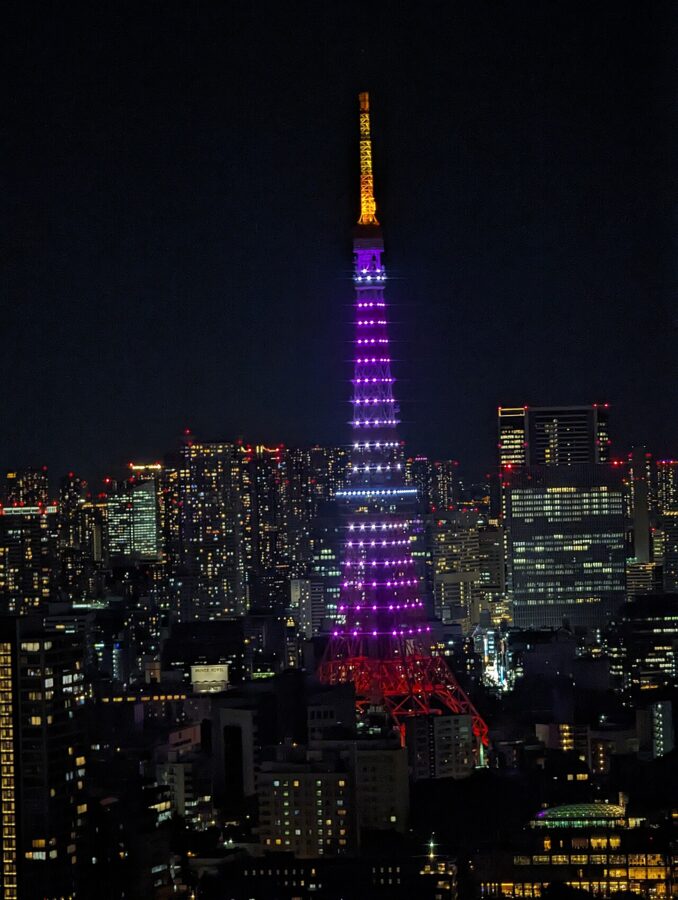
Whichever scheme is on, watch at the top of each hour between sunset and midnight. For two minutes, rings of pure white light called the Diamond Tiara and Diamond Choker sparkle above the two decks.
Foot Town, the building under the legs
Foot Town is the five-story building between the tower’s legs, and you pass through it whether you buy a ticket or not. The current floor guide puts the ticket counter, coin lockers, Main Deck elevators and a small history exhibit on the first floor.
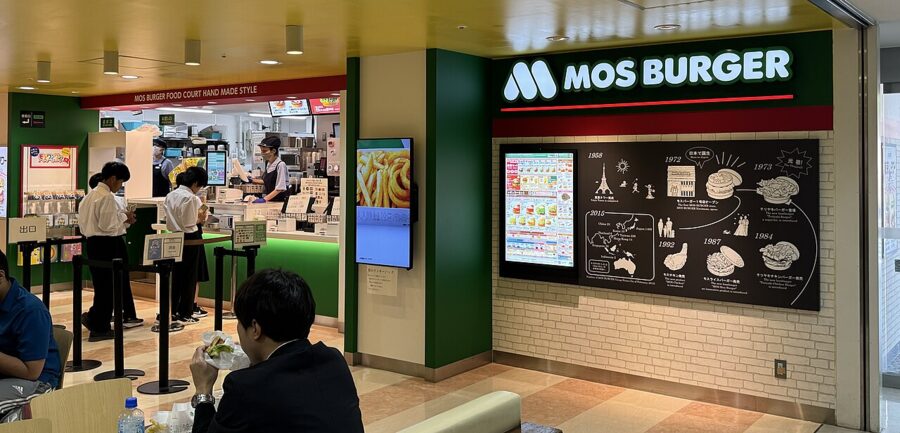
The second floor holds the food court, souvenir shops and a Minato City tourist information center. The third floor has the official shop and a gallery, the fifth floor is a sumo entertainment venue, and the roof is where the stairs start. The One Piece theme park that once filled the upper floors closed in 2020.
Look for restrooms marked だれでもトイレ (daredemo toire), “anyone’s toilet”, the accessible kind, including one on the Main Deck. The first word is in hiragana; if the buttons inside puzzle you, the Japanese toilet guide explains them.
Zojo-ji, the temple below
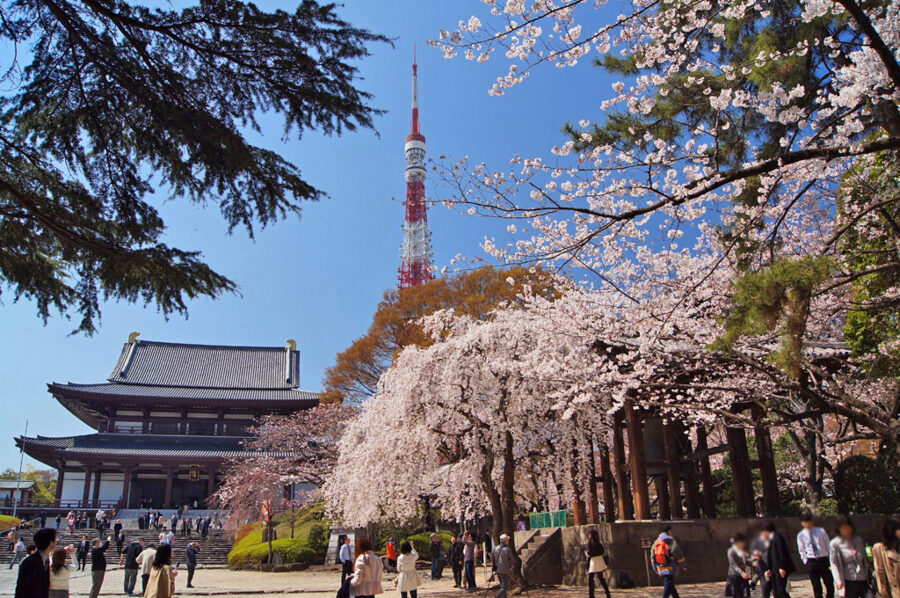
Zojo-ji was here long before the tower. Founded in 1393 and moved to this spot in 1598, it became the family temple of the Tokugawa shoguns and a head temple of the Jodo (Pure Land) school of Buddhism. Most of it burned in the air raids of 1945; the main hall you see today dates from 1974.

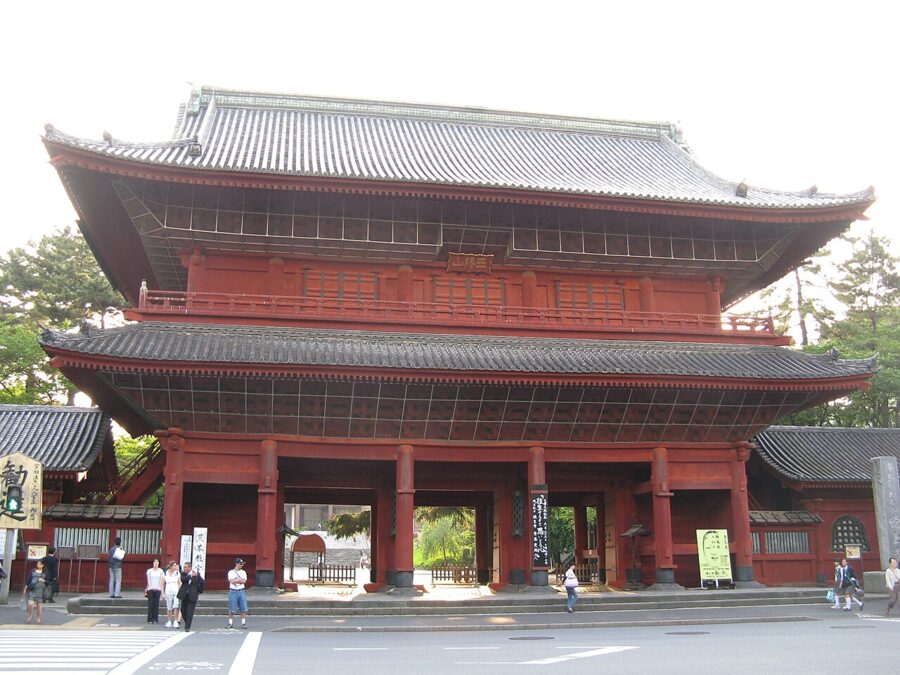
The great gate, the Sangedatsumon of 1622, is the only building left from the temple’s Edo-period peak and an Important Cultural Property. As of November 2026 it is under a restoration the temple expects to finish in June 2032. The temple’s great bell, cast in 1673, stands 3.33 meters high, a number the tower would echo.

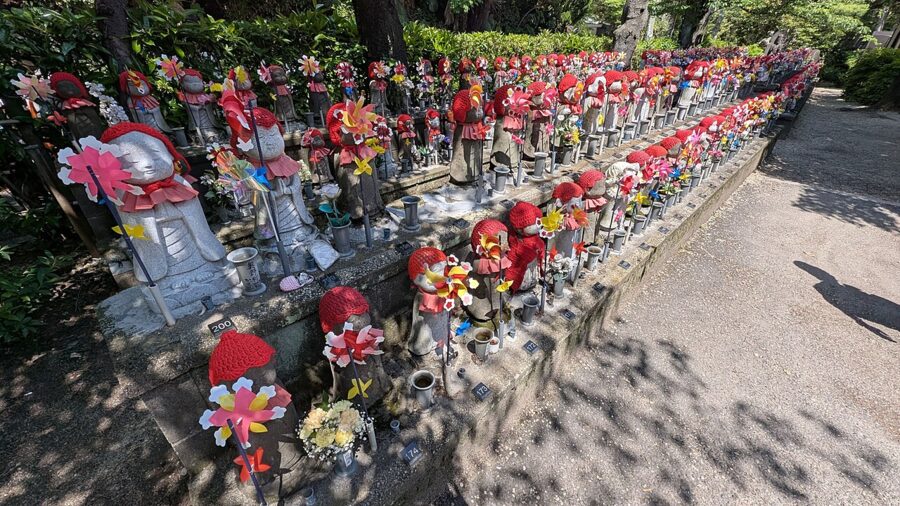
In the grounds stand rows of small stone Jizo statues in red caps, each with a pinwheel, placed since 1975 by families praying that their children grow up safe and healthy. Please leave the pinwheels and knitted hats as they are.

Below the main hall, the Treasures Gallery shows a 1:10 model of a shogun’s mausoleum made for the 1910 Japan-British Exhibition in London. It opens weekdays 11 a.m. to 3 p.m. and weekends and holidays 10 a.m. to 4 p.m., closes on Tuesdays, and costs ¥700 (about US$5). The Tokugawa shoguns’ graveyard is closed until December 1, 2026 while its ticket booth is rebuilt.
Shiba Park
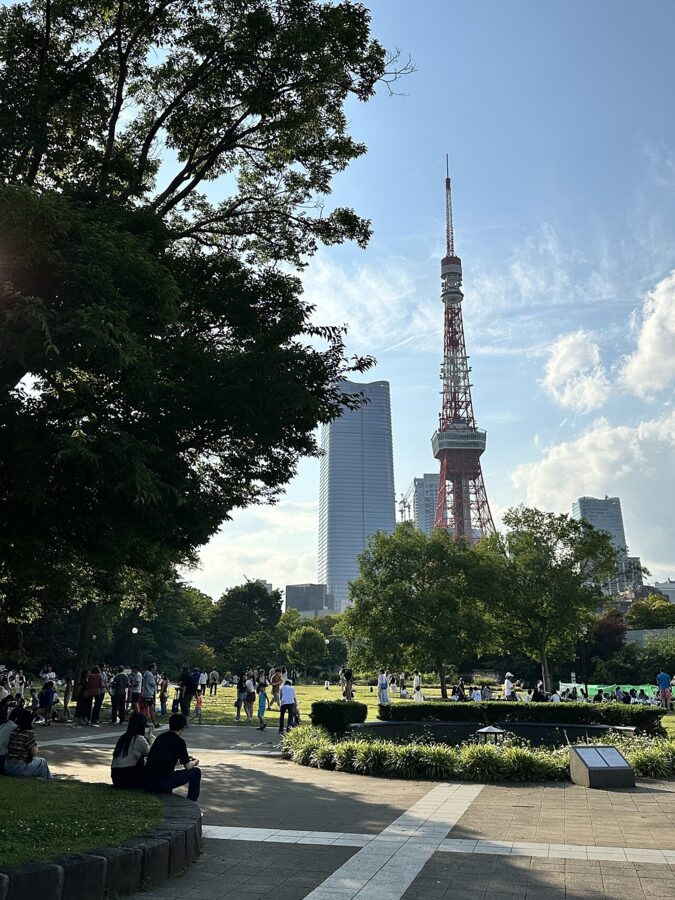
Shiba Park was laid out in 1873 as one of Tokyo’s first five public parks, and at first it took in the temple grounds. Today it is a free belt of green around Zojo-ji, with the tower at its western edge.
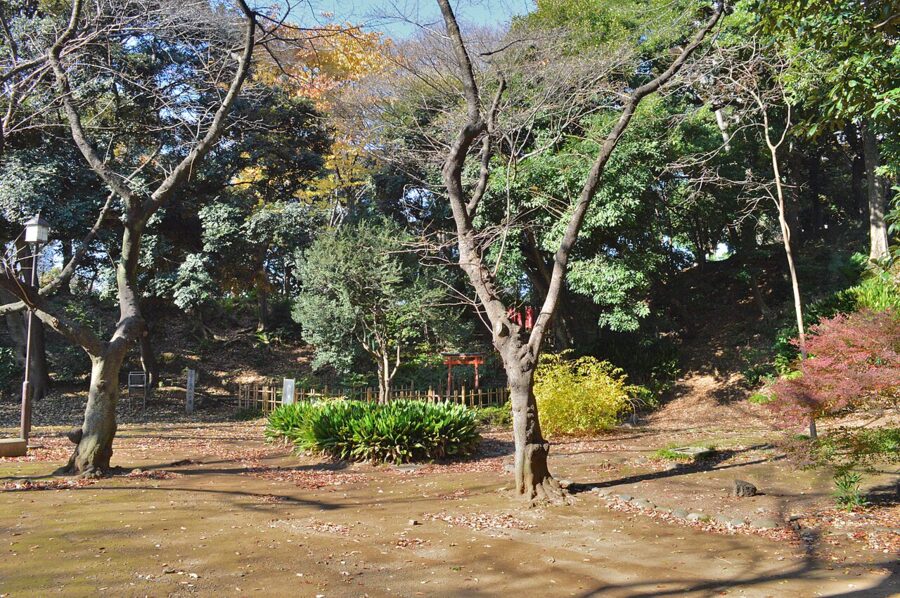
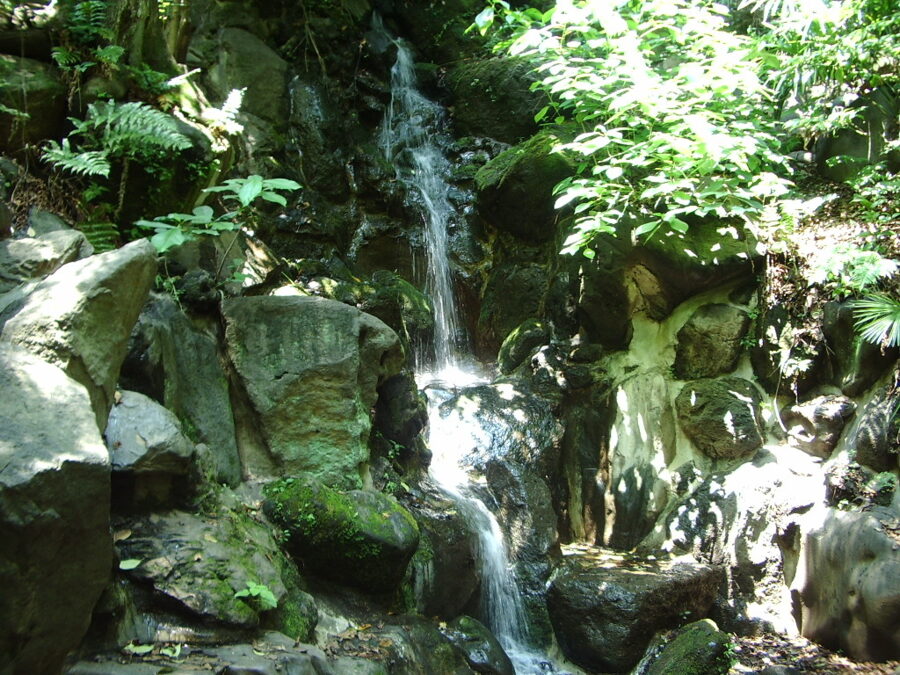
Two corners are worth finding: Shiba Maruyama Kofun, a burial mound you can walk across, and Momijidani, the maple valley, with a small waterfall that turns red in late autumn. The paths on the park’s eastern side face the tower head-on.

The best places to see Tokyo Tower from the ground
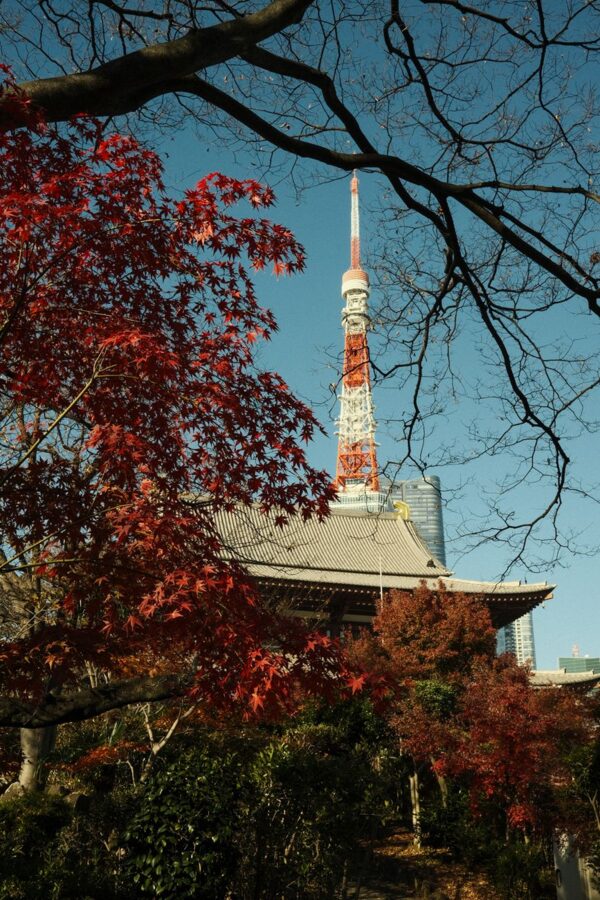
The best views of Tokyo Tower are free. Start at Zojo-ji, where the main hall’s steps put the temple roof and the tower in one frame and the Jizo garden gives a quieter version. Then walk the eastern paths of Shiba Park, where the tower fills the sky above the trees.
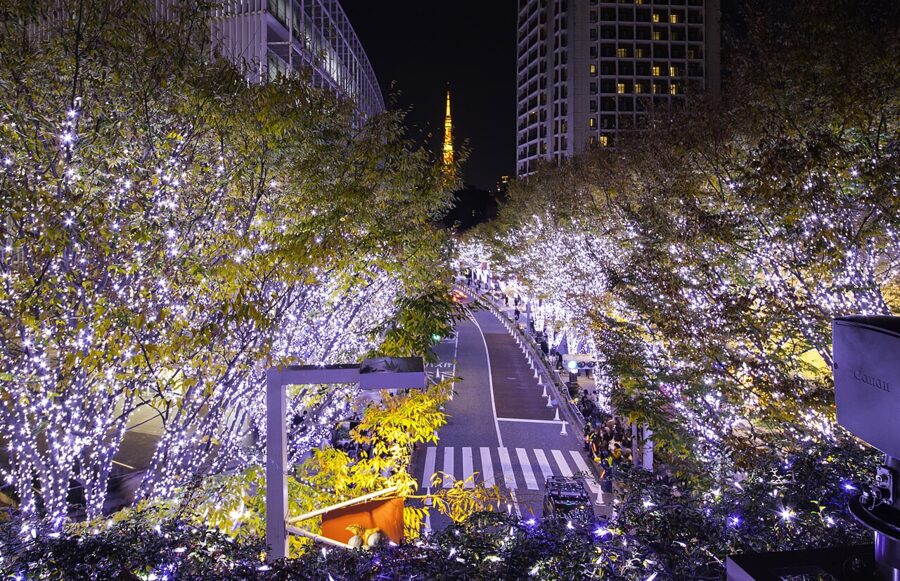
Roppongi has two classic angles. Keyakizaka street, below Roppongi Hills, lines up with the tower at its far end, and before Christmas its trees are hung with lights. Above it, Tokyo City View, the paid observatory on the 52nd floor of Mori Tower, opens 10 a.m. to 10 p.m. and looks across at the tower from the west.

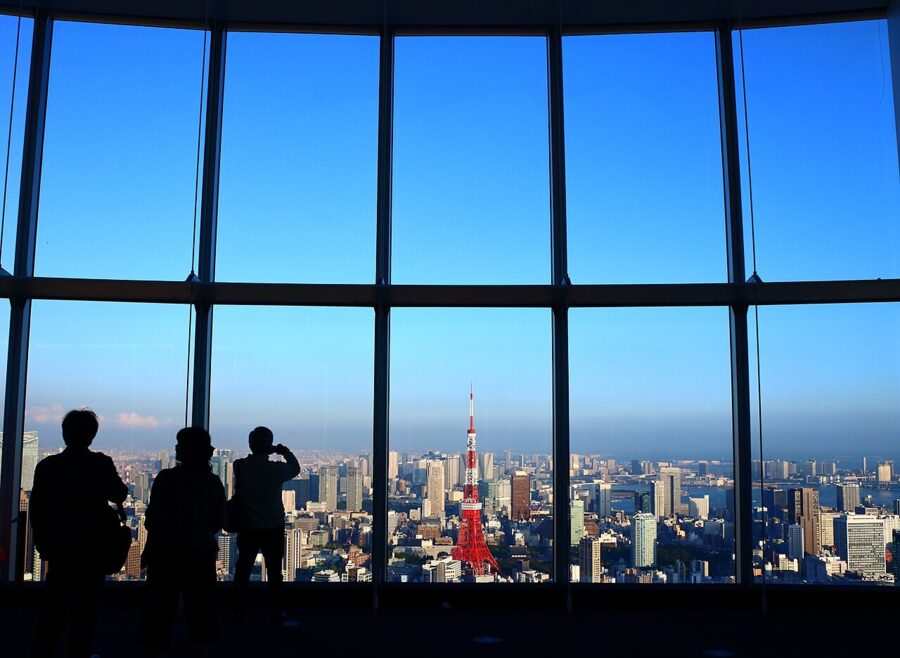

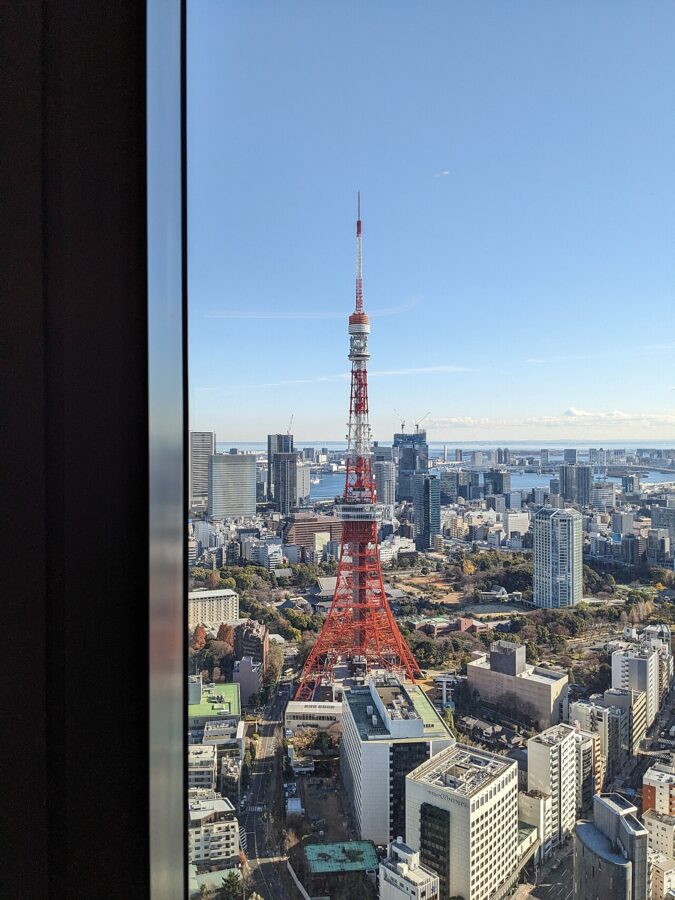
The newest angle is Azabudai Hills, which opened in November 2023 beside the tower. Its Mori JP Tower, about 325 meters and the tallest building in Japan, stands close enough that the two seem to share the sky.

Tokyo Tower or Tokyo Skytree?
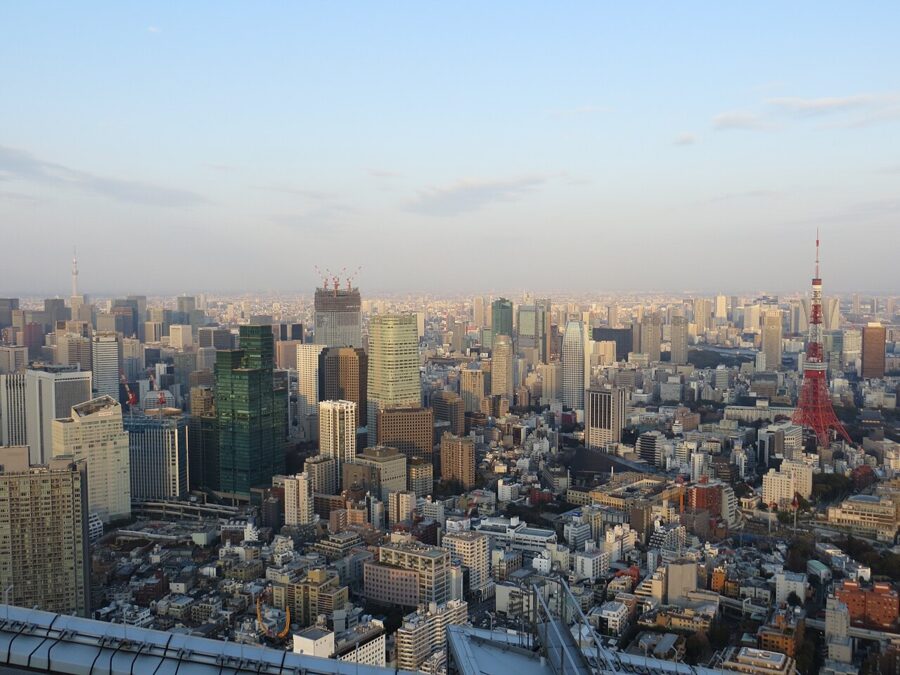
Tokyo Skytree, opened in 2012 in Oshiage near Asakusa, is 634 meters tall, with decks at 350 and 450 meters. The Skytree’s tickets start at ¥1,800 (about US$12) online for the lower deck and ¥3,000 (about US$19) for both, vary by date, and cost ¥500 (about US$3) more at the counter.
| Tokyo Tower | Tokyo Skytree | |
|---|---|---|
| Height | 333 m (1958) | 634 m (2012) |
| Decks | 150 m and 250 m | 350 m and 450 m |
| Cheapest deck ticket (adult) | ¥1,500 | From ¥1,800 online |
| Neighborhood | Shiba, Minato: Zojo-ji, Roppongi | Oshiage, Sumida: Asakusa, the Sumida River |
The Skytree shows you more of the Kanto Plain. Tokyo Tower is lower and in the middle of the city, so you look into the streets rather than over them, and the Skytree is part of the view. My pick: the Skytree for scale, paired with Asakusa, and Tokyo Tower at night for the city lights and the walk through Shiba.
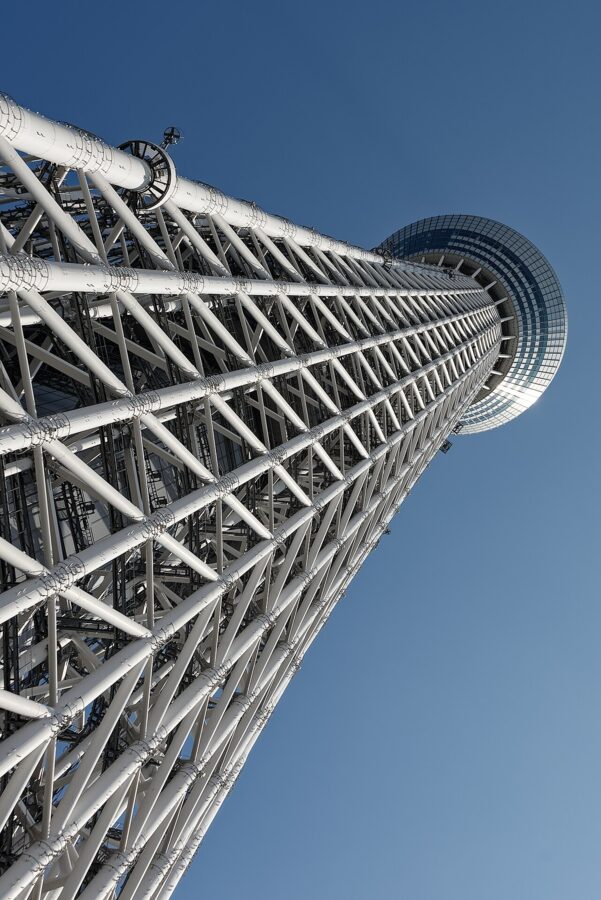

Either makes an easy half-day; the Japanese vacation spots guide has ideas beyond Tokyo, and Tokyo DisneySea is the other big day out families ask about.
Getting to Tokyo Tower
The tower is in Shiba Park, Minato ward, with five subway stations and one JR station in walking distance. Exits and times from the access page:
| Station | Line | Exit | Walk |
|---|---|---|---|
| Akabanebashi | Toei Oedo Line | Akabanebashi exit | 5 minutes |
| Onarimon | Toei Mita Line | A1 | 6 minutes |
| Kamiyacho | Tokyo Metro Hibiya Line | 1 | 7 minutes |
| Shibakoen | Toei Mita Line | A4 | 10 minutes |
| Daimon | Toei Asakusa and Oedo lines | A6 | 10 minutes |
| Hamamatsucho | JR Yamanote and Keihin-Tohoku lines | North exit | 15 minutes |
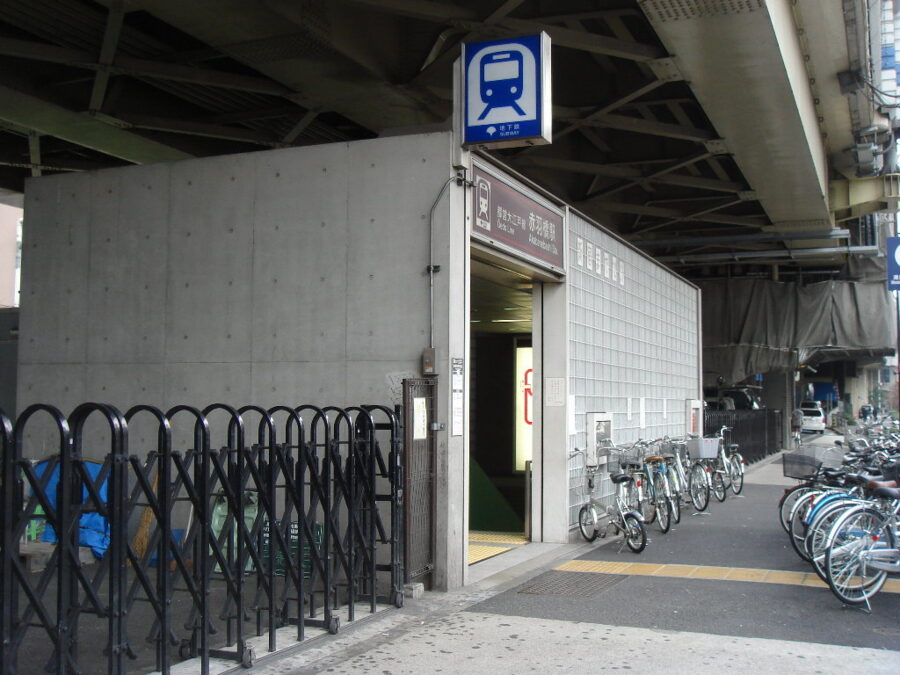

Akabanebashi is closest, but I prefer Daimon or Hamamatsucho and walking in past Zojo-ji: the tower grows ahead of you the whole way. Any IC card pays the fare on all these lines. From Tokyo Station, Tokyu bus route 東98 runs from the Marunouchi South exit to the Tokyo Tower stop in about 20 minutes.
Look for 出口 (deguchi, exit) when you come up from the subway, then look up. Nobody needs directions after that: the orange and white shows from most of Shiba, exactly as the law intended.