
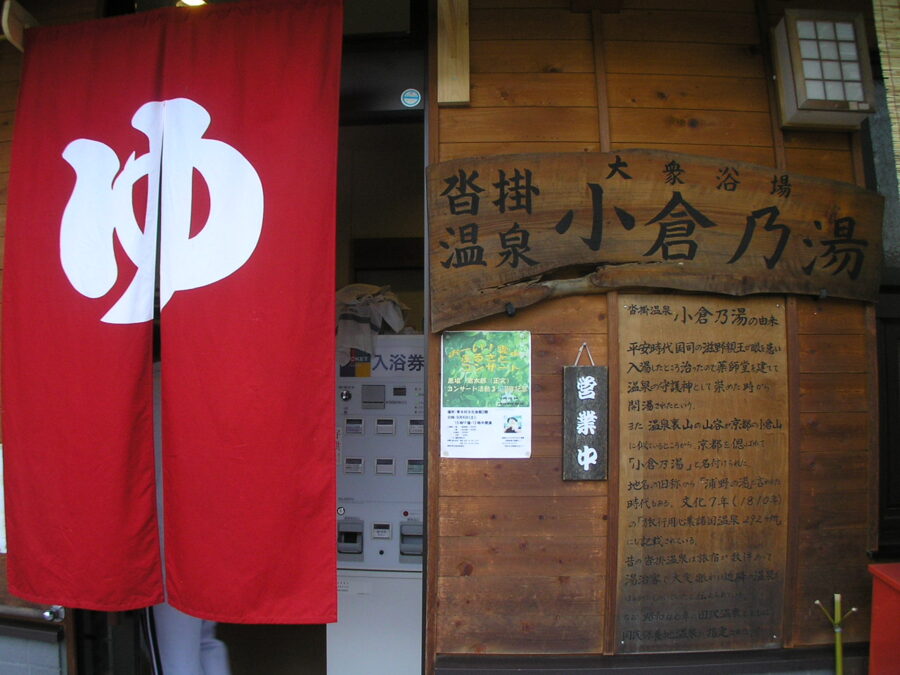

Some Japanese bathhouses hang a single character over the door, ゆ, and once you can read it you know what waits behind the cloth: hot water. That one curl is hiragana, the rounded script every Japanese child learns first, and it is the fastest way into the writing on Japan’s signs.
Key facts Script
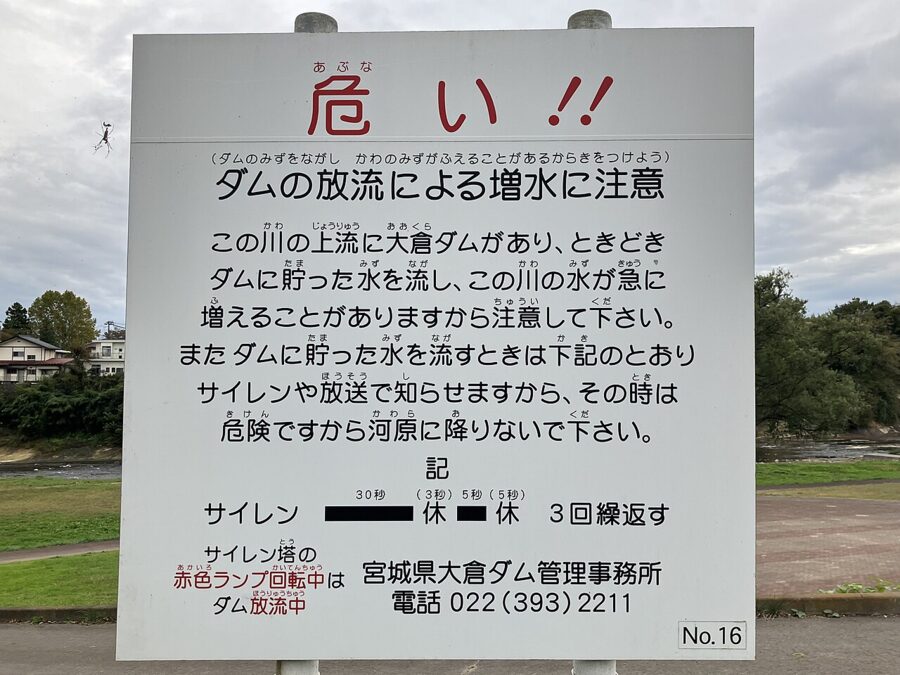
- 足元
- kanji
- に
- hiragana
- ご
- hiragana
- 注意
- kanji
- 下さい
- kanji + hiragana
There are 46 basic hiragana, each one a syllable: か is ka, き is ki, and so on. Most adults can learn them in a week of short sessions. You will not read whole signs, because those lean on kanji, but you will read the parts that tell you how a word sounds, and plenty of words written in hiragana alone.

I would learn hiragana before any phrases. A phrasebook gives you romaji, the Latin-letter spelling, but the country around you is not written in romaji, and hiragana is the bridge between the two.
What hiragana does on a Japanese sign
Written Japanese mixes three scripts, often in one line. Kanji (漢字), the characters borrowed from Chinese, carry the meaning: nouns and the stems of verbs and adjectives. Katakana (カタカナ), the angular set, spells loanwords like トイレ (toire, toilet) and adds emphasis, the way English uses italics. Hiragana does the rest.
Hiragana writes the grammar: the particles that mark who did what, and the endings that make a verb past or polite. It also writes words whose kanji are rare, and everything for children. Japan’s list of kanji for general use runs to 2,136 characters, taught across the school years, and until a child knows them, hiragana carries the load.
One sign taken apart
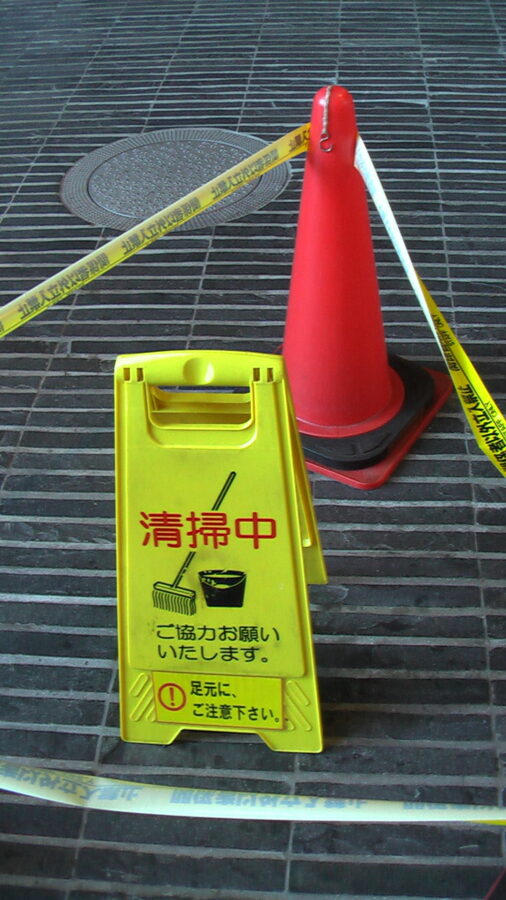

That bottom line, 足元に、ご注意下さい (ashimoto ni, go-chūi kudasai), splits like this:
| Piece | Script | Reading | Job |
|---|---|---|---|
| 足元 | kanji | ashimoto | at your feet |
| に | hiragana | ni | particle: at, to |
| ご | hiragana | go | polite prefix |
| 注意 | kanji | chūi | care, attention |
| 下さい | kanji + hiragana | kudasai | please |
Almost every sign works this way: kanji for the nouns and stems, hiragana for the joints. Hiragana that finish a kanji word, like the さい in 下さい, are called okurigana (送り仮名), which is why 入口 and 入り口 (iriguchi, entrance) are both correct.
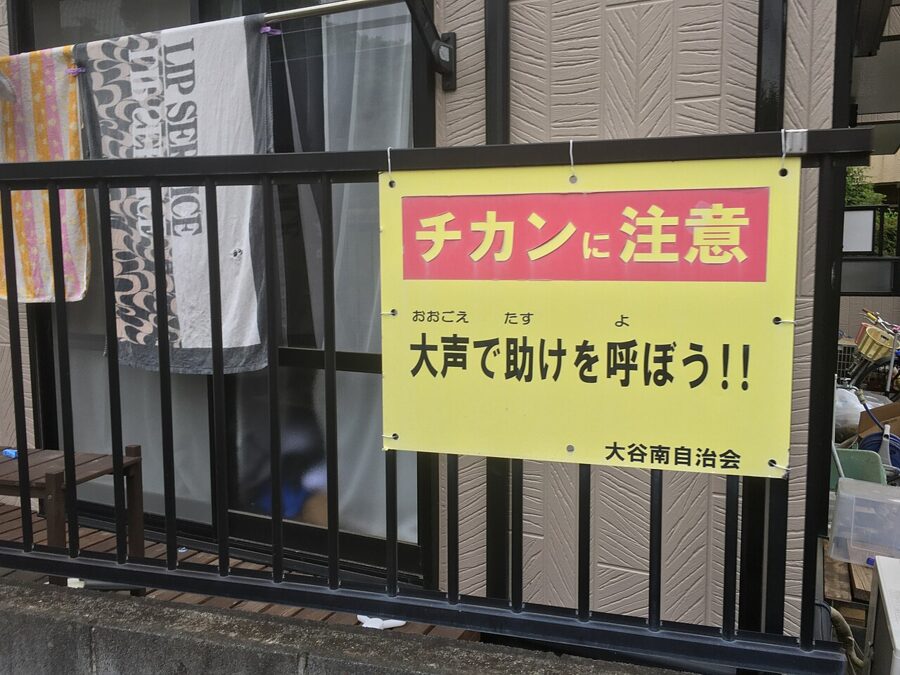

Furigana: hiragana as a reading aid
Small hiragana printed above or beside a kanji are furigana (振り仮名). They give the reading without changing the text, and they are a learner’s best friend. Children’s books carry them over every kanji, and so do signs meant for children, visitors, or anyone facing an unusual name.
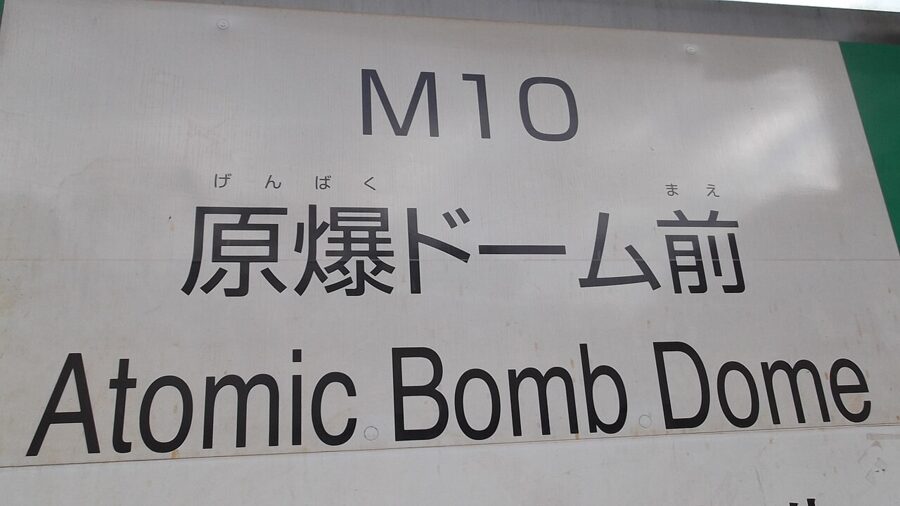

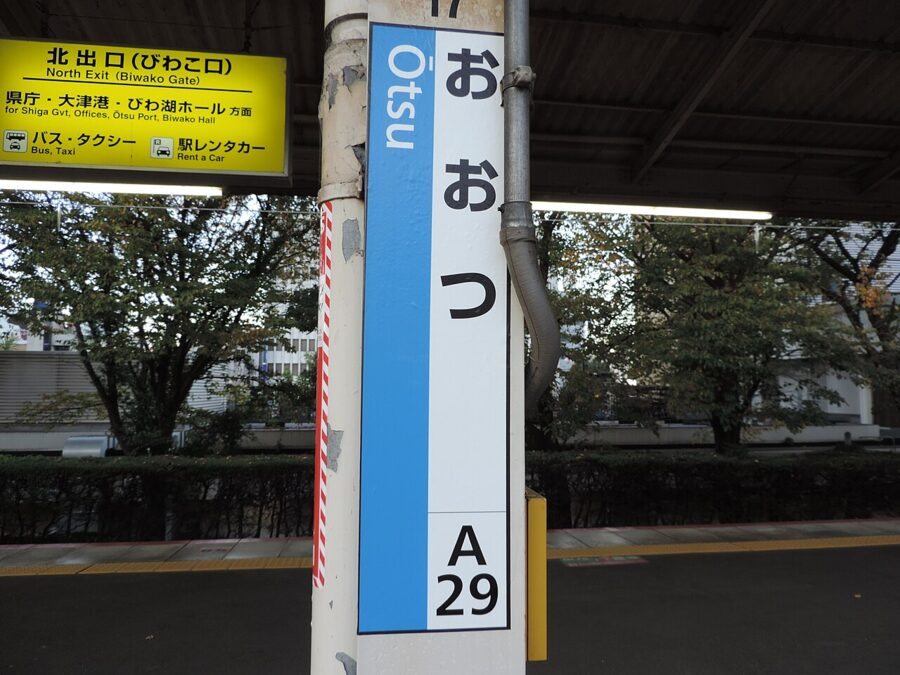
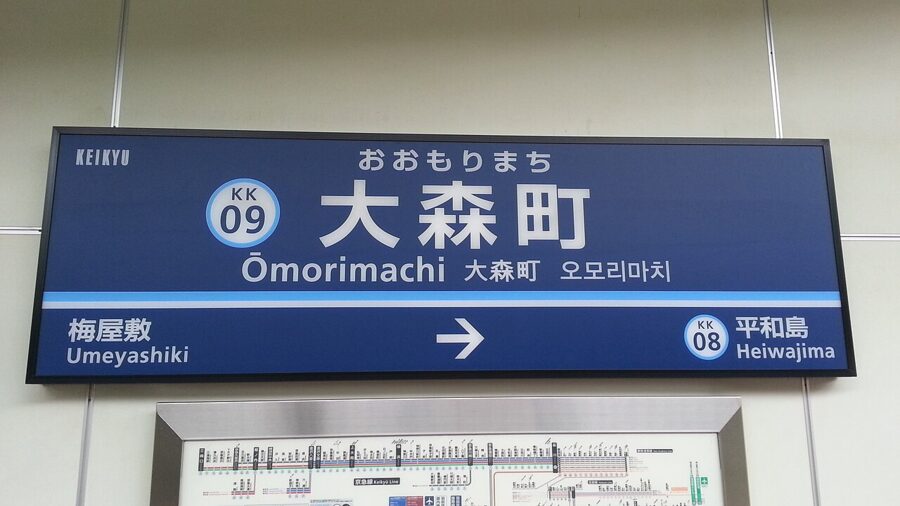
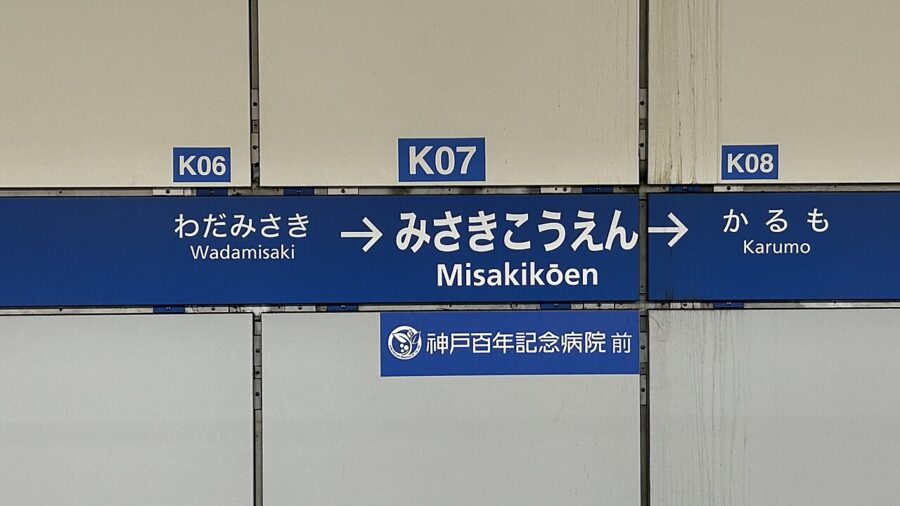
Station boards give the name three ways: kanji, hiragana, romaji. Under the old national railway the hiragana line was often the biggest. JR West and JR Shikoku have gone over to kanji-led boards and JR East is switching too, but hiragana-led signs remain, and narrow pillar signs often use hiragana alone.

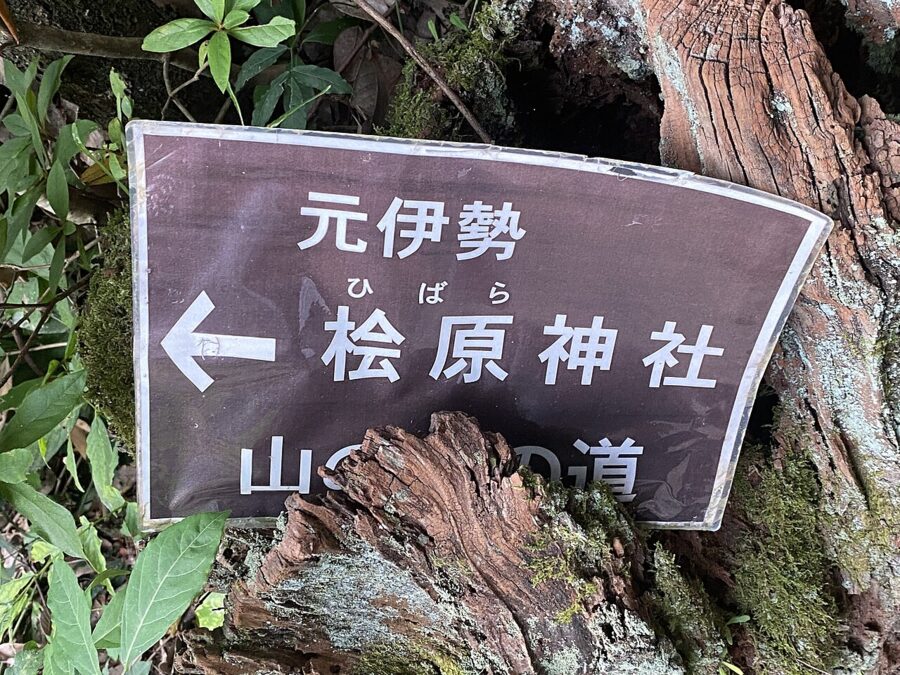
Trail signposts often give the reading of a shrine name in hiragana, because the kanji can be read more than one way.

Where the curves came from
Hiragana grew out of kanji. Early writers borrowed Chinese characters purely for their sound, and over the 800s and 900s those characters, brushed fast in cursive, wore down into simple flowing shapes. あ is a cursive 安, い is 以, ゆ is 由, which helps with the lookalikes later.
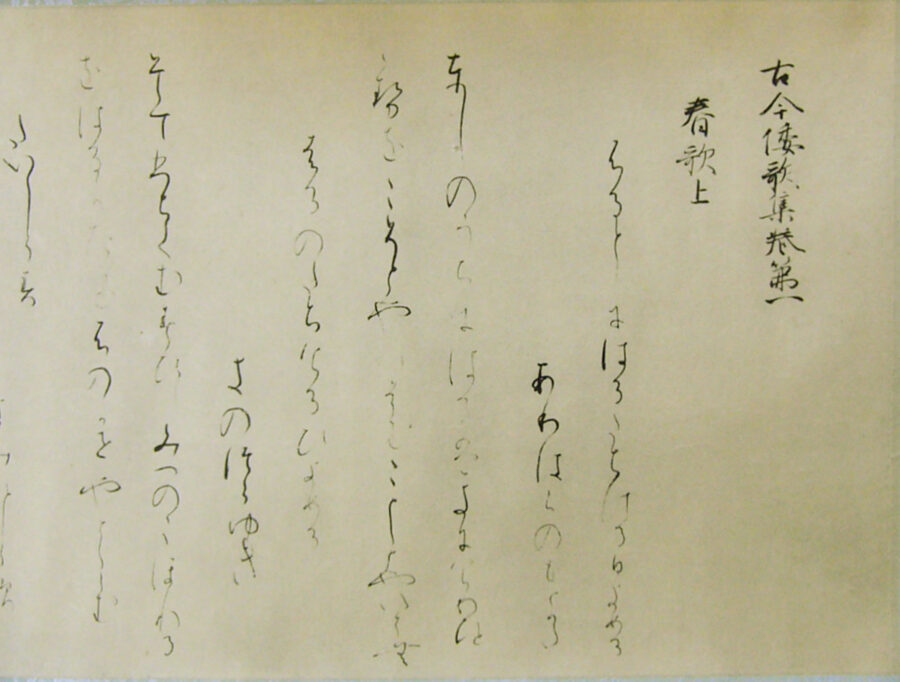
In the Heian court hiragana was linked with private writing and with women, and was called onnade (女手), “women’s hand”. For centuries each sound had several shapes, until a school regulation of 1900 fixed one per sound for teaching.
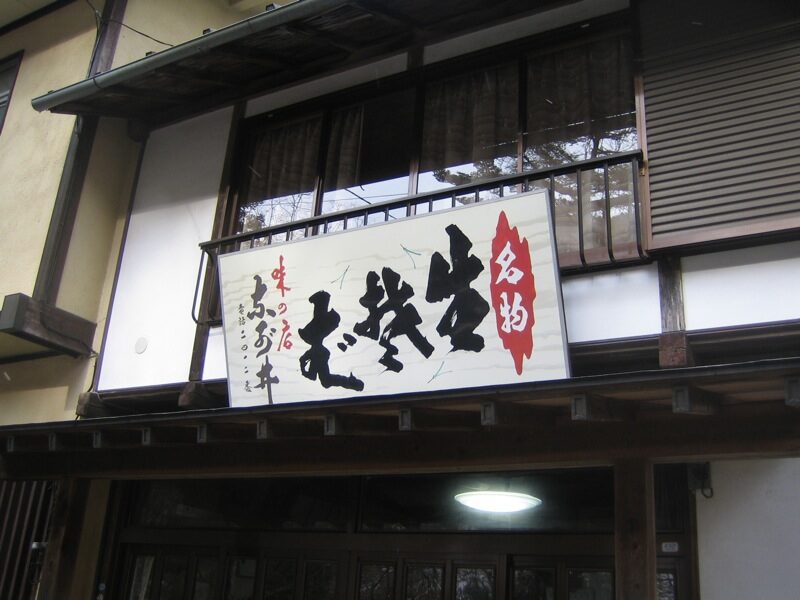
The dropped shapes, hentaigana (変体仮名), survive on old shop signs, soba makers’ especially, much as an English pub keeps a blackletter sign. Nobody expects you to read them, but they explain why a sign can look like hiragana and still refuse to match the chart.


The hiragana chart: 46 sounds
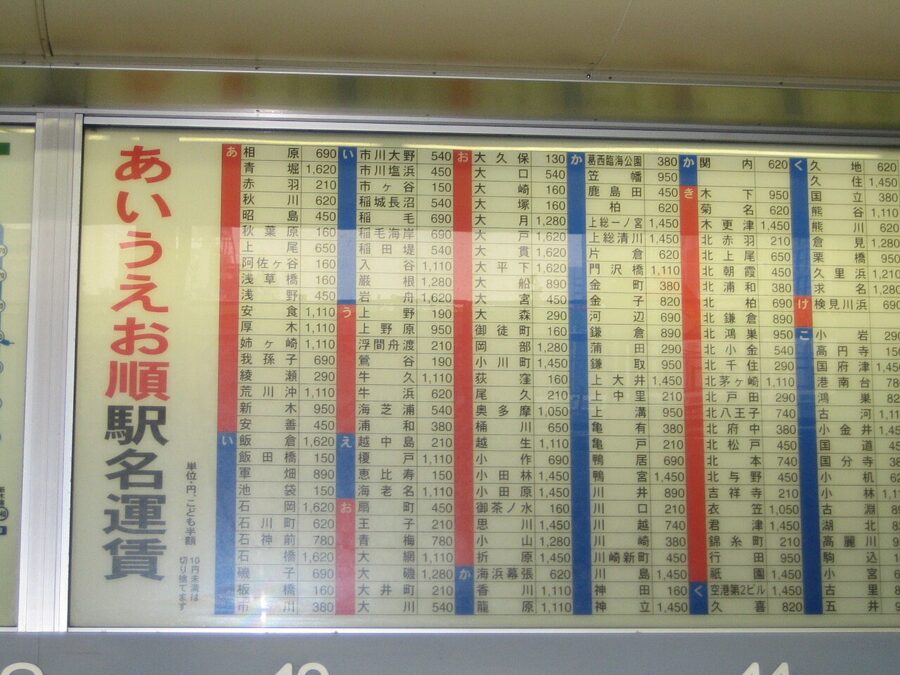
The chart is the gojūon (五十音), “fifty sounds”, a grid of five vowels by ten consonant rows. Some slots are empty, two old characters (ゐ and ゑ) were dropped after the Second World War, and ん stands alone, which leaves 46. The vowel order is a, i, u, e, o, and dictionaries, phone contact lists and fare boards all follow it.
| a | i | u | e | o | |
|---|---|---|---|---|---|
| – | あ a | い i | う u | え e | お o |
| k | か ka | き ki | く ku | け ke | こ ko |
| s | さ sa | し shi | す su | せ se | そ so |
| t | た ta | ち chi | つ tsu | て te | と to |
| n | な na | に ni | ぬ nu | ね ne | の no |
| h | は ha | ひ hi | ふ fu | へ he | ほ ho |
| m | ま ma | み mi | む mu | め me | も mo |
| y | や ya | ゆ yu | よ yo | ||
| r | ら ra | り ri | る ru | れ re | ろ ro |
| w | わ wa | を o | |||
| n | ん n |
Four break their row’s pattern: し shi, ち chi, つ tsu, and ふ fu, a soft sound between f and h. The r row is a light tap of the tongue, nearer the d in “ladder” than an English r. を is said o and is used almost only as a particle.

The voiced marks: dakuten and handakuten
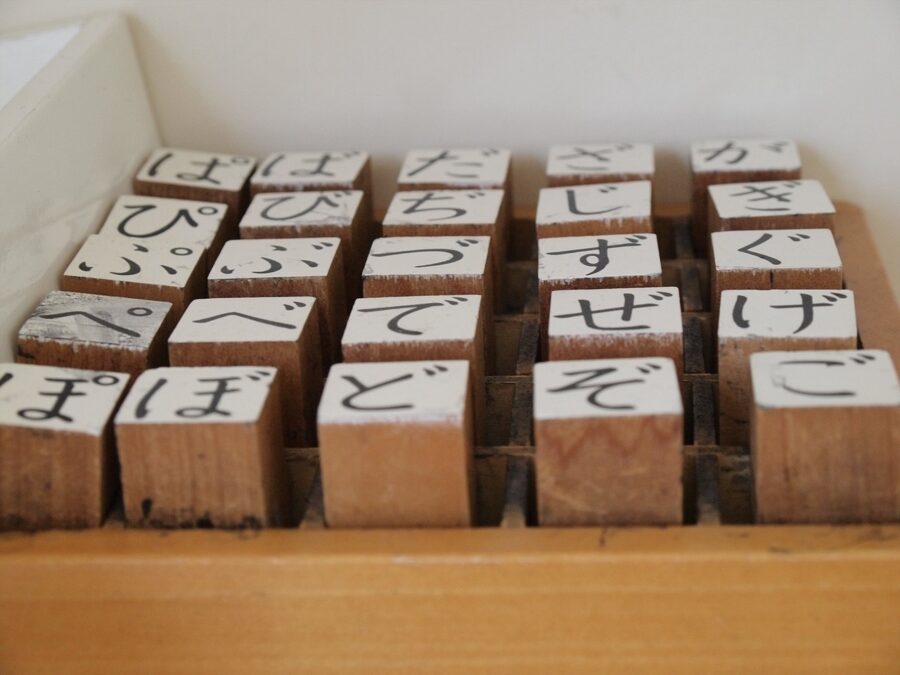
Two small marks change a whole row. Two strokes at the top right, the dakuten (濁点), voice the consonant: か ka becomes が ga. A small circle, the handakuten (半濁点), turns the h row into p. That is 25 more sounds with no new shapes.
| Base | With ゛ | With ゜ |
|---|---|---|
| か row | が ぎ ぐ げ ご (ga gi gu ge go) | |
| さ row | ざ じ ず ぜ ぞ (za ji zu ze zo) | |
| た row | だ ぢ づ で ど (da ji zu de do) | |
| は row | ば び ぶ べ ぼ (ba bi bu be bo) | ぱ ぴ ぷ ぺ ぽ (pa pi pu pe po) |
ぢ and づ sound like じ and ず, and the official kana rules keep them for a short list of words such as みかづき (mikazuki, crescent moon). On signs they are rare.
Small っ and the small ゃ ゅ ょ
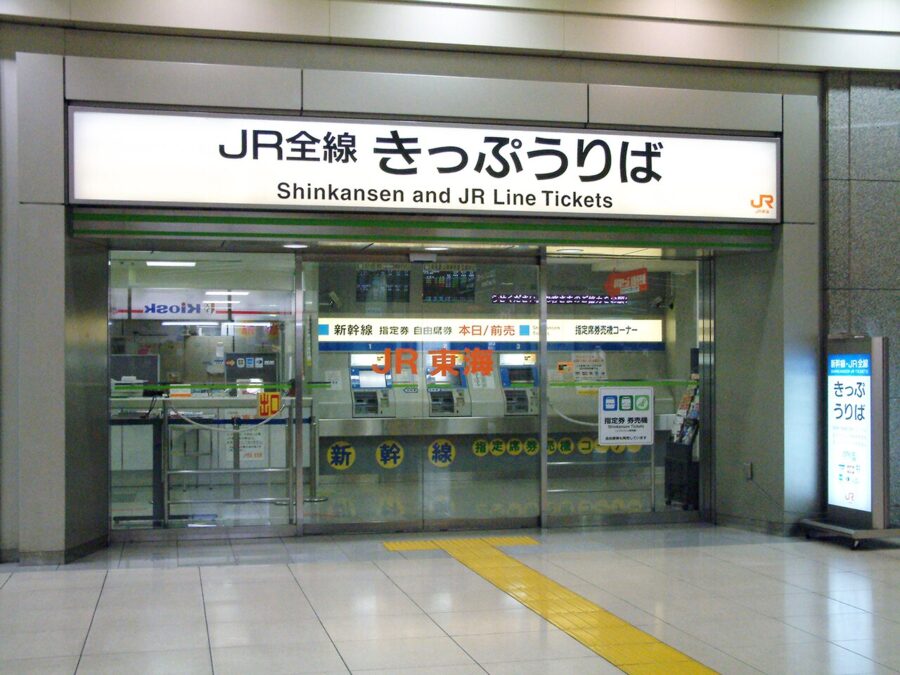
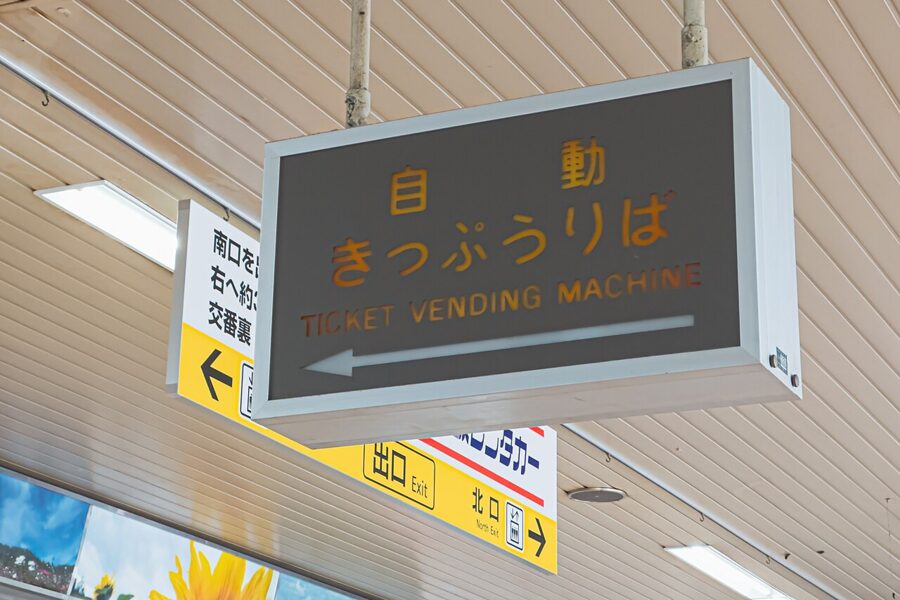
A small っ doubles the next consonant, a short catch in the voice: きっぷ is kippu (ticket), not kitsupu. Small ゃ, ゅ and ょ join an i-column character into one syllable: きゃ kya, しょ sho, ちゅ chu. The 注意 on the cleaning sign is spelled ちゅうい, chūi.

Long vowels
Vowel length can change a word, and hiragana marks it by adding a vowel: おばさん is obasan (aunt), おばあさん is obāsan (grandmother). A long o is usually written with う, so 東京 is とうきょう (Tōkyō), though some words take お, as in おおさか (Ōsaka). A long e is usually えい, as in せんせい (sensei, teacher).
The long-vowel bar ー belongs to katakana, as in コーヒー (kōhī, coffee), but now and then a sign borrows it to spell a foreign name in hiragana.
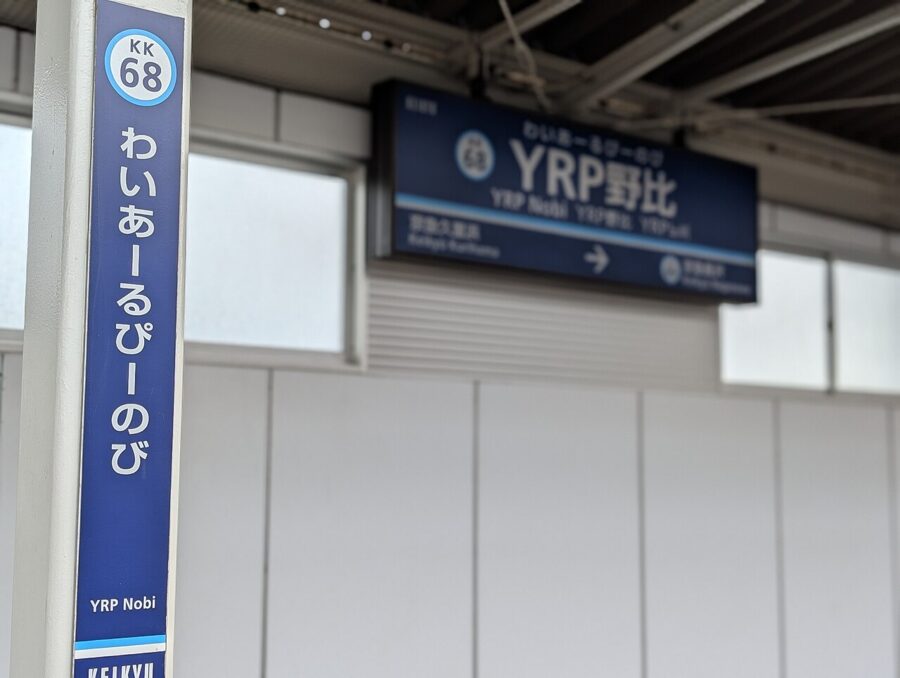

The hiragana you meet first on the road
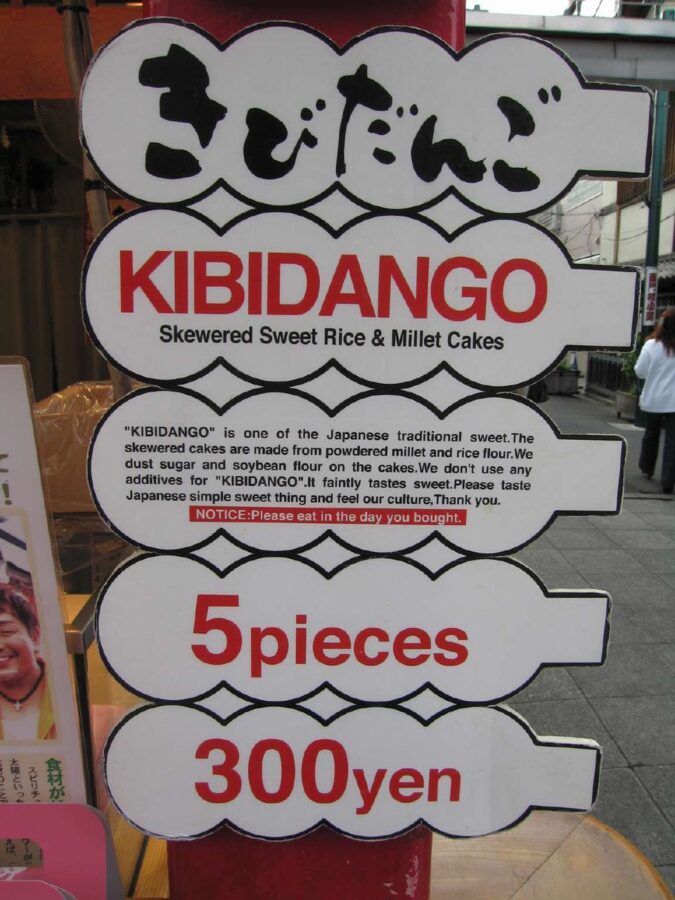
Most big direction signs are kanji, often with English. The hiragana that matter to a visitor are words normally written in hiragana, the readings of the kanji you need most, and the friendly notices shops write in hiragana on purpose.
| Sign | Hiragana | Reading | Meaning |
|---|---|---|---|
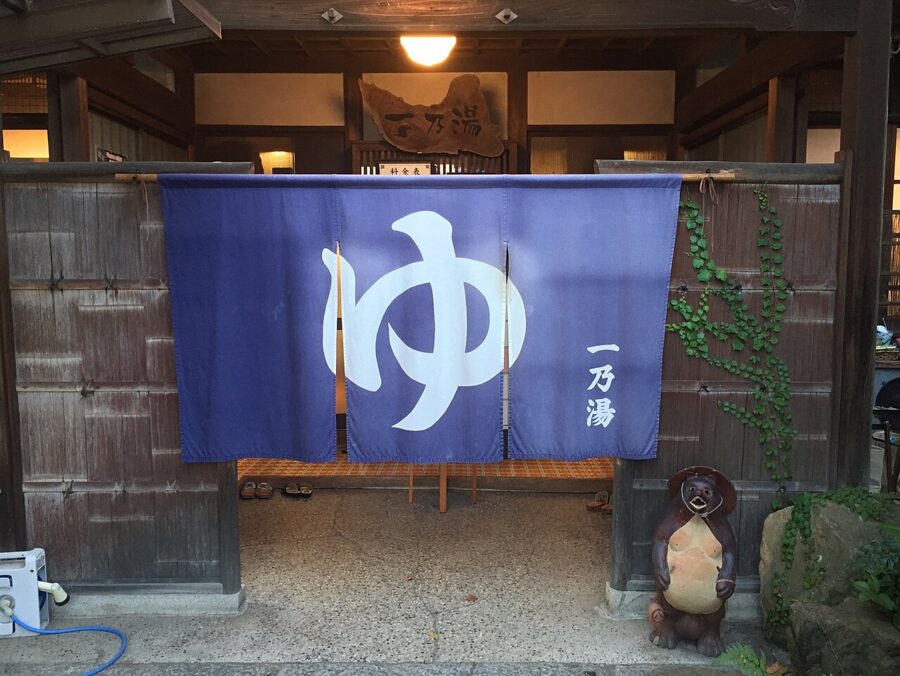
| ゆ | ゆ | yu | hot water (bath curtains) |
| お手洗い | おてあらい | otearai | restroom |
| 出口 | でぐち | deguchi | exit |
| 入口 | いりぐち | iriguchi | entrance |
| きっぷうりば | きっぷうりば | kippu uriba | ticket sales |
| のりば | のりば | noriba | platform, bus or taxi stand |
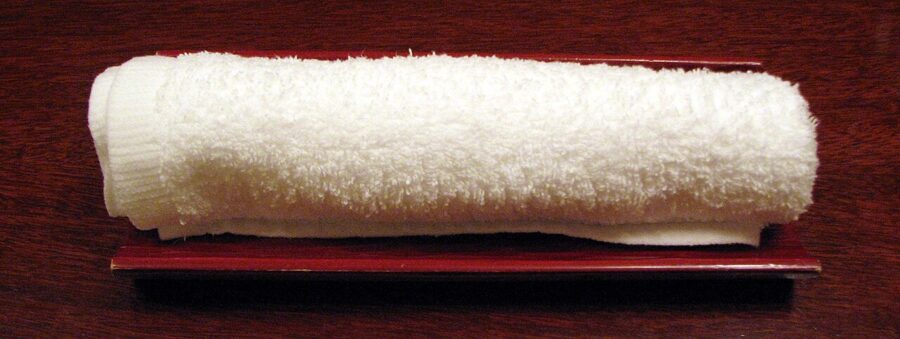
| おしぼり | おしぼり | oshibori | hand towel |
ゆ on the bath curtain
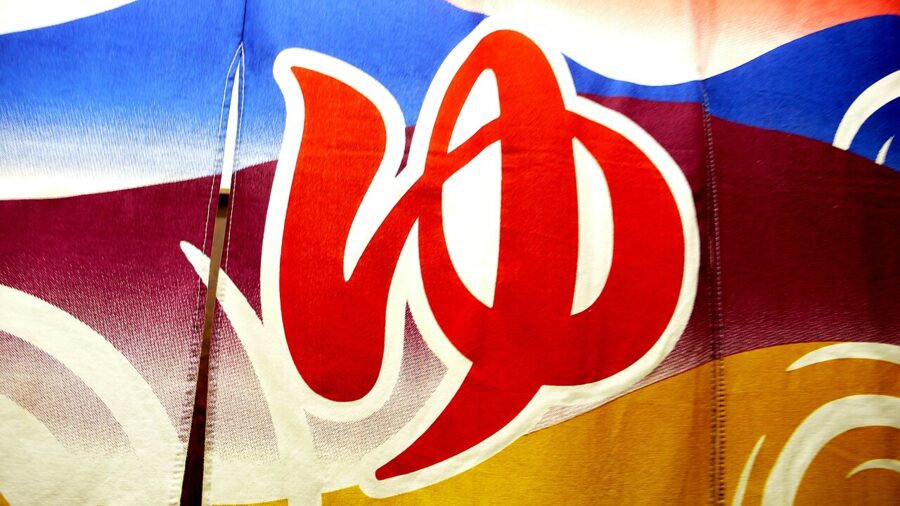
ゆ stands for 湯, hot water. A curtain, or noren (暖簾), marked with it means a public bath or the bath at an onsen inn. Inside, two curtains split the bathers, 男 (otoko, men) and 女 (onna, women), often blue and red; learn those two kanji too, because the colors are a habit, not a rule.


おてあらい and トイレ
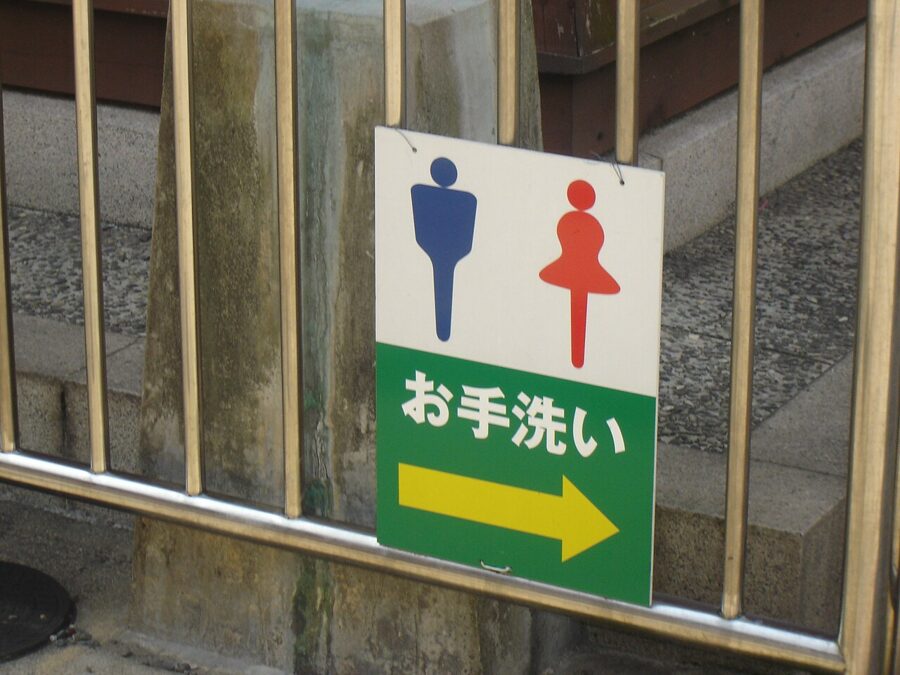
The restroom has three common names in three scripts. トイレ (toire) in katakana is the everyday word; お手洗い (otearai), “hand-washing”, is the polite one; 化粧室 (keshōshitsu) is the department-store word. おてあらい is the one to use when you ask, and the buttons inside are covered in the guide to the Japanese toilet.

でぐち and いりぐち
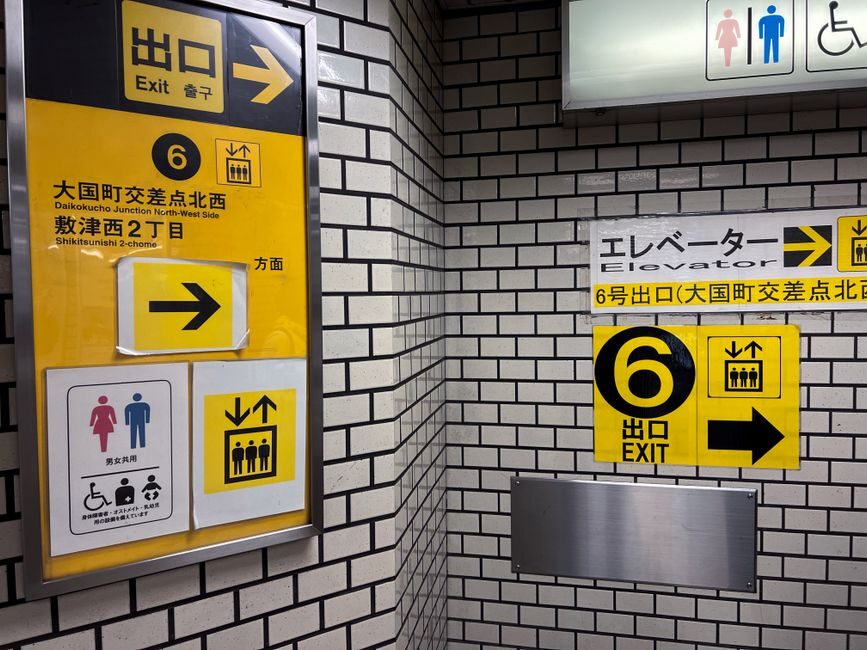
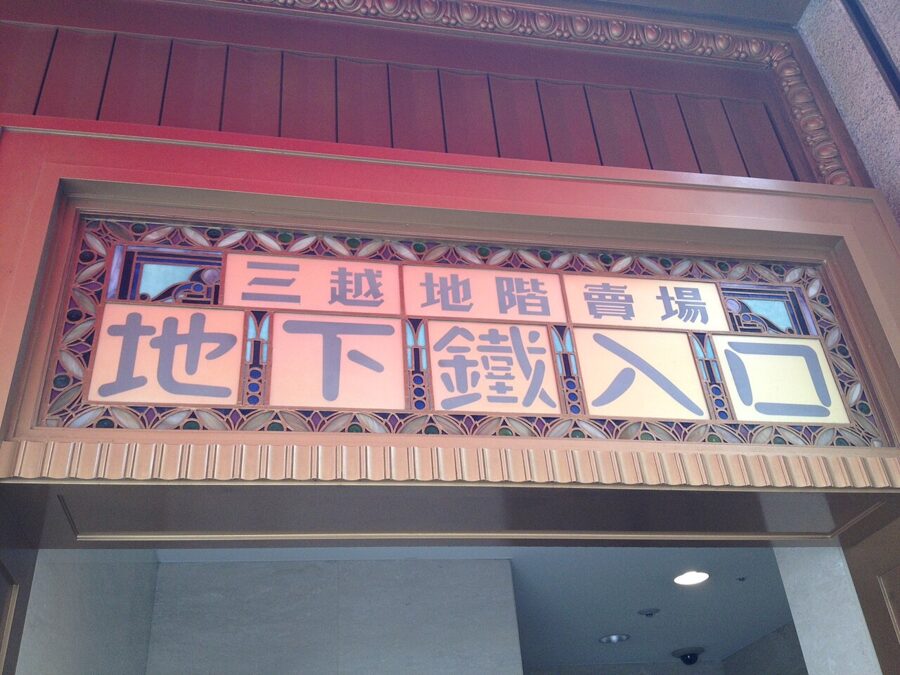
出口 (deguchi, exit) and 入口 (iriguchi, entrance) are almost always written in kanji, so the hiragana is for saying them and for reading furigana. Both end in 口, guchi, “mouth”, a square. Learn the kanji in front: 出 looks like two mountains stacked, 入 like a person walking.

きっぷ, うりば and のりば
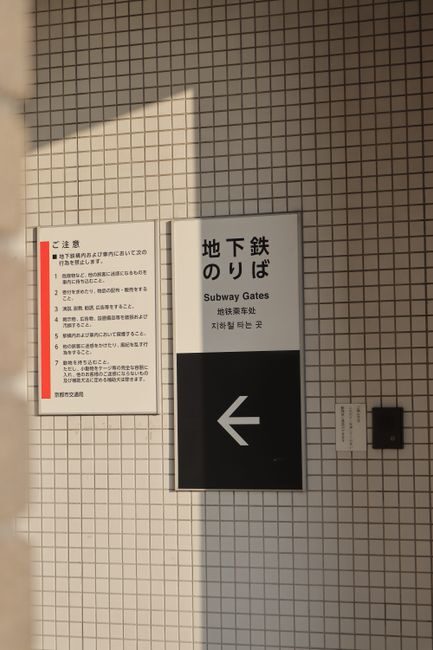
Railways are fond of hiragana. うりば (uriba, sales place) and のりば (noriba, boarding place) are kanji words, 売り場 and 乗り場, very often written in kana. I would learn のりば first: it marks platforms, bus bays and the taxi rank, usually with a number.

おしぼり at the table
The rolled towel handed to you as you sit down is an oshibori, written in hiragana on its wrapper. It is for your hands, hot in winter and cool in summer. Some older men at an izakaya wipe their faces with it, but most people keep it to their hands.

は, を and へ: three letters read differently
Three hiragana change their sound as grammar particles. は is ha in a word but wa when it marks the topic. へ is he in a word and e when it means “toward”. を is said o and appears almost only as the object particle.
Pronunciation drifted while spelling stood still, and when kana spelling was reformed after the war, these particles kept their old letters. The Cabinet’s 1986 modern kana usage rules still list the exceptions.
You will meet one daily: こんにちは, konnichiwa. It ends in は because it began as a sentence, “as for today…”, and the rules name it as a は word, like こんばんは, konbanwa, good evening. More in how to say hello in Japanese.
Lookalikes and traps
A handful of hiragana come in pairs or trios that catch every learner. Find the one stroke that differs and say both names aloud as you compare. The kanji each shape came from often explain the difference.
| Pair | The difference |
|---|---|
| さ sa / ち chi | Mirror images: さ opens left at the bottom, ち bulges right (from 左 and 知). |
| さ sa / き ki | き has two crossbars, さ one. |
| ぬ nu / め me | ぬ ends in a small loop, め does not (from 奴 and 女). |
| ね ne / れ re / わ wa | Same left stroke; ね ends in a loop, れ kicks out, わ curls in (from 祢, 礼, 和). |
| る ru / ろ ro | る ends in a loop, ろ stays open (from 留 and 呂). |
| い i / り ri | り has a long right stroke dropping below the left. |
| は ha / ほ ho | ほ has an extra bar across the top. |

In handwriting and some fonts the strokes of さ, き and り join up, and a dakuten can sit so close it looks like part of the letter. Katakana adds the classic swaps, シ shi and ツ tsu, ソ so and ン n, which is why I would not learn both sets in the same week.
How to learn hiragana in a week
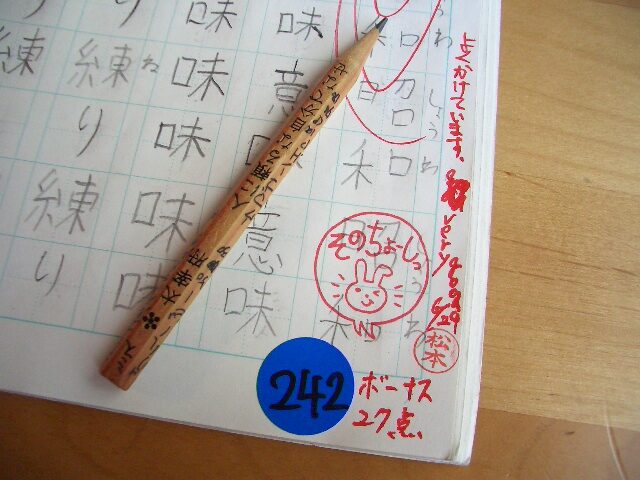
What works for most adults is two short sessions a day, about half an hour in total, writing each character by hand and testing reading before writing from memory. The plan spreads the 46 over three days and leaves the rest for the extras and real signs.
| Day | Learn | Practice on |
|---|---|---|
| 1 | あ, か, さ, た rows | あさ (asa, morning), かさ (kasa, umbrella) |
| 2 | な, は, ま rows | ねこ (neko, cat), なまえ (namae, name) |
| 3 | や, ら, わ rows and ん | よる (yoru, night), ほん (hon, book) |
| 4 | Dakuten and handakuten | でぐち, ごはん (gohan, a meal) |
| 5 | Small っ, ゃ ゅ ょ, long vowels | きっぷ, とうきょう |
| 6 | Particles; the lookalikes | こんにちは, ぬ/め, ね/れ/わ |
| 7 | Review the misses | Station names and signs in photos |

Apps, charts and flashcards
Mnemonics, small pictures tied to each shape, are the quickest route for most adults. The Japan Foundation’s free HIRAGANA Memory Hint app for iPhone and Android pairs each character with a drawing and an English word, with quizzes that include similar-looking hiragana. NHK World’s free Easy Japanese hiragana chart comes as a printable PDF, which I would stick by the bathroom mirror.
From day three, review with spaced-repetition flashcards, which bring back the cards you miss sooner. Anki is the standard tool, free on computers and Android (the iPhone version is paid), with shared hiragana decks. Paper cards sorted into “know” and “don’t know” piles do the same job.
Typing hiragana on your phone
Add a Japanese keyboard before you fly. On an iPhone it is under Settings, General, Keyboard, Keyboards, Add New Keyboard, Japanese, then Romaji; on Android, add Japanese in the Gboard languages. Type kippu and it writes きっぷ, type nn for ん, and kanji suggestions appear above the keys.
Every word you type is a word you spell, and a typed word on a screen helps when your pronunciation does not land. A translation app’s camera mode will read signs and menus too; the guide to phones and data covers getting online.
A short reading test
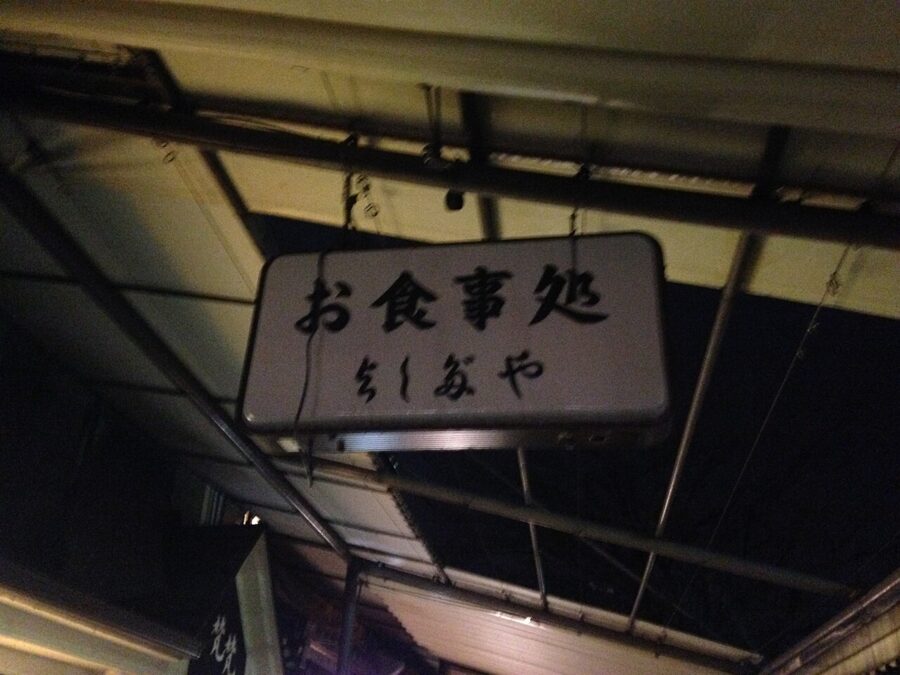
Every one of these appears in the photos above: ゆ, のりば, きっぷうりば, おてあらい, みさきこうえん, やってません, ありがとうございました.
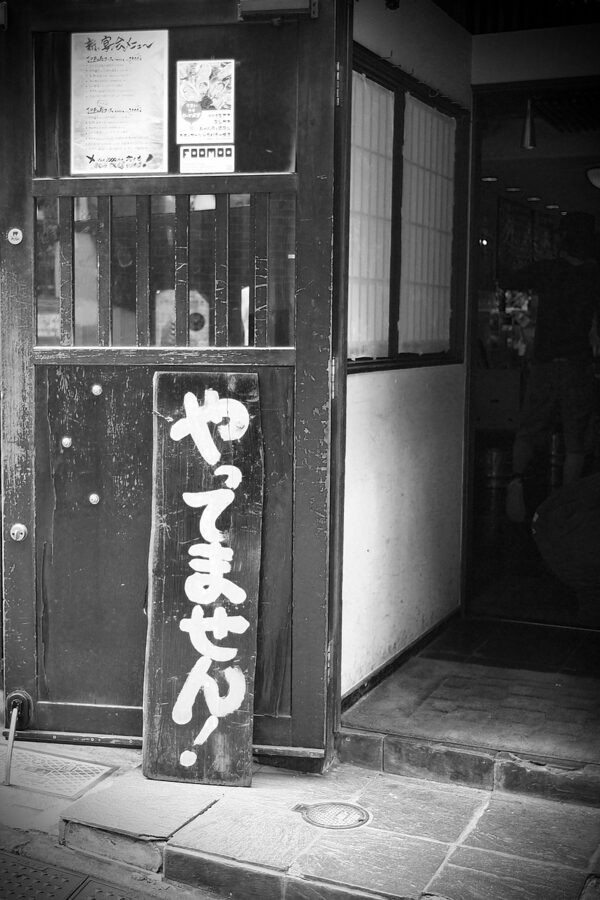
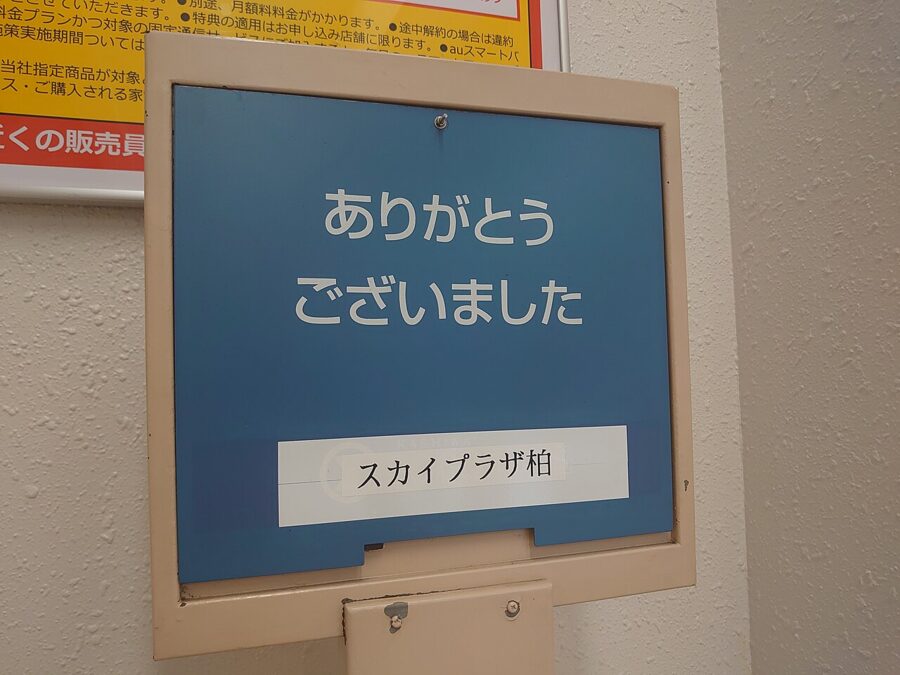

Answers: yu, hot water; noriba, boarding place; kippu uriba, ticket sales; otearai, restroom; Misaki-kōen, a Kobe station; yattemasen, not open; arigatō gozaimashita, thank you. Get four and the rest of the week is just practice.
If you learn one character before your flight, make it ゆ. It takes two strokes, it hangs over town bath doors all over the country, and the first time you read it on a curtain, you will know which door leads to the hot water.