
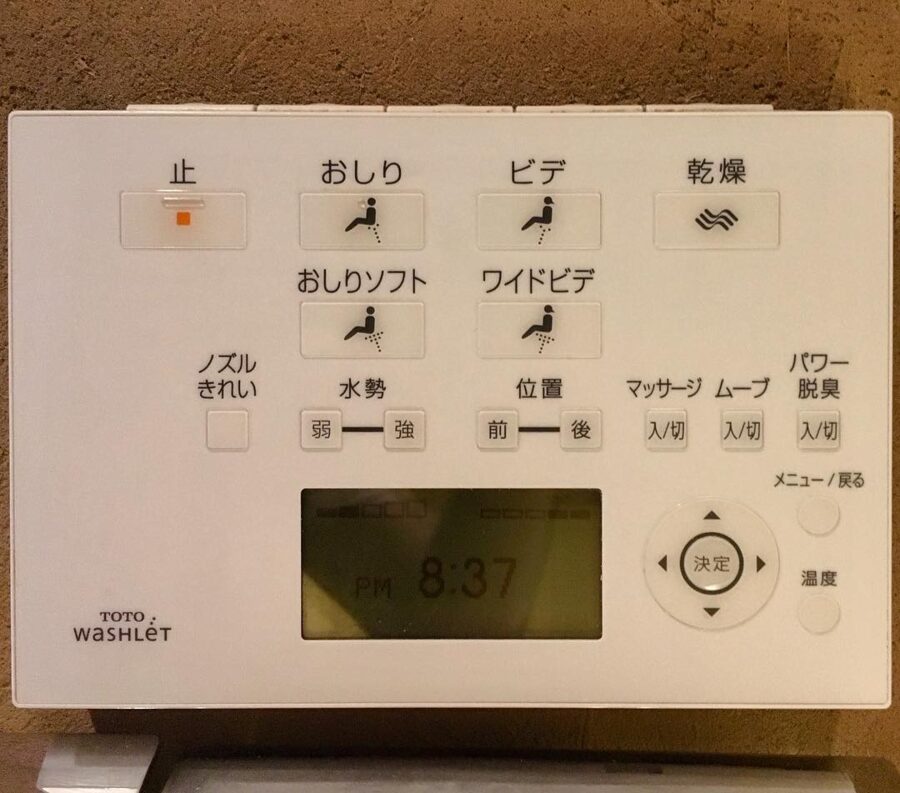

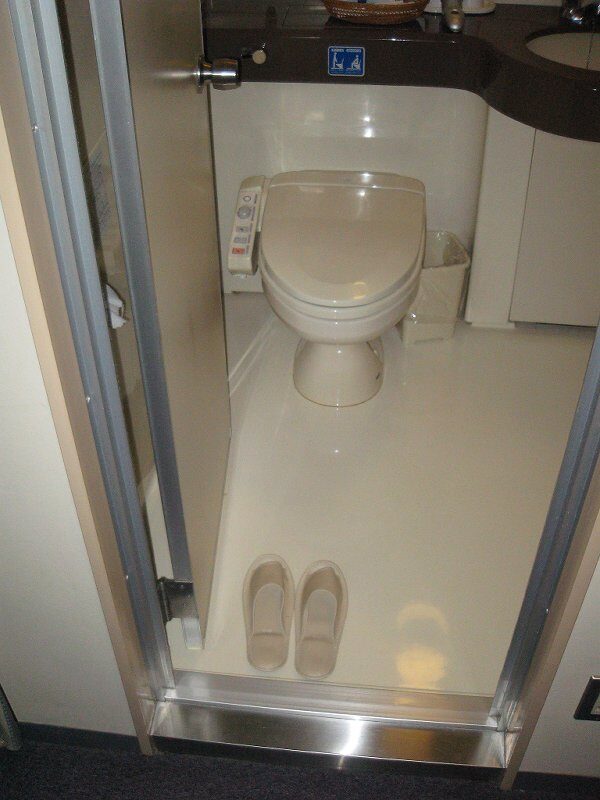
At the end of March 2026, 82.5 percent of Japanese households had a toilet seat that washes you, more than had a car or a computer. So you’ll probably meet your first one at the airport, minutes after landing, with a panel of buttons beside it.
Key facts Reading
- 止
- tomeru, stop
- おしり
- oshiri, bottom
- ビデ
- bide, bidet
- 乾燥
- kansō, dry
- 水勢
- suisei, water pressure
- 便座 / 便ふた
- benza, seat; benfuta, lid
- 大 / 小
- dai, large; shō, small
- 音
- oto, sound
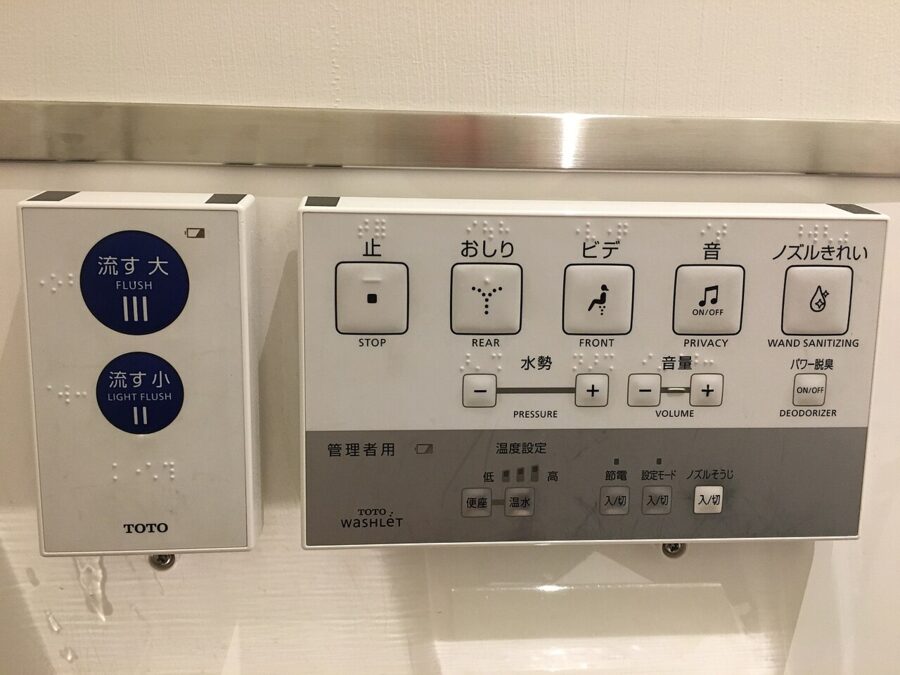
The panel looks like a lot. It isn’t. Two buttons matter on your first visit: the one that stops the water and the one that flushes. Everything else is comfort, and you can learn it sitting down.

Below: what each button does, the squat toilet you’ll still meet now and then, where the slippers go, what goes in the bowl, how to find a toilet in a hurry and the words on the door. Then a short history, because the warm seat had to start somewhere.
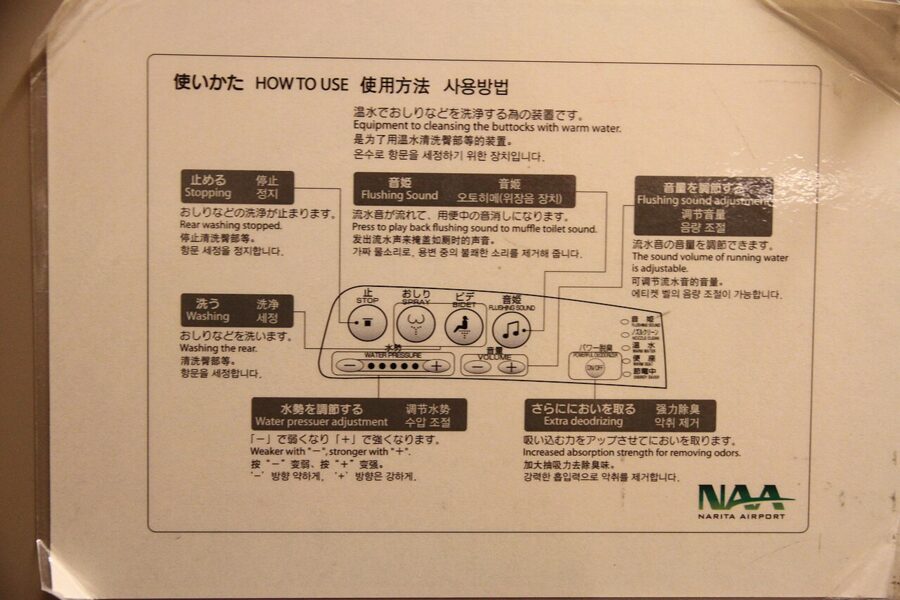

The panel, button by button
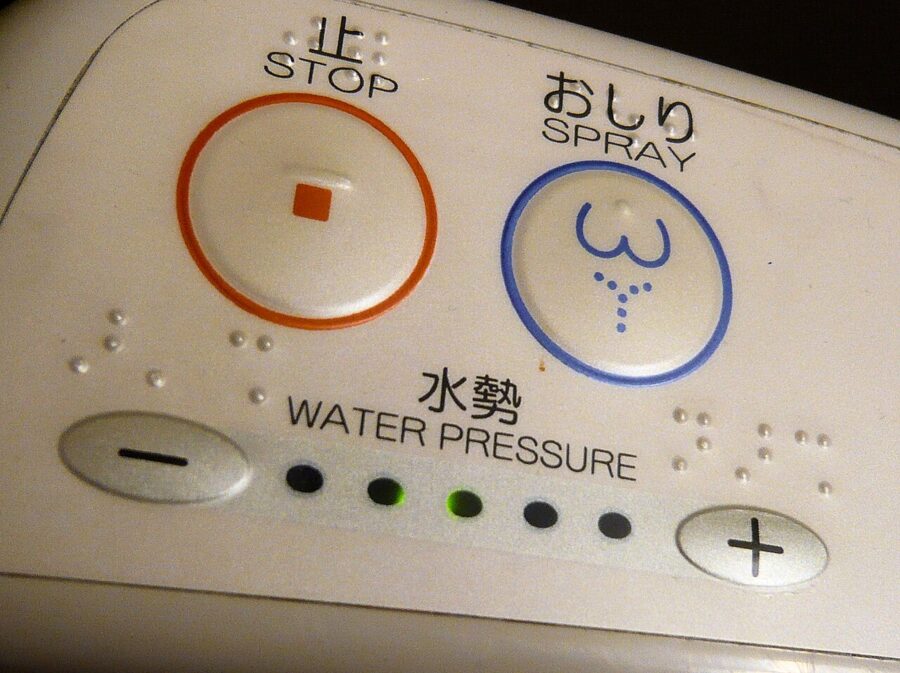
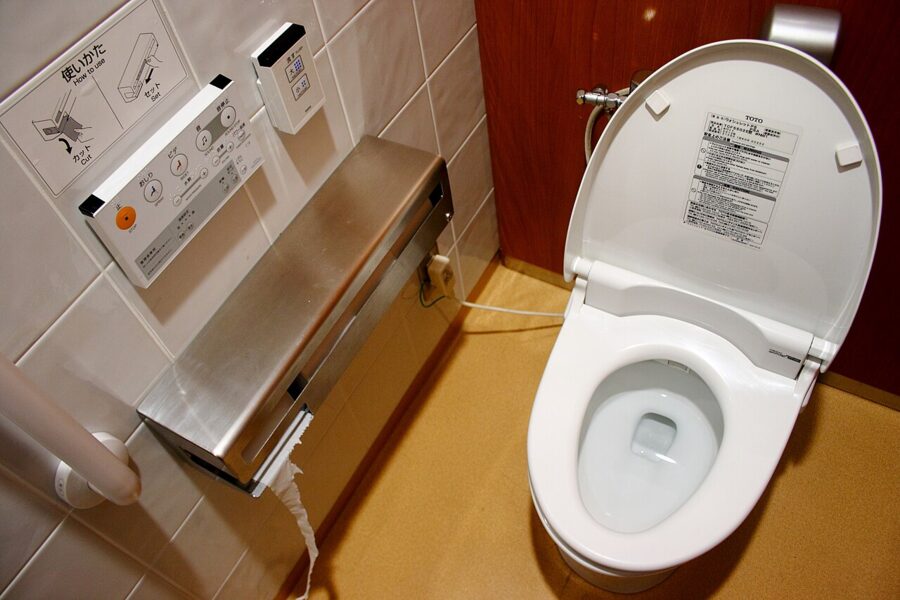
In Japanese the seat is a 温水洗浄便座 (onsui senjō benza, warm-water washing toilet seat), but nearly everyone says washlet, which is TOTO’s brand name. LIXIL calls its version a シャワートイレ (shawā toire, shower toilet). They all do the same things.
For years each maker drew its own icons, and visitors pressed them more or less at random. In January 2017 the Japan Sanitary Equipment Industry Association, the makers’ trade body, published a standard set of pictograms for toilet controls, and in December 2018 it became a Japanese Industrial Standard (JIS S 0103). Older panels still carry the old icons, so the Japanese labels are worth knowing too.
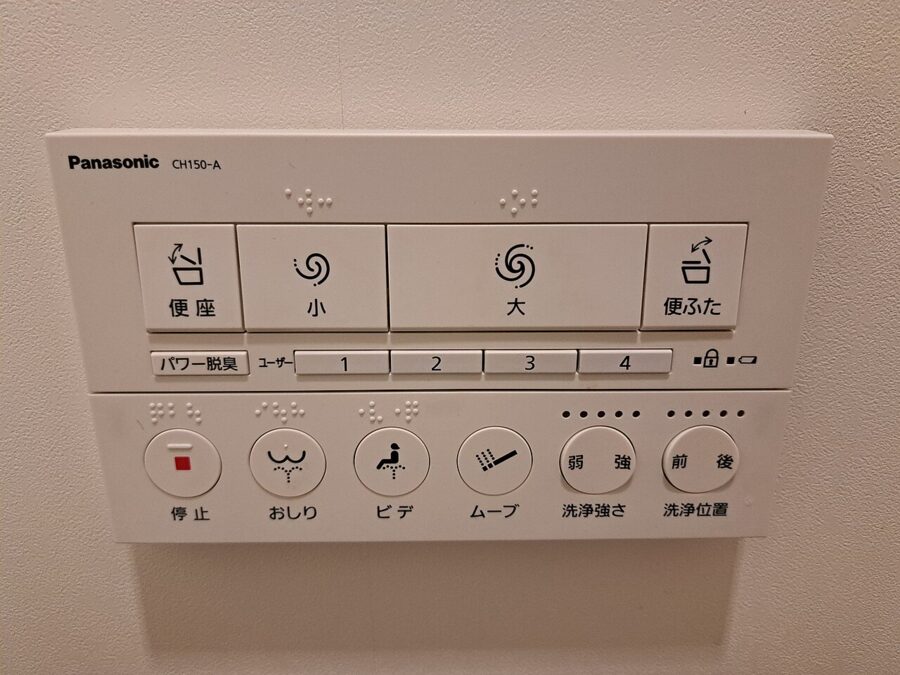

| Label | Reading | What it does |
|---|---|---|
| 止 | tomeru, stop | Stops whatever is running. Usually a square, often orange or red. |
| おしり | oshiri, bottom | Rear wash. The icon is a bottom over a fountain of dots. |
| ビデ | bide, bidet | Front wash for women. The icon is a seated woman in profile. |
| 乾燥 | kansō, dry | Warm-air dryer. Three curved lines. |
| 水勢 | suisei, water pressure | Pressure up and down, with + and − buttons. |
| 便座 / 便ふた | benza, seat; benfuta, lid | Raise or lower the seat or lid. |
| 大 / 小 | dai, large; shō, small | Flush, with more or less water. |
| 音 | oto, sound | Plays running water (see below). |
| 呼出 | yobidashi, call | Calls staff for help. Not a flush. |
Whatever the icons, the stop button almost always says 止 or STOP, often on a square button set a little apart. Find it before you press anything else.

Using it, in order
Sit all the way back: most seats have a sensor, and the spray won’t start unless someone is sitting. When you’re done, press おしり (or ビデ), adjust the pressure if it’s too strong, then press 止. Pat dry with paper; the dryer is slow, and most people in Japan skip it.
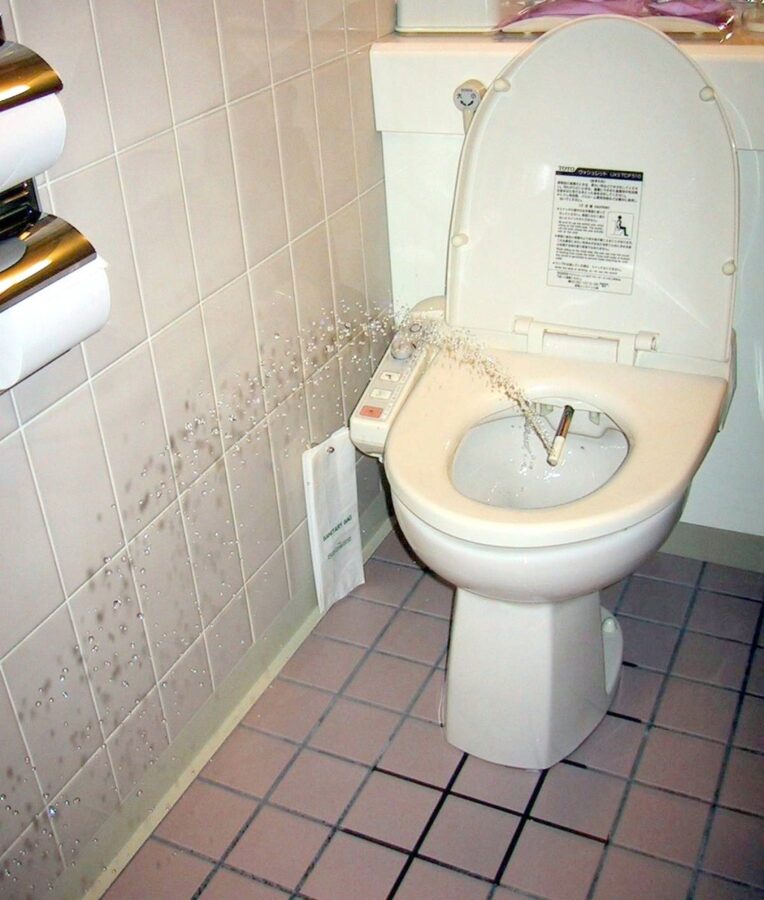
Wipe before or after? Either works, and the machine doesn’t care. Stand up mid-spray and most newer seats shut off by themselves. Older ones don’t, which is where the stories about soaked bathroom walls come from.
The warm seat
In winter the heated seat is the feature you notice first. Japanese homes are often unheated outside the main room, and a toilet off a cold hallway is where a warm seat earns its place. The temperature is set under 便座 (benza) or a thermometer icon, and many seats learn when the toilet gets used and save power in between.

The sound princess
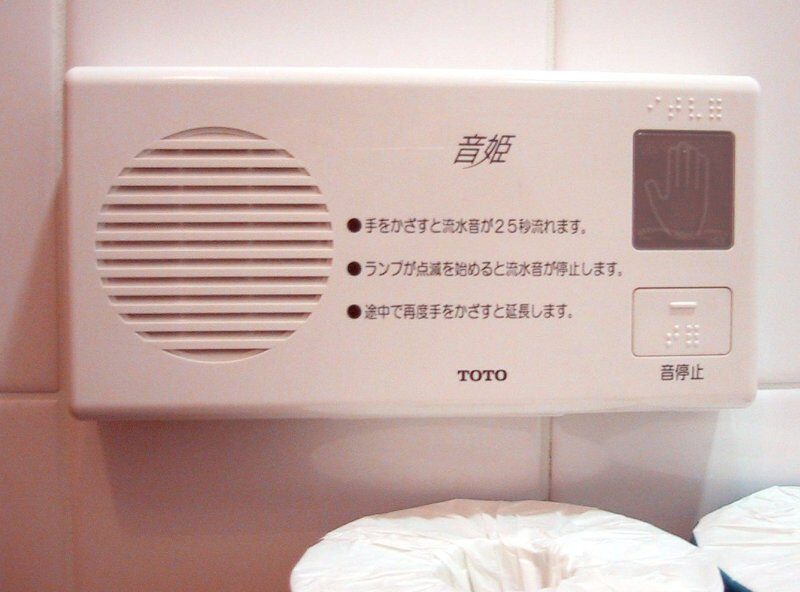
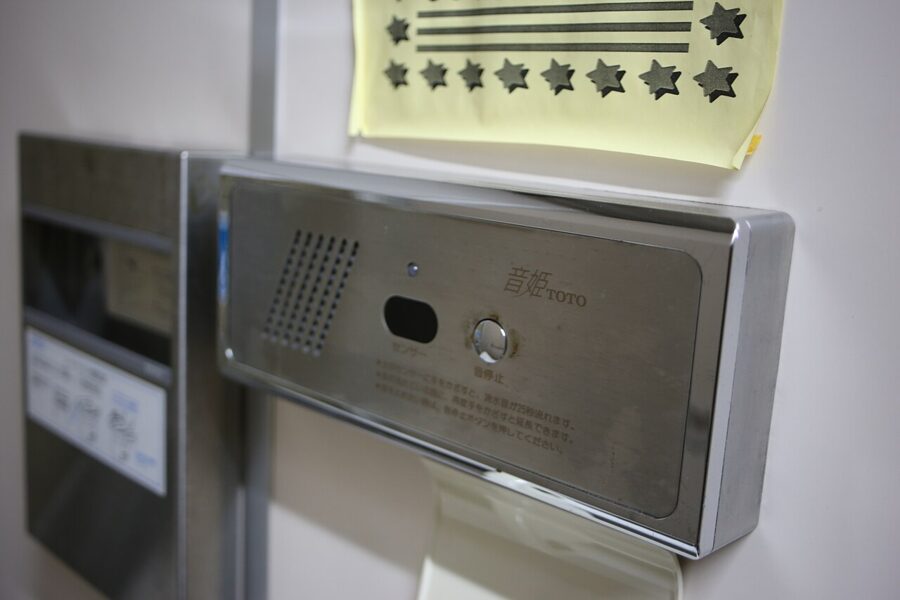
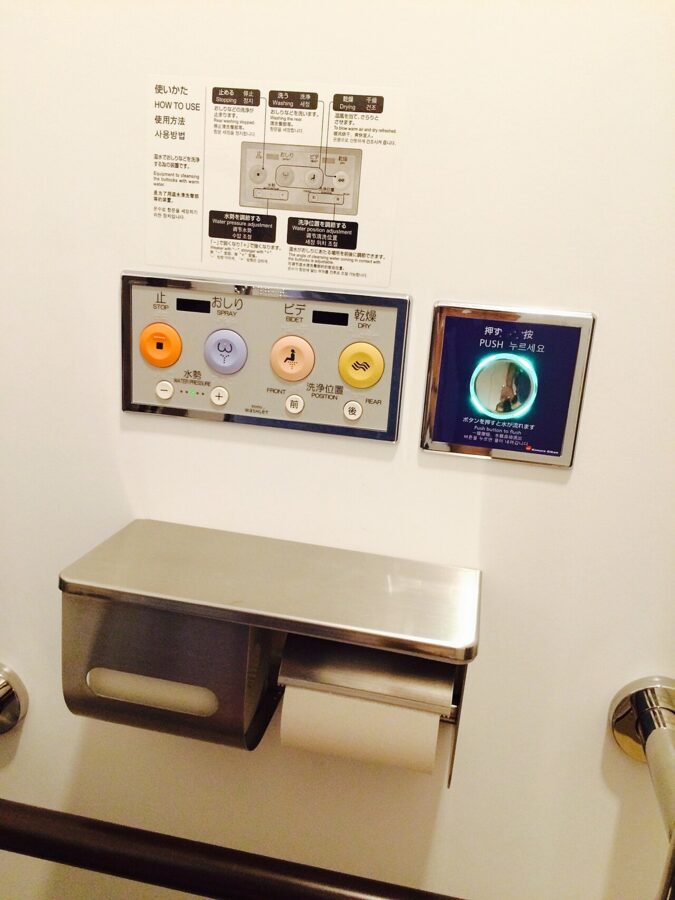
Many women’s toilets have a small box on the wall labeled 音姫 (Otohime), the “sound princess”. Wave a hand at the sensor and it plays the sound of a flush. Before TOTO brought it out in 1988, many women flushed again and again to cover the sounds of using the toilet, and the wasted water is the reason the machine exists.

You don’t have to use it. On a washlet panel the same function is a button marked 音 (oto, sound) or 擬音 (gion, sound effect), and some newer toilets play it by themselves.

Flushing, and the button that isn’t
A Japanese flush comes in two sizes, 大 (dai, large) and 小 (shō, small). On a toilet with a tank, the lever turns one way for each. On a washlet the flush may be a panel button, a separate plate on the wall or a sensor; look for 流す (nagasu, flush) or the swirl icon. Some toilets flush by themselves when you stand up.

Then there is the call button. In station, airport and department store toilets you’ll often see one marked 呼出 (yobidashi) or 非常呼出 (hijō yobidashi, emergency call), often red or orange, sometimes with a pull cord. It summons help for someone who has collapsed, and the toilet makers’ own association lists pressing it in place of the flush among the usual mishaps.
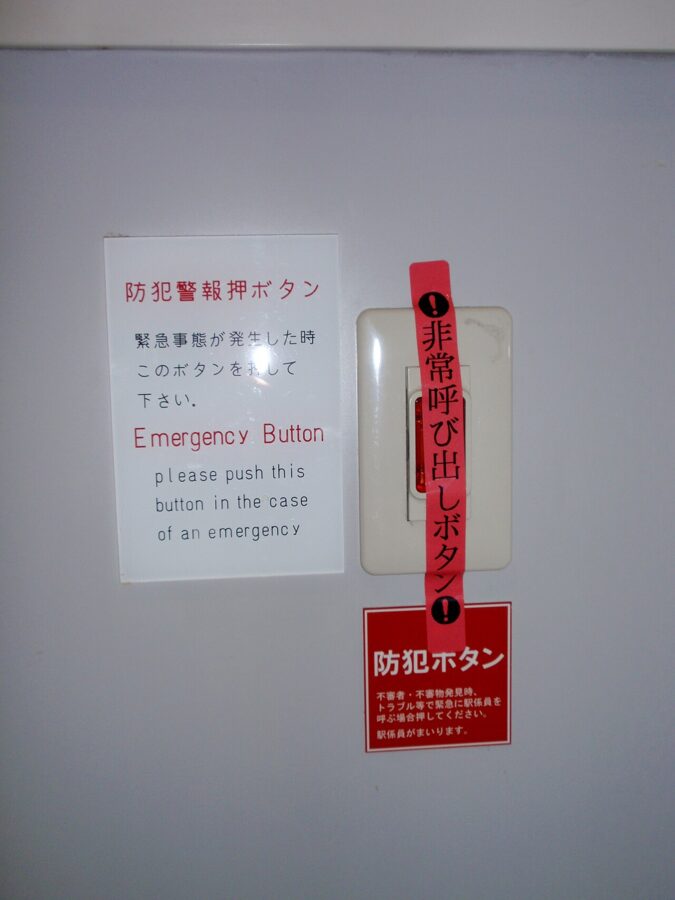

If you press it by mistake, don’t slip away. If staff come to check, machigaemashita (間違えました, I made a mistake) is all you need. Numbers for real emergencies are in the traveler safety guide.

The squat toilet: 和式 (washiki)
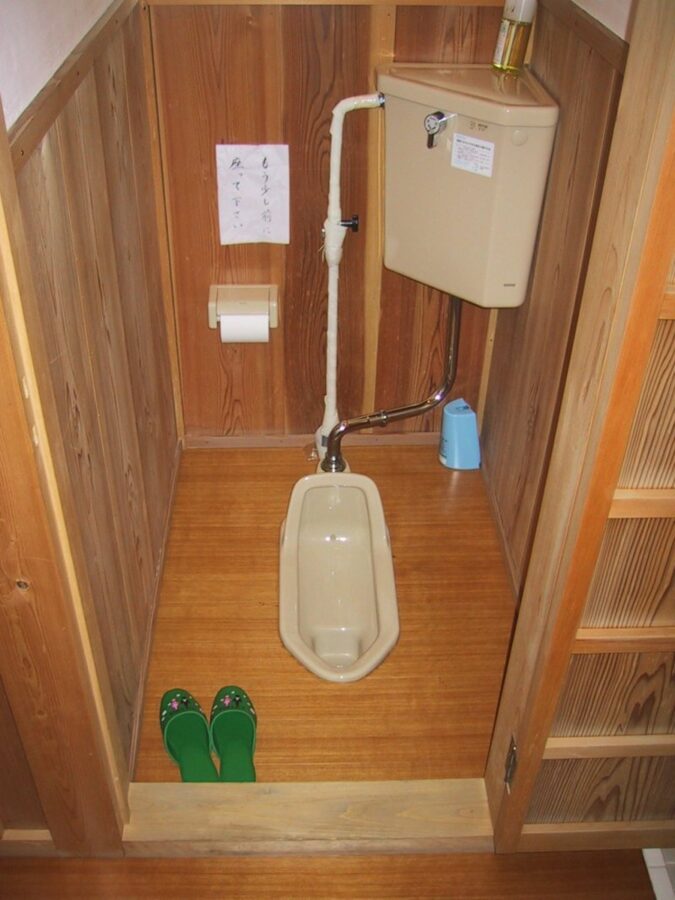
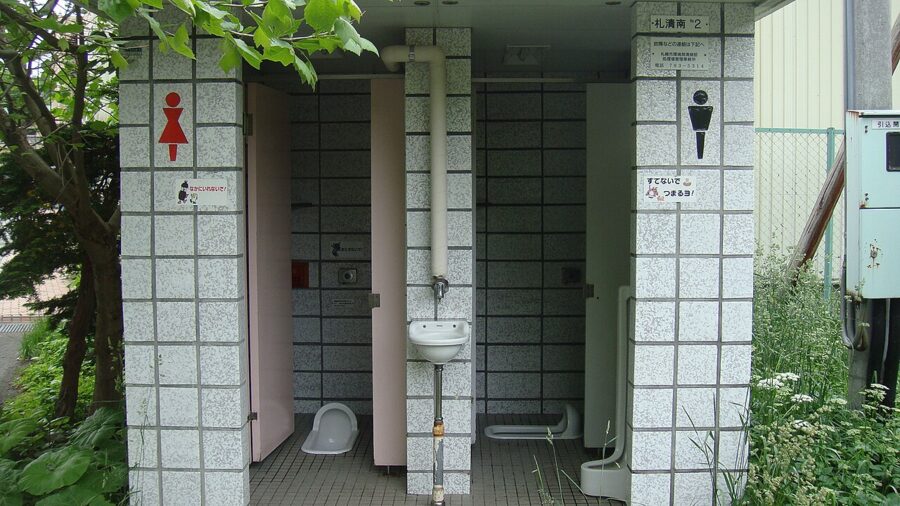
The older Japanese toilet is a porcelain trough set into the floor with a rounded hood at one end. It’s called 和式 (washiki, Japanese style); the sit-down kind is 洋式 (yōshiki, Western style). Western bowls outsold squat ones from the late 1970s, and by the early 2000s squat toilets were under 5 percent of shipments. You’ll still find them in older stations, parks, temples, rural restaurants and a few trains.
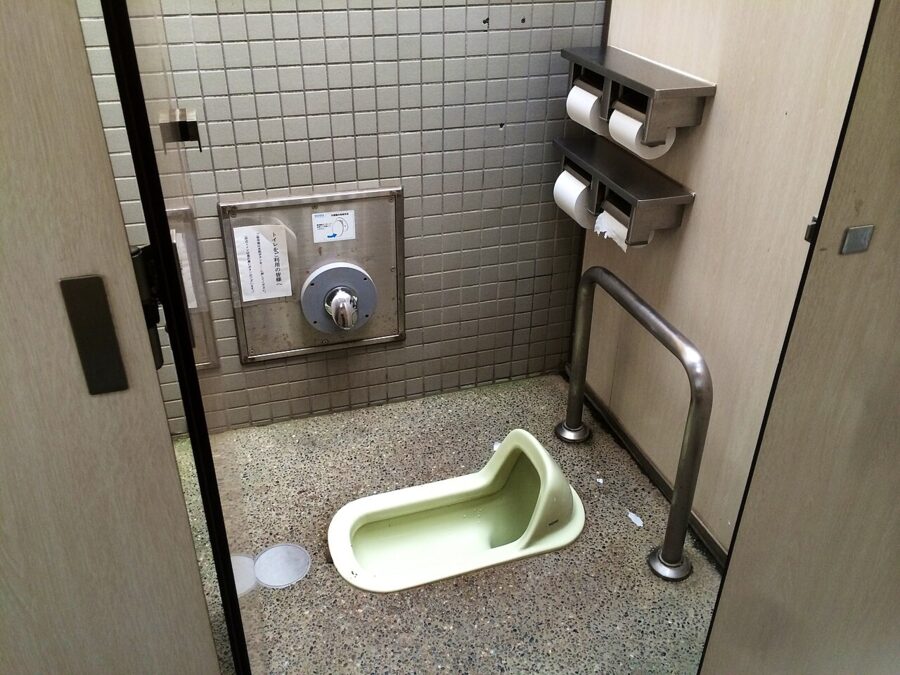

Face the hood, with a foot on each side of the trough, as far forward as is comfortable. Lower your trousers to your knees, not the floor, and squat low. Paper goes into the trough, then flush. Empty your back pockets first.

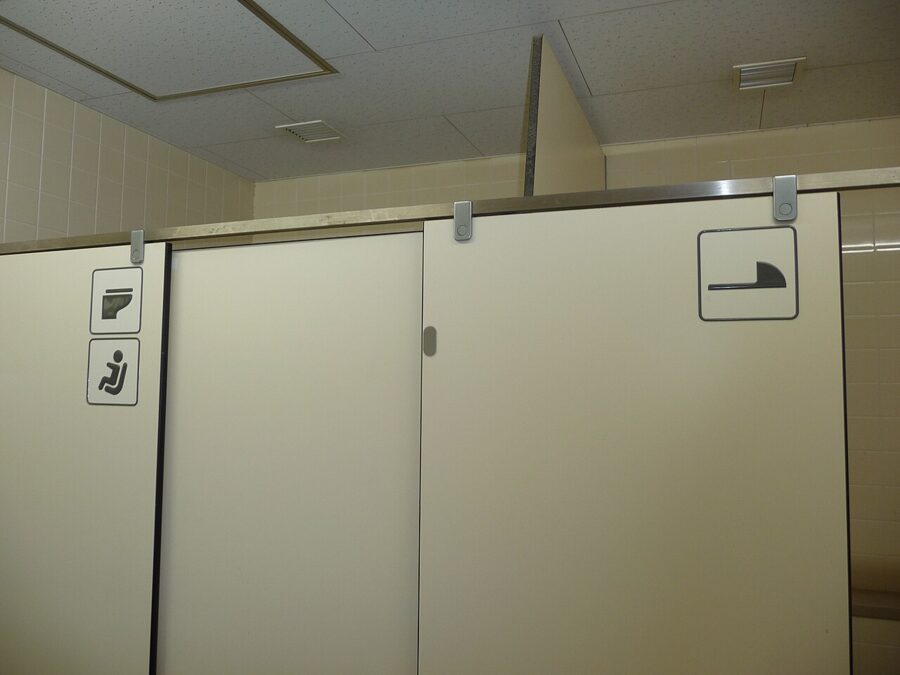
If you can’t squat, look before you queue. Most public toilets now have at least one Western stall, the doors say which is which, and accessible toilets are always Western style.

Toilet slippers, and where they stay
In homes, ryokan, temple lodgings and some traditional restaurants, shoes come off at the entrance and you wear indoor slippers. The toilet has a pair of its own. Step out of the house slippers at the toilet door, into the toilet slippers, and swap back when you leave.
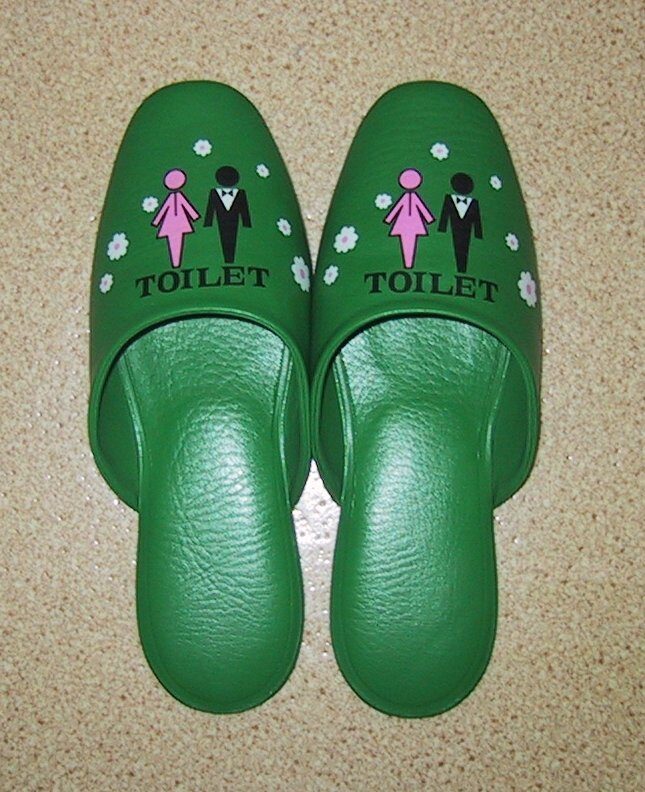

The reason is the line between clean and unclean: the toilet floor is unclean, and the slippers keep it in its room. The same idea runs through the onsen, where you wash before you get in. The classic mistake is walking back down the hall still wearing them, and nobody will scold you, but someone will notice.
Missing slippers outside the door usually mean someone is inside. Knock anyway: two knocks is the custom, and two knocks back means it’s taken.

Paper, and what goes in the bowl
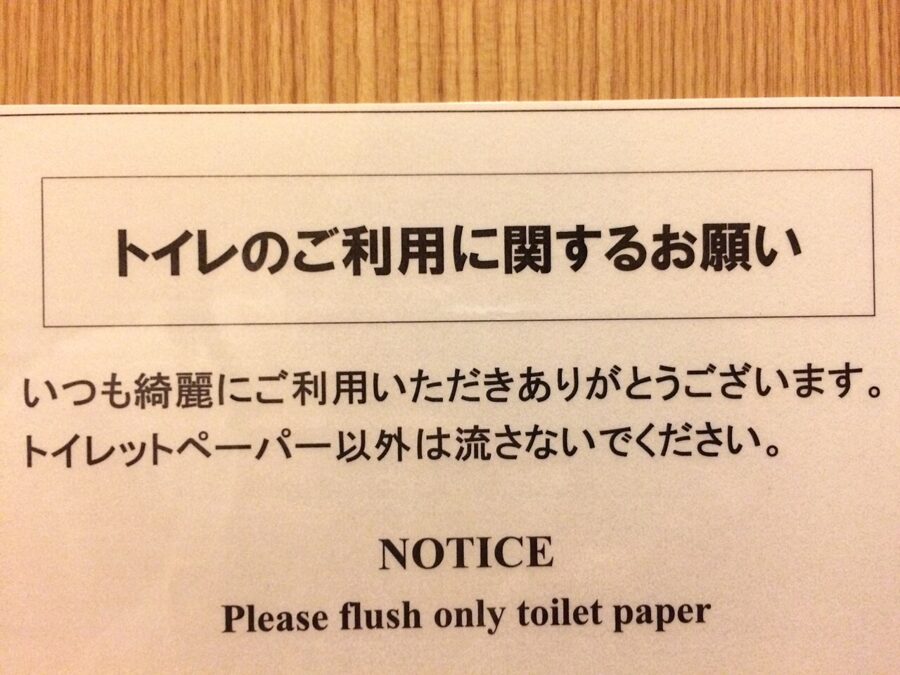
Toilet paper goes in the bowl. Japanese pipes and paper are made for it, so don’t put used paper in the bin, even if that’s the rule at home. Tissues (ティッシュ, tisshu) and paper towels don’t break down the same way and block pipes. Signs say so: トイレットペーパー以外は流さないでください, “please don’t flush anything except toilet paper”.

Sanitary products go in the small lidded box in the stall, the 汚物入れ (obutsu-ire). Paper is almost always provided in public toilets now, and soap usually is. Hand dryers and paper towels aren’t guaranteed, which is why so many people carry a handkerchief, a ハンカチ (hankachi); I would pack one.
Finding one when you need one
Japan is generous with toilets, and nearly all of them are free.
- Stations. Almost every railway and subway station has toilets, usually inside the ticket gates.
- Convenience stores. Many let customers use theirs. Ask first: トイレを借りてもいいですか (toire o karite mo ii desu ka, may I use the toilet?). Some keep it staff-only, and buying a drink on the way out is good manners.
- Department stores and malls. The best public toilets in the country, on most floors.
- Parks, shrines and temples. Public toilets, 公衆トイレ (kōshū toire), are common, and squat toilets most likely.
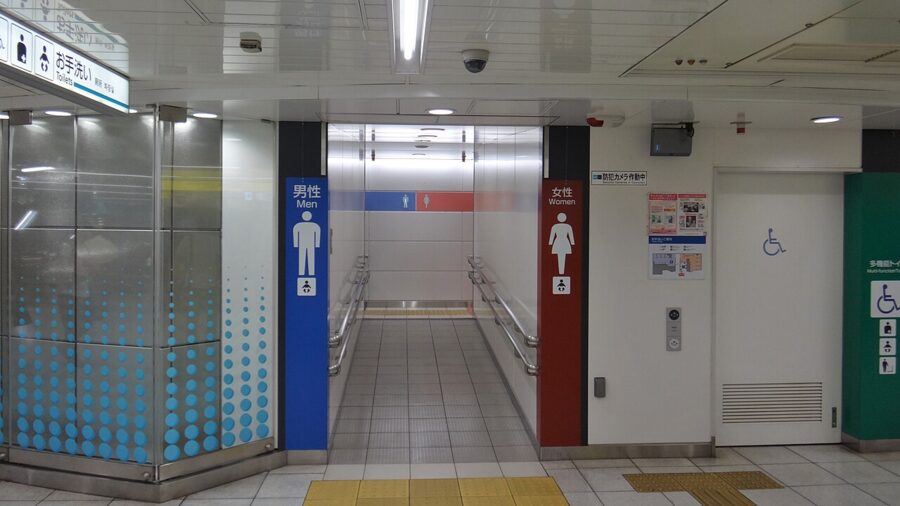

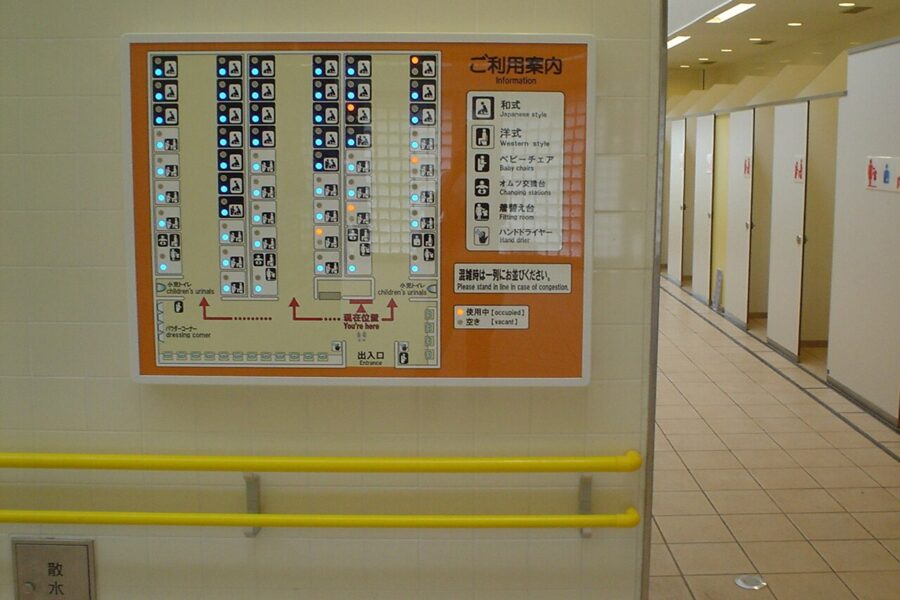
In busy places a board at the entrance may map the stalls; newer ones light up to show which are free. If the women’s line at a station is long, a department store nearby is usually quicker.



The Tokyo Toilet in Shibuya
Between 2020 and 2023, seventeen public toilets in Shibuya were rebuilt by sixteen architects and designers in The Tokyo Toilet, a project started by the Nippon Foundation. All have washlets and wheelchair access, and since April 2024 Shibuya City has run them, with cleaning up to three times a day. Wim Wenders’ film Perfect Days (2023) follows a man who cleans them.
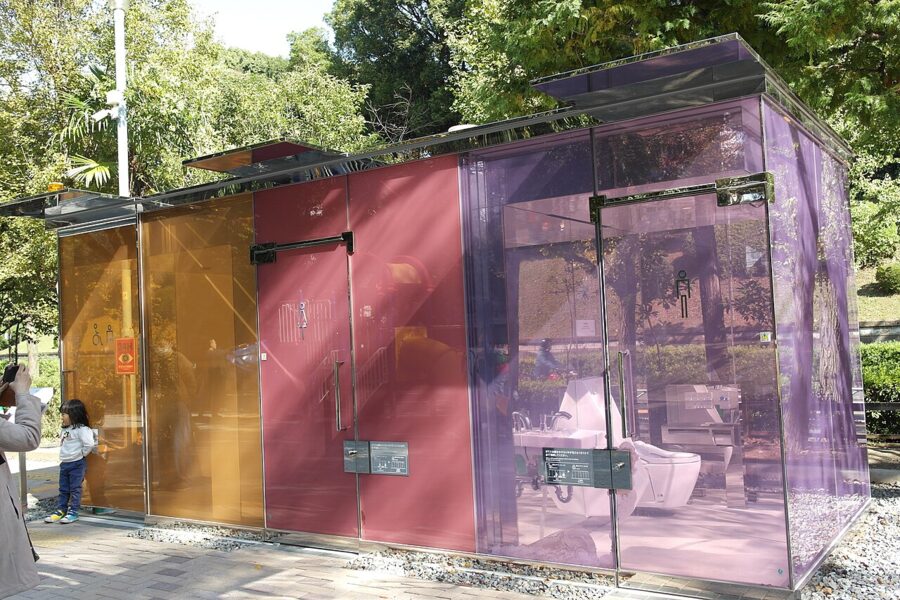

They’re ordinary public toilets, open to anyone, and they make a good walk between Shibuya, Harajuku and Ebisu. The ones I would see first:
- Yoyogi Fukamachi Mini Park and Haru-no-Ogawa Community Park: Shigeru Ban’s colored glass boxes, best after dark.
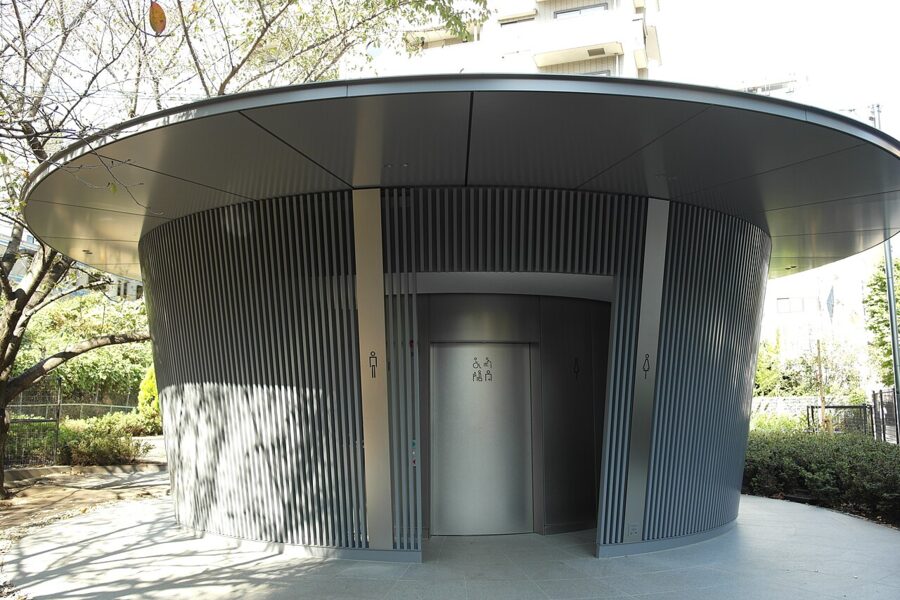
- Jingu-Dori Park: Tadao Ando’s round pavilion, a short walk from Shibuya Station.
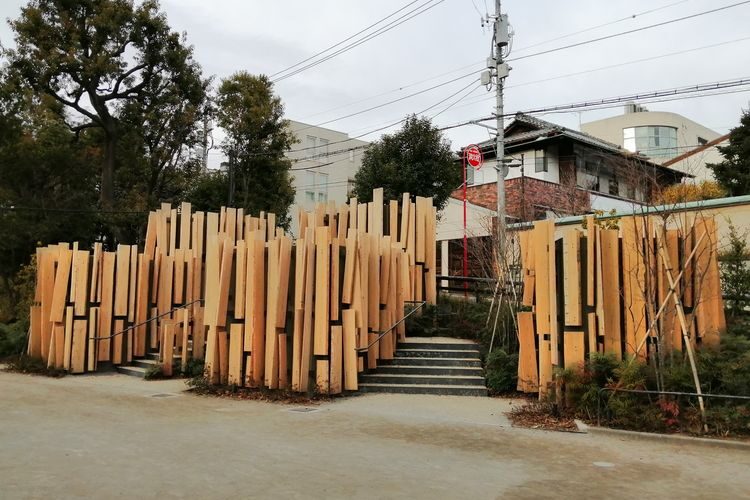
- Nabeshima Shoto Park: Kengo Kuma’s “toilet village” of cedar huts.
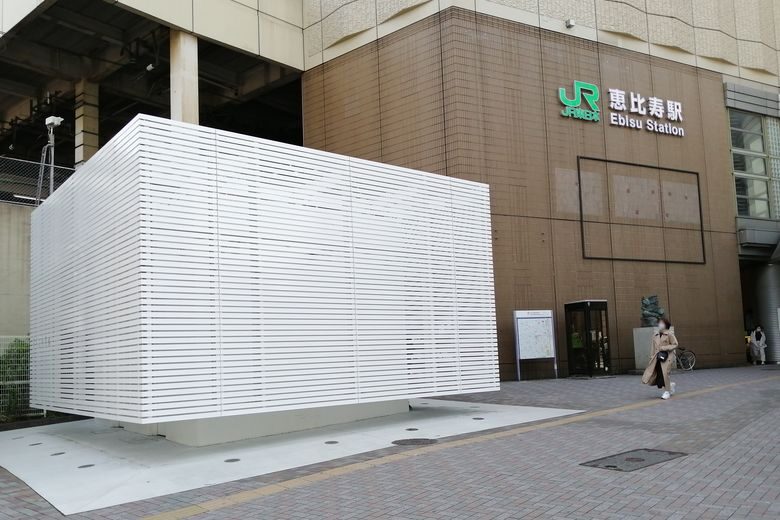
- Ebisu Station, West Exit: Kashiwa Sato’s white louvered box.
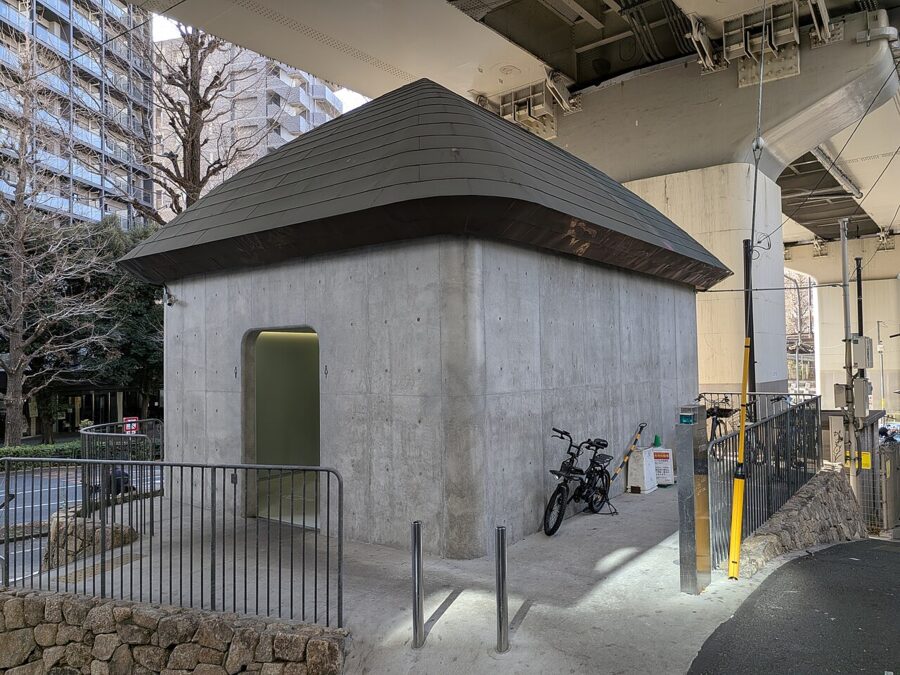
- Urasando: Marc Newson’s concrete hut.



Accessible and family toilets
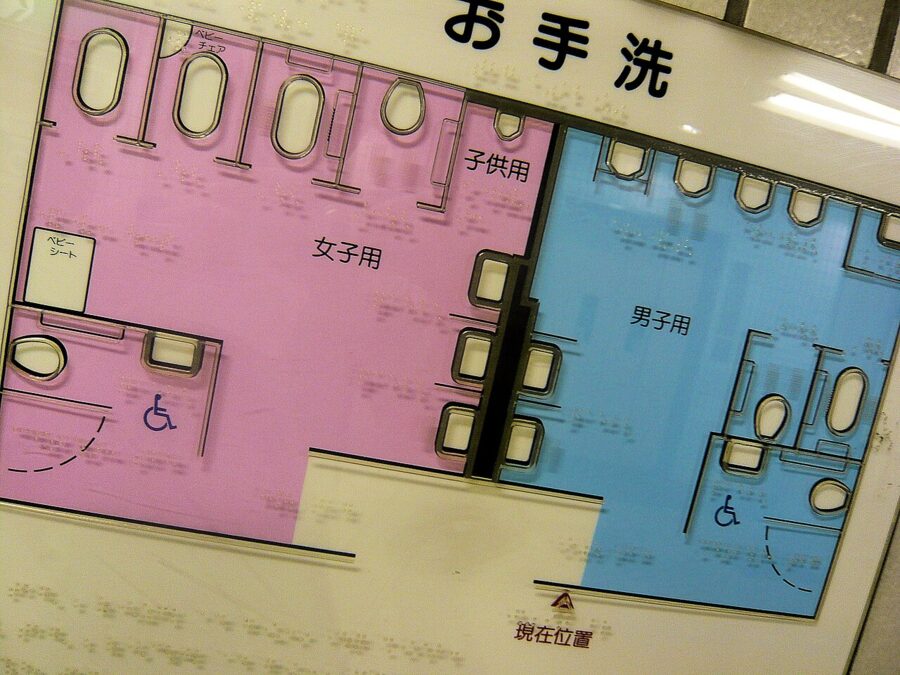
The large single toilet with the wheelchair symbol is a 多目的トイレ (tamokuteki toire, multipurpose toilet), also signed 多機能トイレ, みんなのトイレ (minna no toire, everyone’s toilet), だれでもトイレ (daredemo toire, anyone’s toilet) or バリアフリートイレ. Inside are handrails and room to turn, often a baby changing table, sometimes an adult changing bed, and a sink for people with a stoma, marked オストメイト (osutomeito, ostomate).
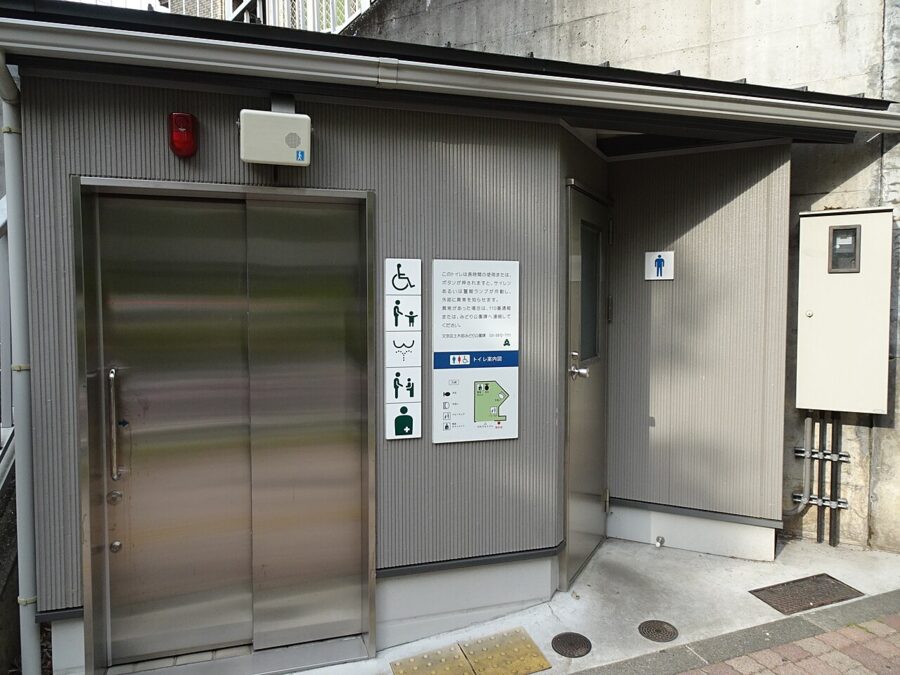

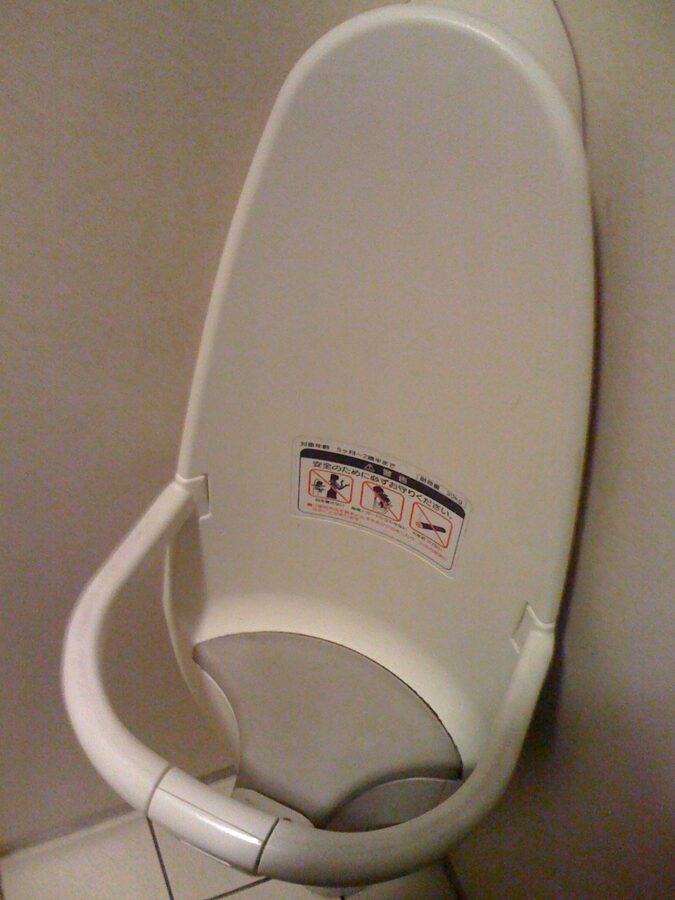
These rooms are for anyone who needs them, including a parent with a stroller or someone helping a person of another gender. Because they get busy, the government’s building guidelines now spread the features out, with baby chairs in ordinary stalls. If you don’t need the multipurpose toilet, use the regular one.


The words on the door
| Sign | Reading | Meaning |
|---|---|---|
| トイレ | toire | Toilet, the everyday word |
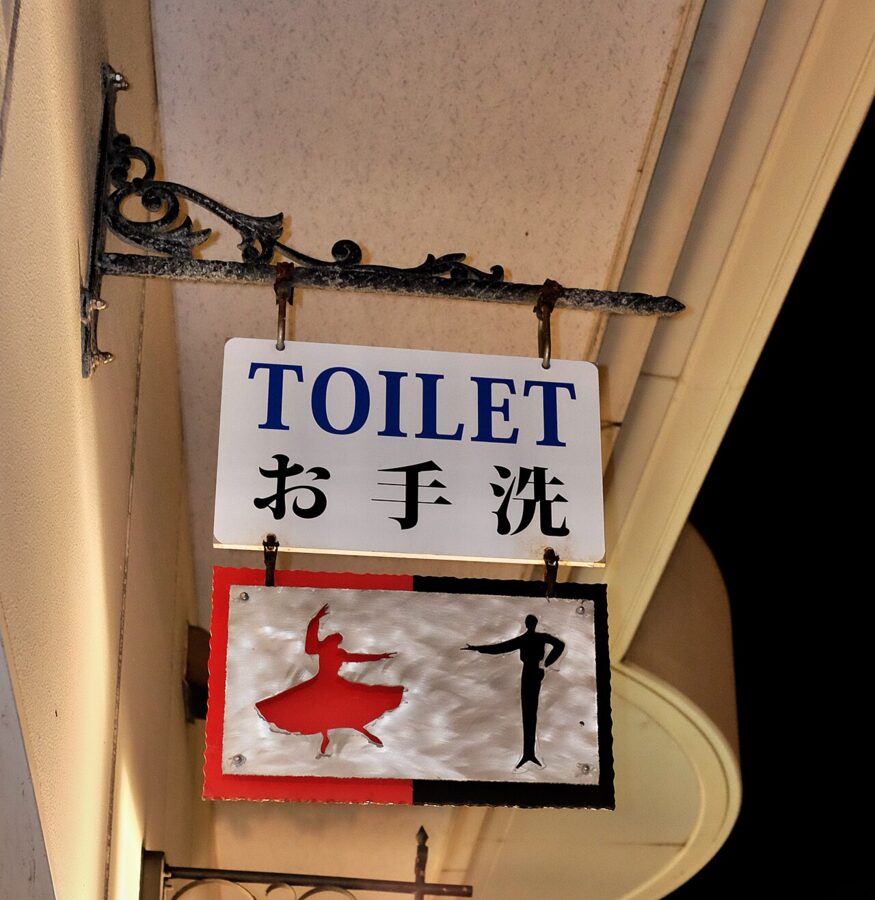
| お手洗い | otearai | Restroom, literally “hand-washing” |
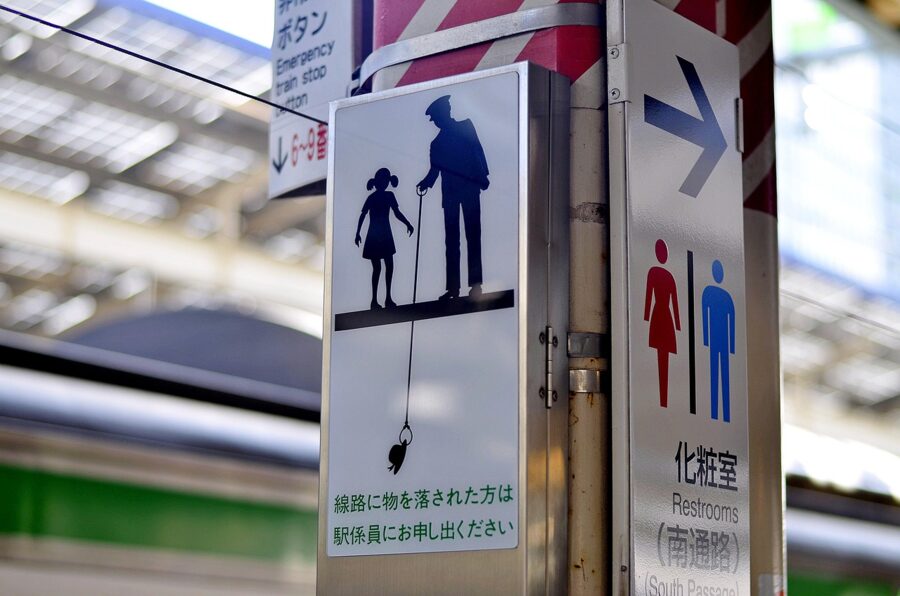
| 化粧室 | keshōshitsu | Powder room; stations, stores, hotels |
| 便所 | benjo | Toilet; old and blunt |
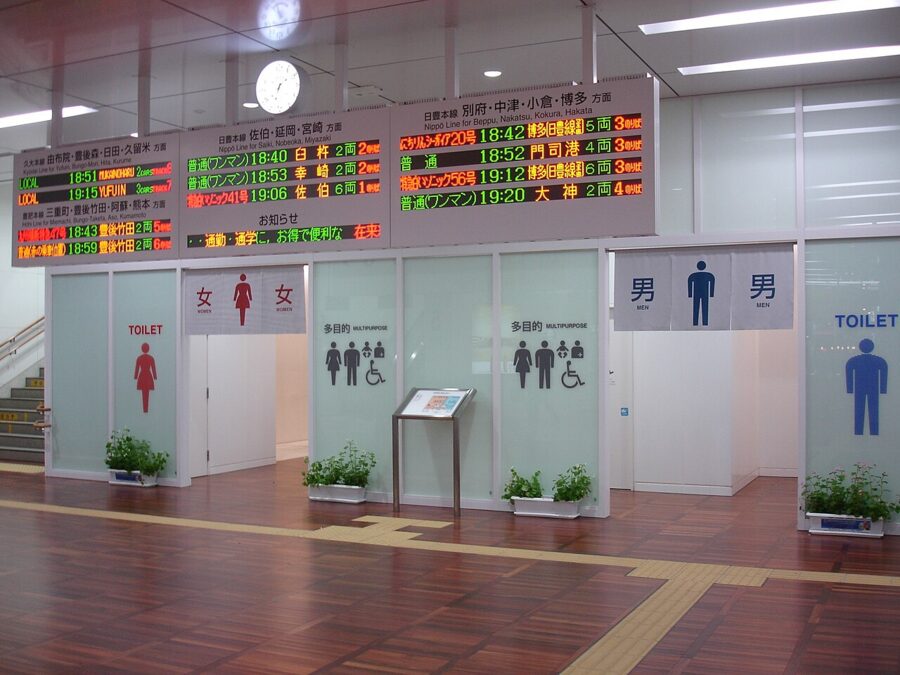
| 男 / 男性 / 紳士 | otoko, dansei, shinshi | Men |
| 女 / 女性 / 婦人 | onna, josei, fujin | Women |
| 多目的 | tamokuteki | Multipurpose toilet |
| 洋式 / 和式 | yōshiki, washiki | Western / squat |
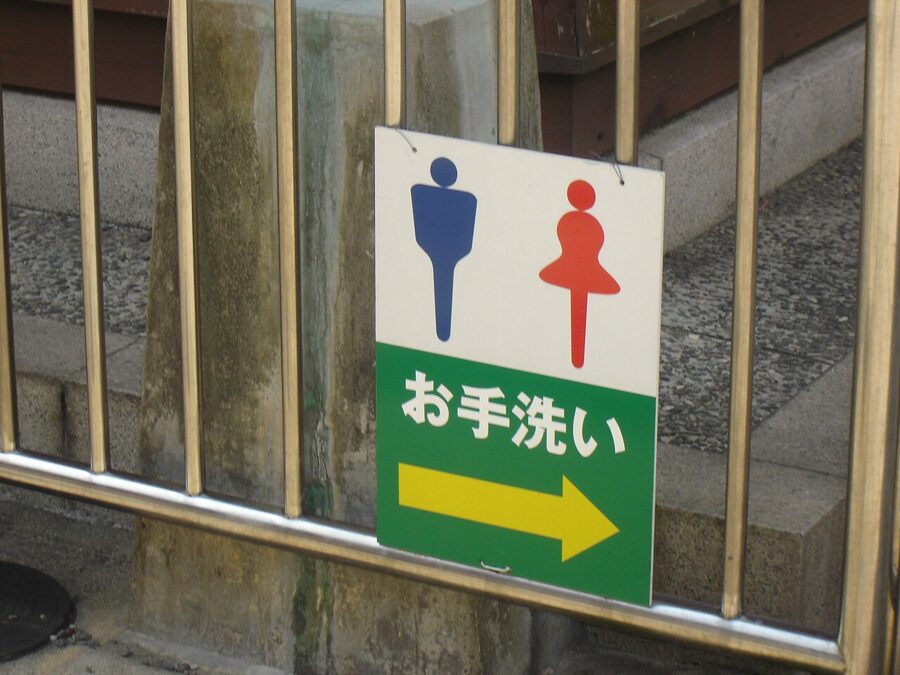

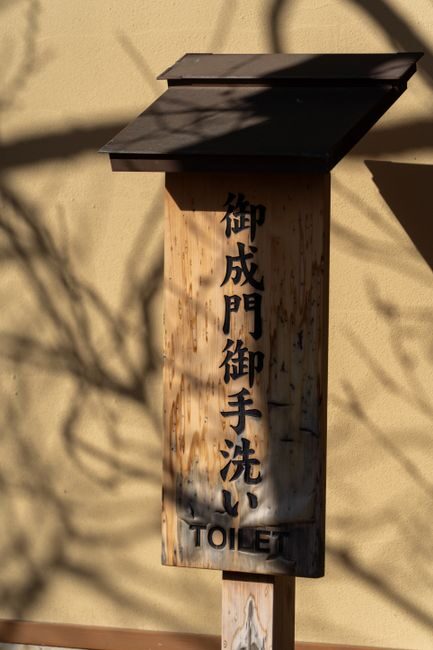
トイレ is written in katakana, the script for borrowed words, and the お and い in お手洗い are hiragana. To ask the way, say sumimasen (すみません, excuse me), then トイレはどこですか (toire wa doko desu ka, where is the toilet?). The guide to how to say hello in Japanese has the other polite openers.

From the first warm-water seat to 70 million
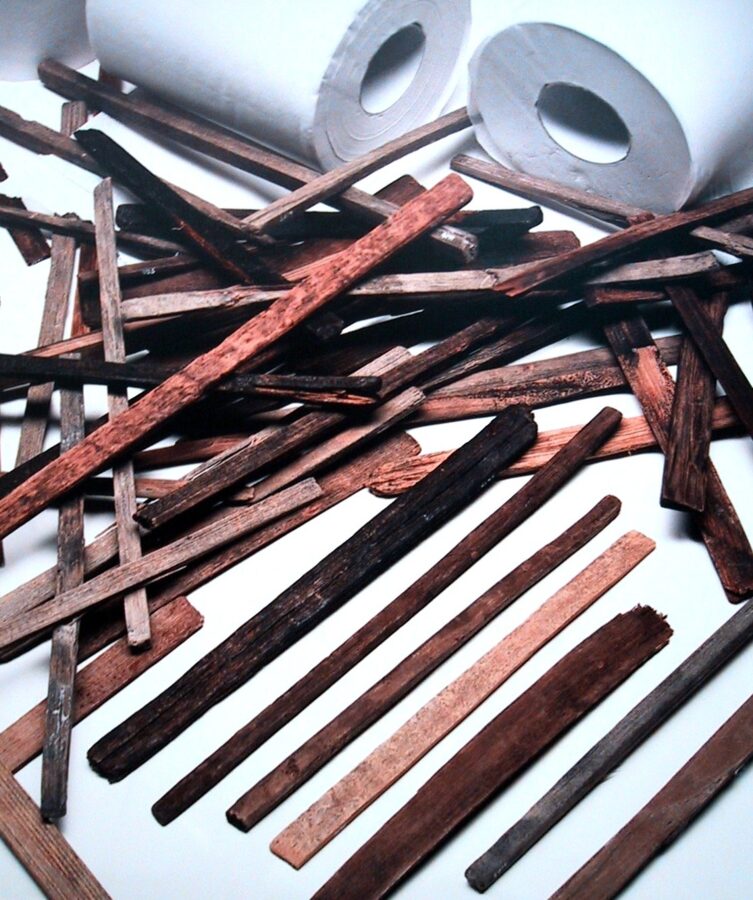
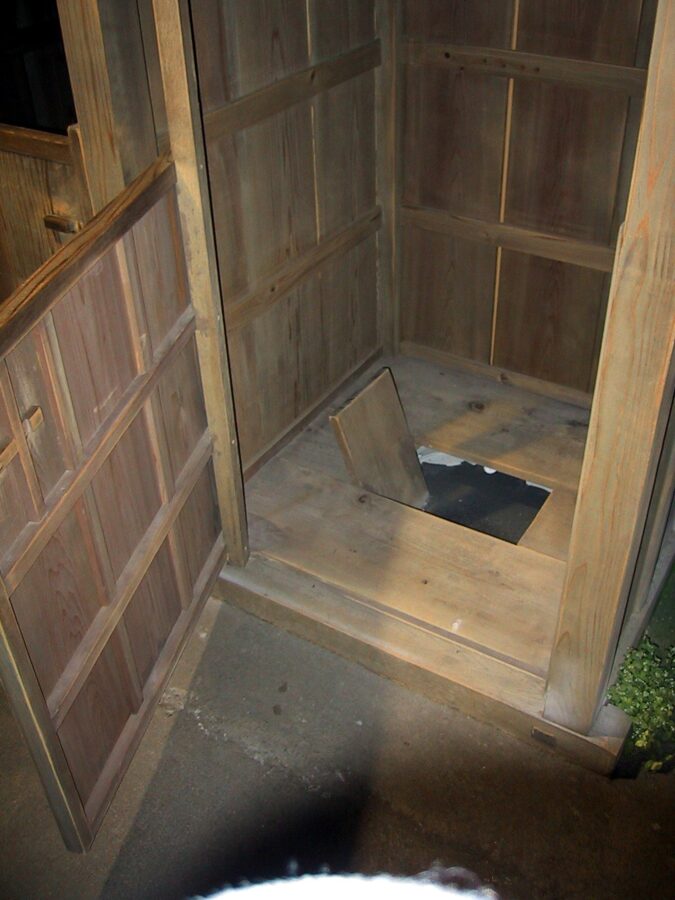
Japan was particular about toilets long before electricity. In the Nara-period capital, from 710, people squatted over narrow channels of running water and cleaned up with wooden sticks called 籌木 (chūgi). By the Edo period paper had taken over, and human waste was sold to farmers as fertilizer, which kept the cities cleaner.


The washing seat came from abroad. In 1964 Ina Seitō (now LIXIL) began importing a Swiss toilet with built-in washing, and Tōyō Tōki (now TOTO) an American seat called the Wash Air Seat. Ina made the first Japanese one in 1967 and TOTO followed in 1969. In June 1980 TOTO launched the Washlet G, the model that named the whole category.
A 1982 TOTO ad with the line おしりだって洗ってほしい (oshiri datte aratte hoshii, “your bottom wants washing too”) did the rest. More than half of households had one by 2002, and the figure passed 80 percent in March 2016. The Cabinet Office consumer survey put it at 82.5 percent of two-or-more-person households in March 2026, with 117 seats per 100 homes, and TOTO says it had sold 70 million Washlets worldwide by 2025.
The toilet museum in Kitakyushu
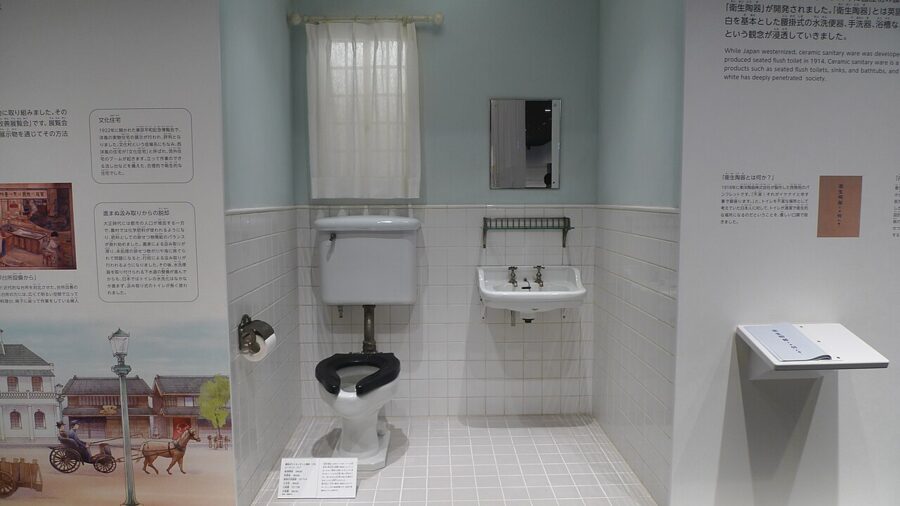
The TOTO Museum in Kitakyushu tells the story with the objects: early Western bowls, washlets through the decades, and toilets saved from famous buildings, including the old prime minister’s residence. It sits beside TOTO’s head office at Nakajima 2-1-1, Kokura Kita Ward, about 15 minutes by Nishitetsu bus or 10 by taxi from the Kokura Castle exit of JR Kokura Station.
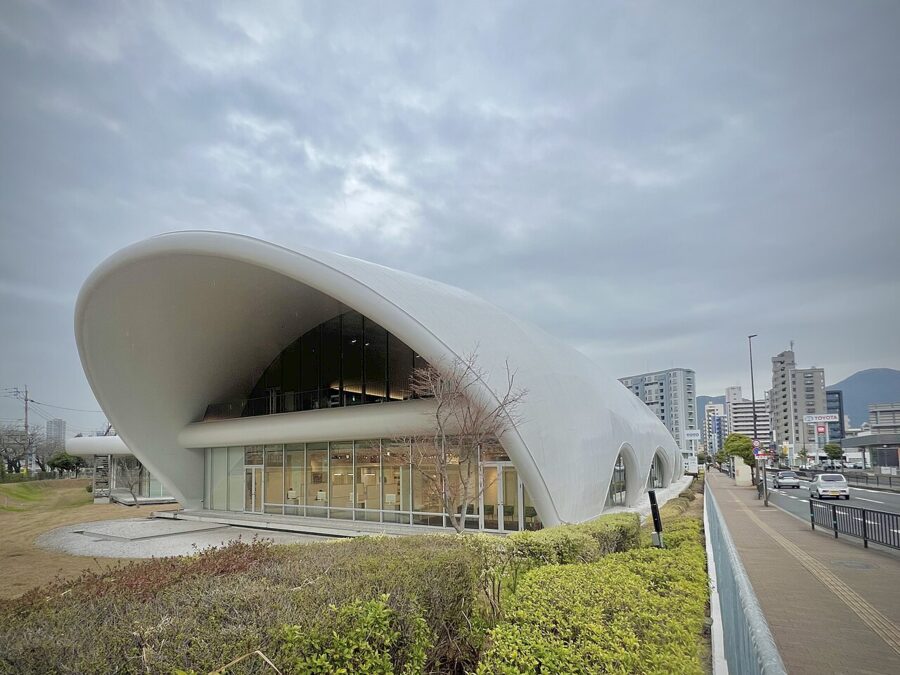

As of November 2026 entry is free, and the museum opens 10 a.m. to 5 p.m. (last entry 4:30 p.m.). It closes on Mondays, Monday holidays included, and over the summer break and New Year. There’s an English leaflet at reception, but no guided tours in other languages.

Before you sit down on your first washlet, find 止. The rest of the panel can wait.