
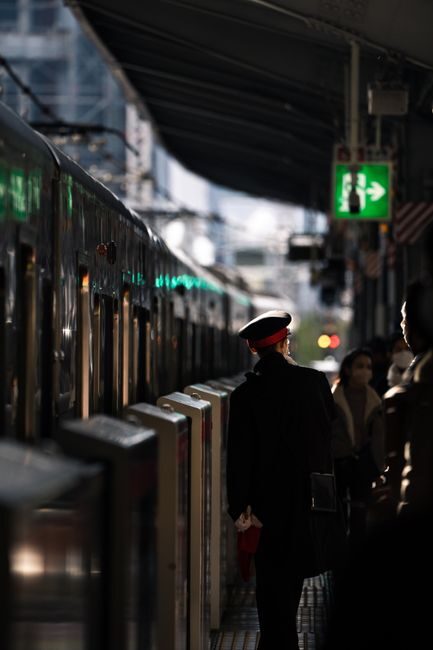
The conductor on a Japanese train who walks the length of a car will usually stop at the far door, turn to face the seats and bow before stepping through, to a carriage of people who mostly do not look up. Nobody bows back, and nobody expects you to.
Key facts About
- 会釈 (eshaku)
- 15°
- 敬礼 (keirei)
- 30°
- 最敬礼 (saikeirei)
- 45° or more
That bow, お辞儀 (ojigi), is the gesture you will see most in Japan and need least. Staff bow to you from the moment you land, and what you owe in return is usually a nod and a word. Behind that nod sit three formal bows that Japanese office workers are drilled in, a set sequence at every shrine, a herd of deer in Nara that bow for crackers and the long, deep bows on the evening news.
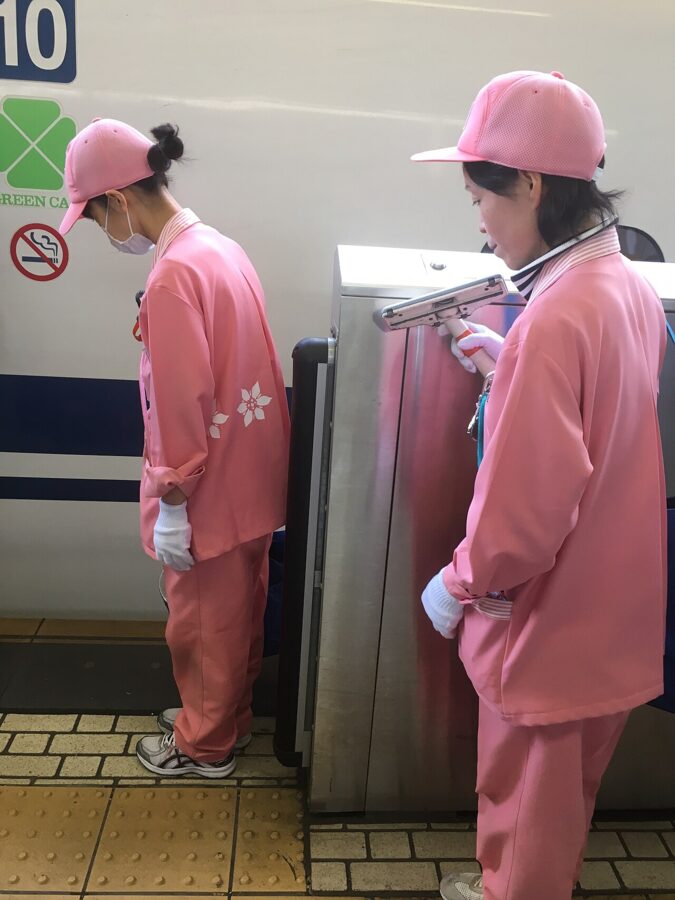
The manners guide from Japan’s national tourism organization says plainly that nobody from abroad needs to learn every rule for bowing unless the setting is very formal. A courteous nod when you greet someone, or when you enter and leave a shop, covers almost everything.
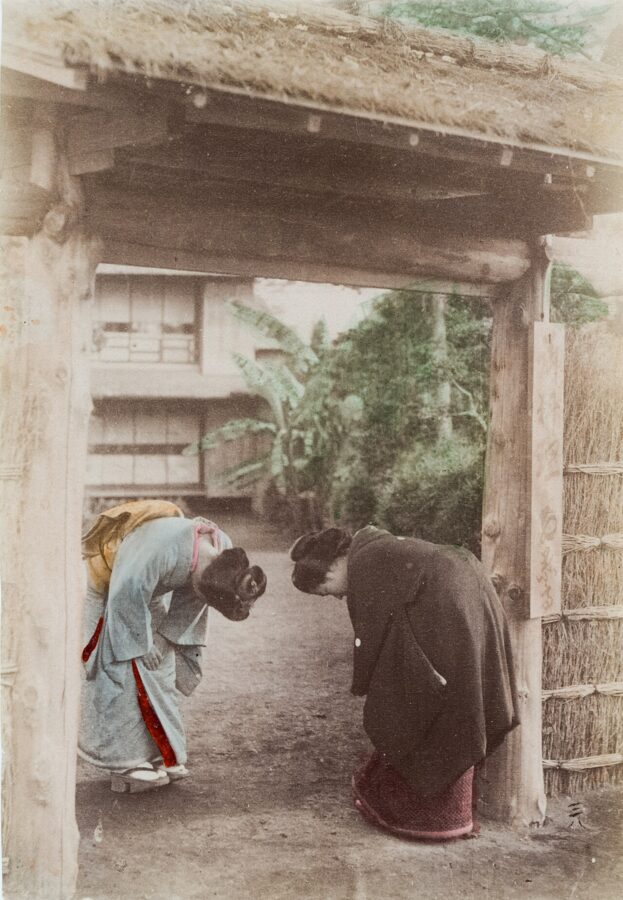
What ojigi says, and where it came from
A bow in Japan does the work of several English words: hello, thank you, sorry, please and goodbye, plus the start or end of a class, meeting or ceremony. Children learn the mechanics early, standing at the start of each school lesson for the call 起立、礼 (kiritsu, rei: stand, bow). The kanji 礼 (rei) means both the bow and good manners in general, which says a lot about how central the gesture is.
The word has wandered. Japanese dictionaries tie 辞儀 (jigi) to an older word, 時宜, whose first sense is “the right moment”; by the late 1400s it could also mean a greeting suited to the moment. The Nihon Kokugo Daijiten lists two later meanings of ojigi that never reached the manners books: a shop going out of business, and nodding off in your seat.
The bow itself is old. It is widely believed to have become the accepted greeting in the Asuka period (593 to 710), when Buddhism and its bows of reverence arrived from the mainland, and samurai households later made it a formal part of warrior etiquette. The Ogasawara-ryū school, which has taught etiquette and archery for more than 830 years, explains a bow as lowering your eyes and exposing your head: a show that you mean no harm.
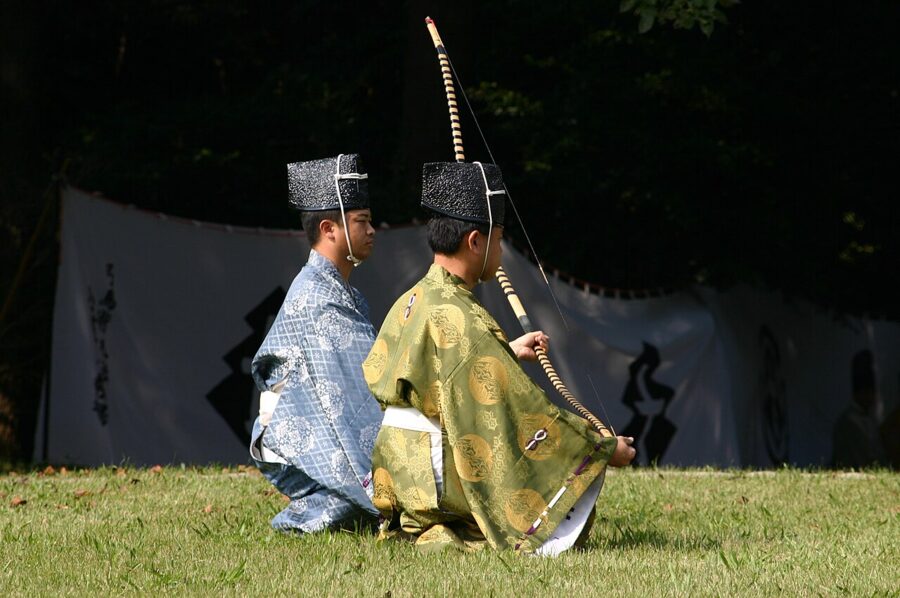

The three bows, as manners courses teach them
Japanese companies, schools and etiquette books teach three standing bows. The angles below are the ones most courses use. They are a convention, not a rule, and some manuals set each bow deeper.
| Bow | About | When it is used |
|---|---|---|
| 会釈 (eshaku) | 15° | Passing someone in a corridor, entering or leaving a room, a light hello to someone you know |
| 敬礼 (keirei) | 30° | Greeting a guest or client, first meetings, arriving at someone’s office: the everyday proper bow |
| 最敬礼 (saikeirei) | 45° or more | Deep thanks, apology, a serious request, ceremonies, and prayer at a shrine |
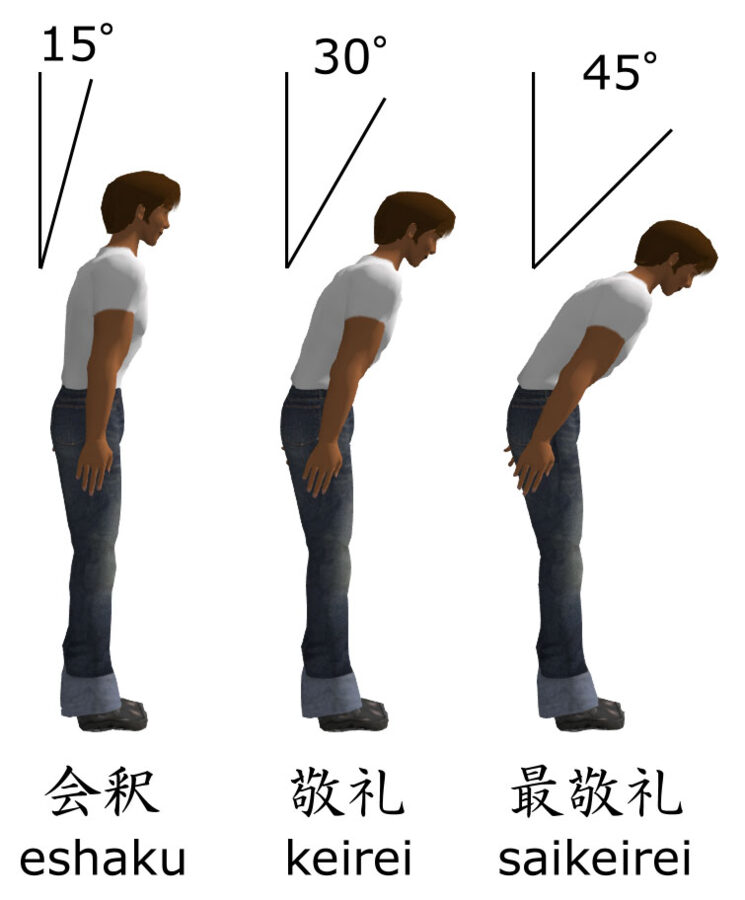
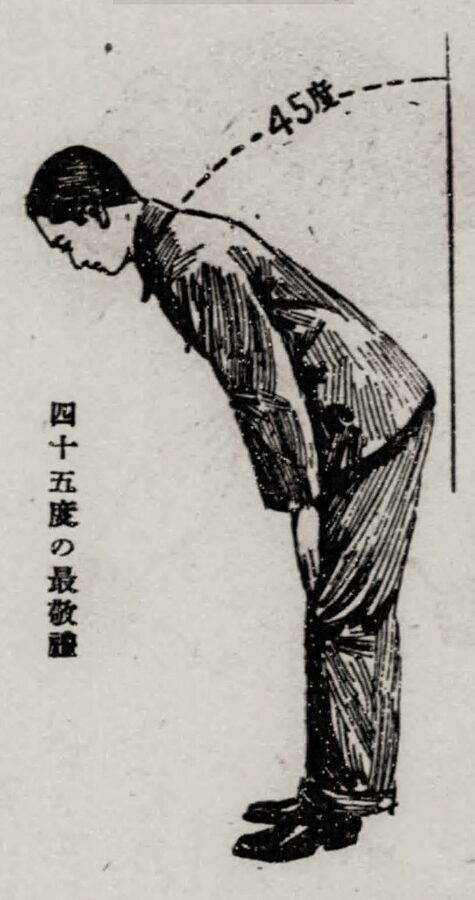
Sources disagree on the numbers. An etiquette guide supervised by an Ogasawara-school instructor sets keirei at 45 degrees and saikeirei close to a right angle, and a German broadcaster’s explainer gave saikeirei as deep as 70. A 1941 etiquette manual issued under the Ministry of Education drew saikeirei at exactly 45.
Timing is a matter of breath. The old teaching is 礼三息 (rei san soku), a bow in three breaths: in as you bend, out while you hold, in again as you come up. In practice that means do not bob, because a bow that pauses at the bottom looks meant and one that snaps up looks like a twitch.
Men are usually taught to keep their arms straight at their sides, women to rest one hand over the other in front. The folded-hands bow you get from hotel and department-store staff is younger than it looks: one theory traces it to staff training at the shop that became Mitsukoshi, the Tokyo department store.


On tatami: the seated bow
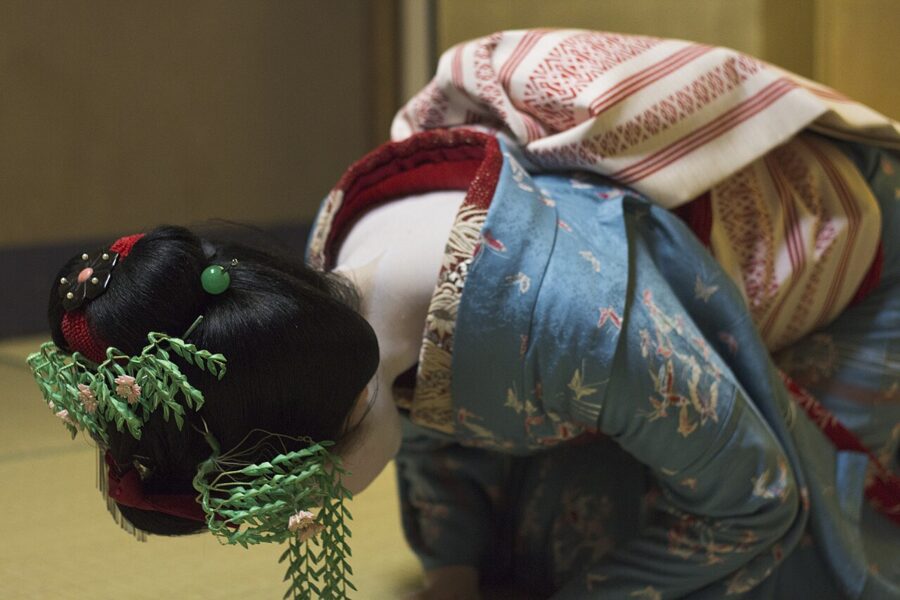
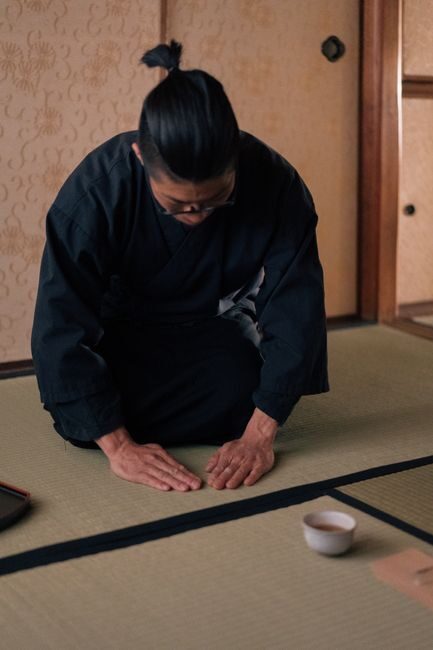
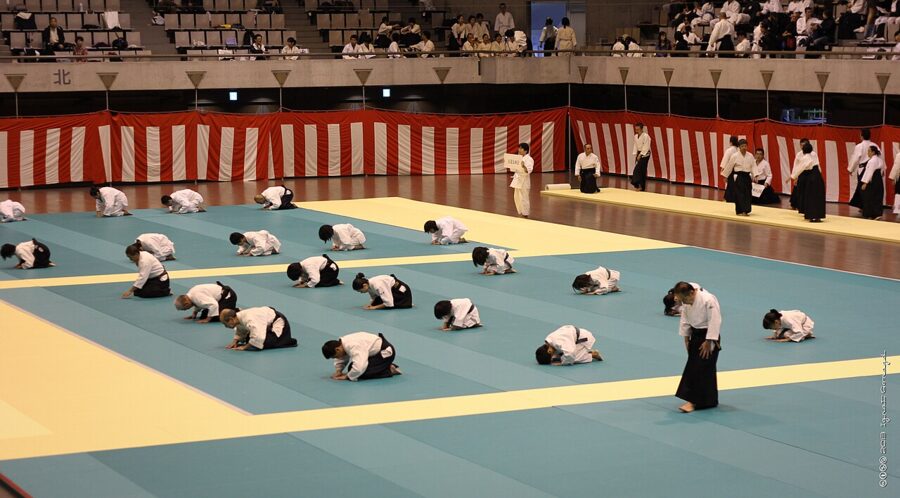
On a tatami floor the bow is made sitting, 座礼 (zarei), from 正座 (seiza): kneeling and sitting back on your heels, hands on your thighs. For the deepest version the hands slide forward onto the mat, fingertips close enough to form a triangle, and the head comes down toward them. You meet it at a tea ceremony, at a formal dinner in a ryokan, in a martial-arts hall and when a maiko, an apprentice geisha, thanks her guests.
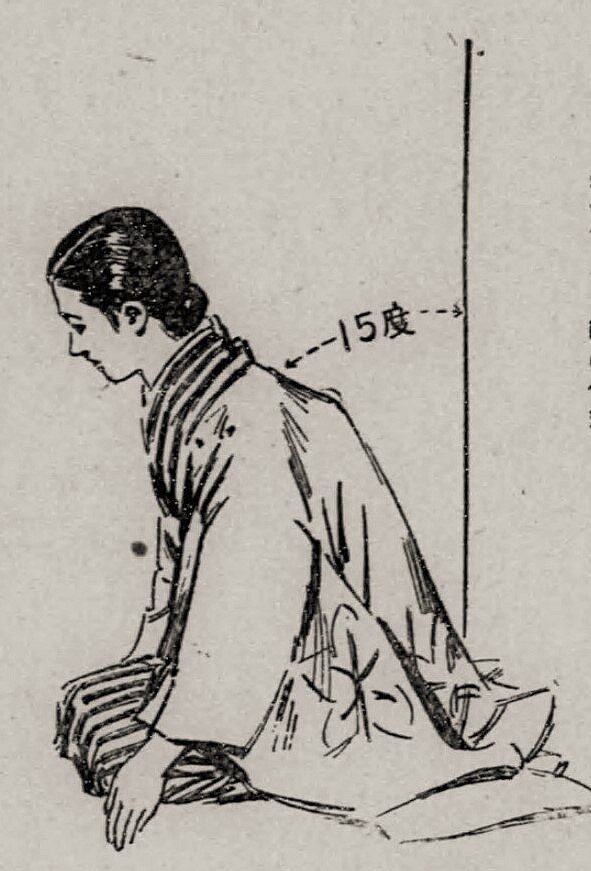
Nobody expects a guest from abroad to hold seiza for long, and it hurts if you are not used to it. If a host bows to you from the floor, a bow from wherever you are sitting, even cross-legged, is a fine answer.

What you actually do: the nod
Most of the bows aimed at you need no bow back. The convenience-store clerk calling いらっしゃいませ (irasshaimase, welcome), the attendant bowing as you leave a department store and the conductor on the train are doing their jobs, and a reply would puzzle them slightly. A reply fits face to face: when someone hands you something, helps you or says goodbye to you.
That reply is a nod, a dip of the head and shoulders of ten or fifteen degrees at most, with a word. Use ありがとうございます (arigatō gozaimasu) for thanks, すみません (sumimasen) for excuse me or sorry, and the ordinary greetings for hello. The word matters more than the angle, and a deep silent bow is stranger than a small nod with arigatō.
At a hotel desk, nod as you are handed your key. At a ryokan the 女将 (okami, the landlady) may greet you kneeling at the entrance with a full bow; a slow nod from standing and a thank-you is the right size of answer. In a taxi a nod and arigatō as you get out finish the ride, and leaving an izakaya, ごちそうさまでした (gochisōsama deshita) said toward the counter, with a nod, closes the meal.
At shrines and temples
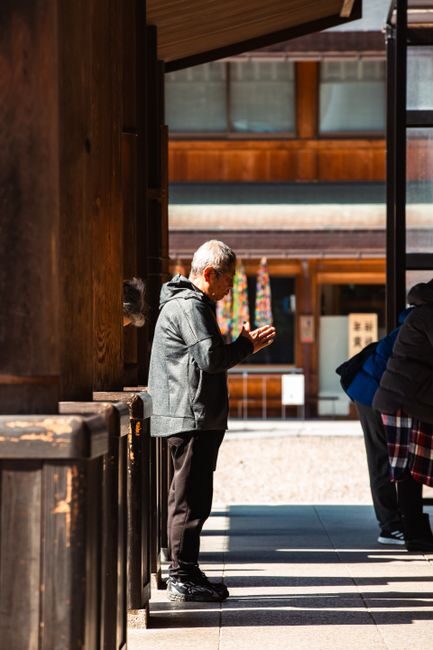
At a Shinto shrine the bow is part of the worship, and here it is worth doing the full thing. Many people make a small bow at the 鳥居 (torii) on the way in, since the gate marks the start of sacred ground, and turn back to bow toward the main hall on the way out.
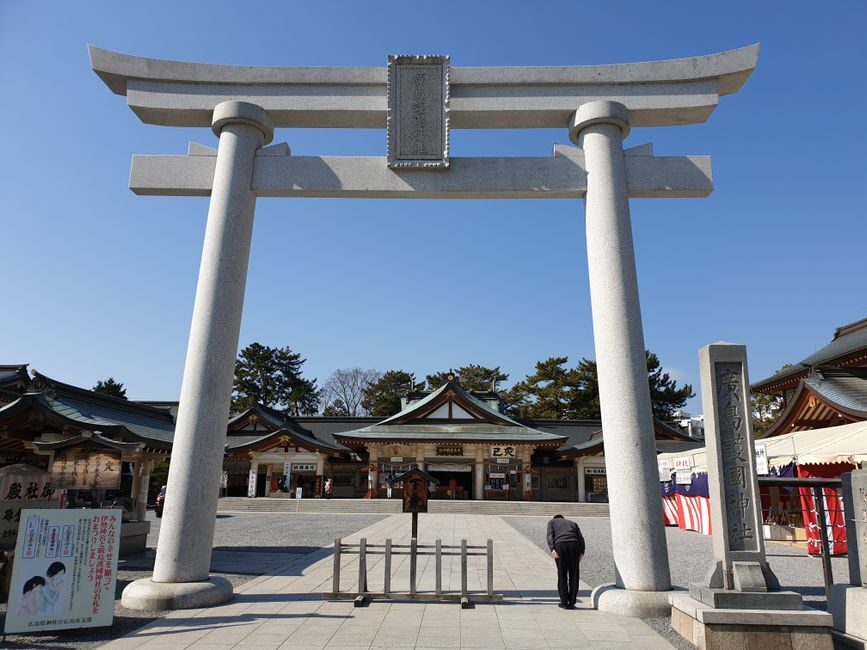
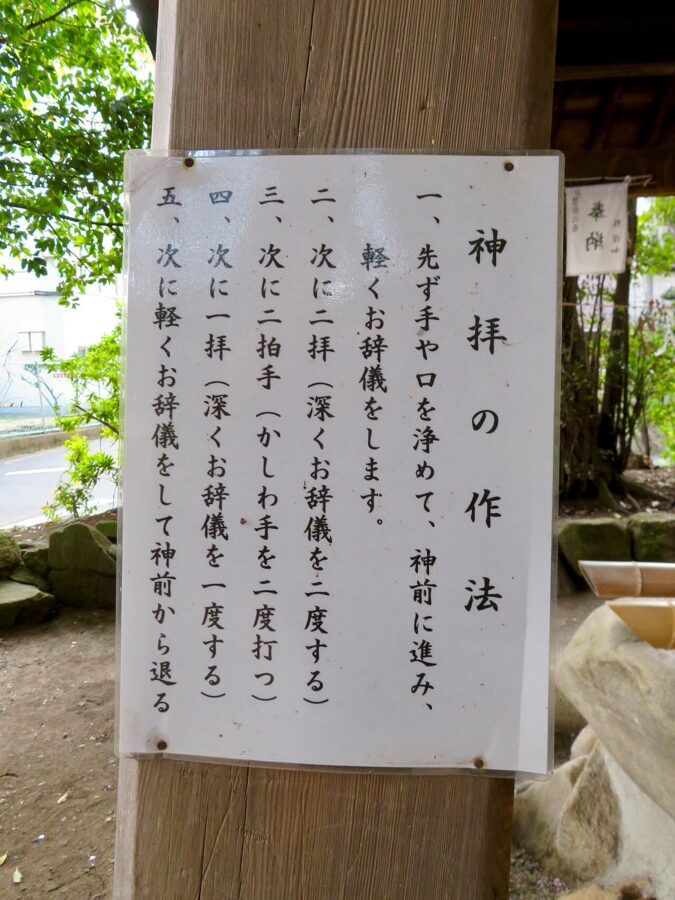
At the main hall, Meiji Jingu’s own sign puts the sequence in five steps:
- Drop a coin into the offering box.
- Bow deeply twice.
- Bring your hands to chest height and clap twice, slowly.
- On the second clap, keep your palms together and pray silently.
- Bow deeply once more.
In Japanese this is 二拝二拍手一拝 (nihai nihakushu ippai), two bows, two claps, one bow, and the bows are saikeirei-deep. The sign adds that no amount is recommended for the offering, because the act of reverence is what counts.
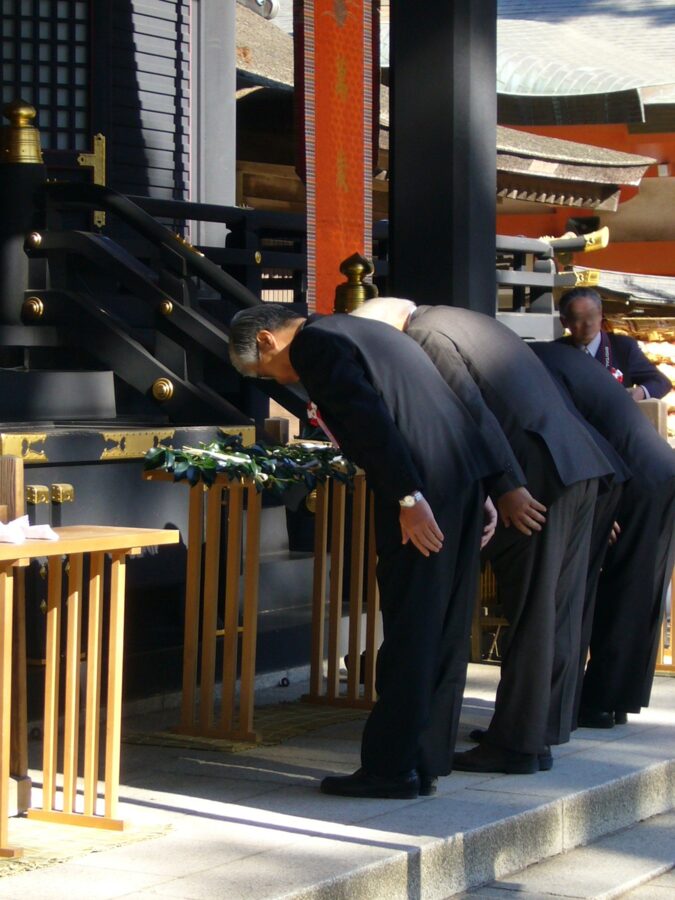

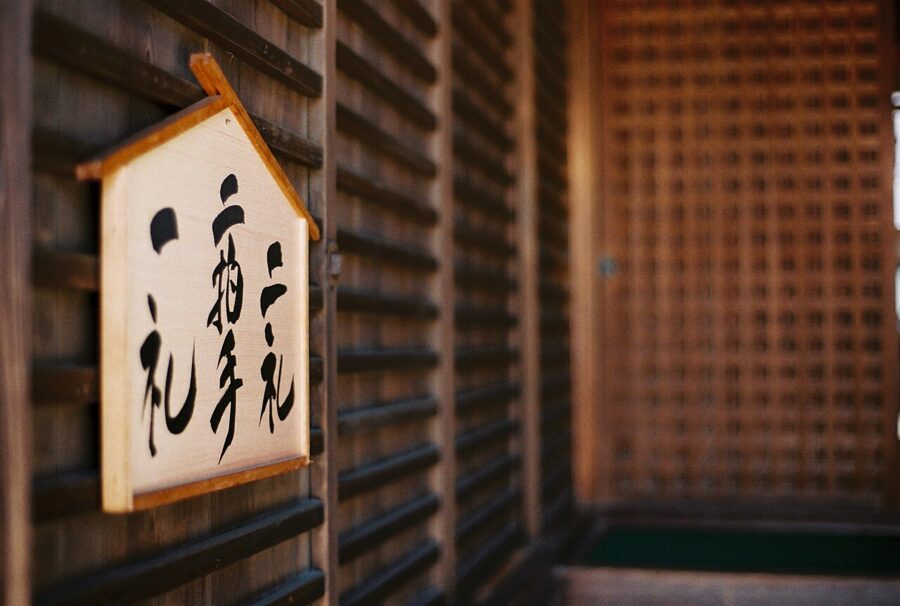

The sequence is younger than it looks. The Kokugakuin University Encyclopedia of Shinto notes that two bows, two claps and one bow is a development of the years after World War II, following the protocol of the Association of Shinto Shrines. Older records show many local styles, and the most widespread was two bows, a prayer and two more bows.

Some shrines keep their own count. At Izumo Taisha in Shimane the form is two bows, four claps and one bow, and at its annual grand festival on May 14 the claps go up to eight, the number long used for the limitless. Do what the shrine’s sign says; where there is no sign, two, two and one is never wrong.
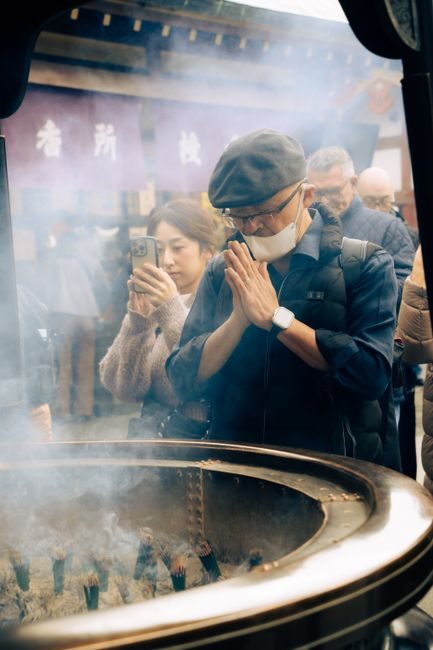
Buddhist temples are quieter. Bow at the 山門 (sanmon) gate, then at the main hall put your palms together in front of your chest, 合掌 (gasshō), and bow without clapping. Clapping at a temple is the one shrine habit worth leaving at the shrine.
Dojo, business cards and handshakes
In a 道場 (dōjō, a martial-arts training hall) the bow is the punctuation of practice. You bow at the door on entering and leaving, to the teacher at the start and end of class and to each partner before and after an exercise, standing or from seiza. If you join a class for a day, copy the person next to you; teachers would rather see a late bow than none.

Business cards, 名刺 (meishi), are swapped with a small bow. Hold yours in both hands with the text facing the other person and say your name, then take theirs in both hands, read it and do not pocket it straight away. The bow is a keirei at most, and between equals it barely shows.
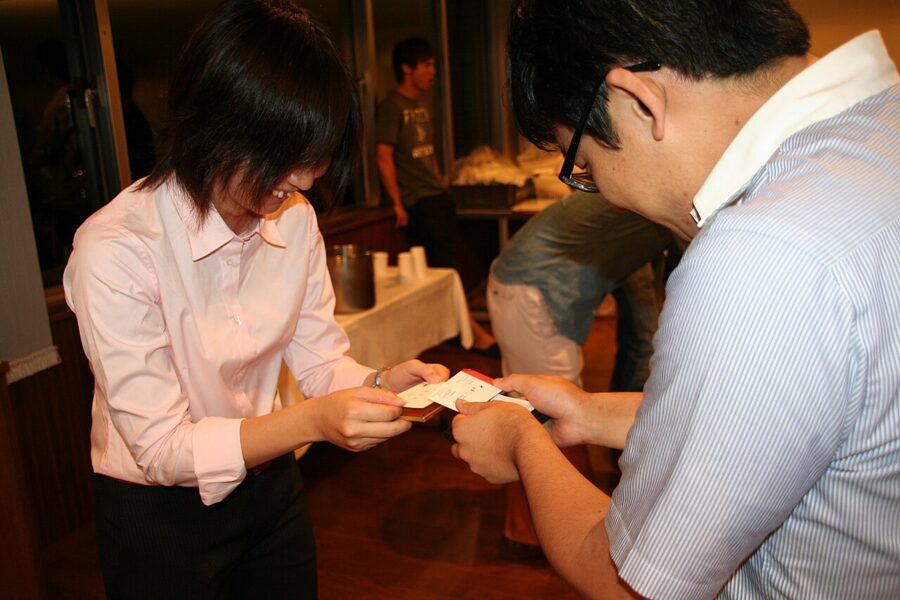

Handshakes are common with people from abroad, and many Japanese people mix the two. The Ogasawara-school guide points out that bowing while shaking hands looks as if you are avoiding the other person’s eyes, and that many Japanese people hold a hand rather than shake it. My advice: if a hand is offered, shake it and look at the person, then save the nod for just before or after.
The bows nobody expects you to return
On the shinkansen you will see the same small ceremony more than once: the conductor, or the attendant with the snack cart, stops at the door, turns to the seats and bows before leaving the car. It is a bow to the room, not to anyone in it, and the right response is to carry on with your book.
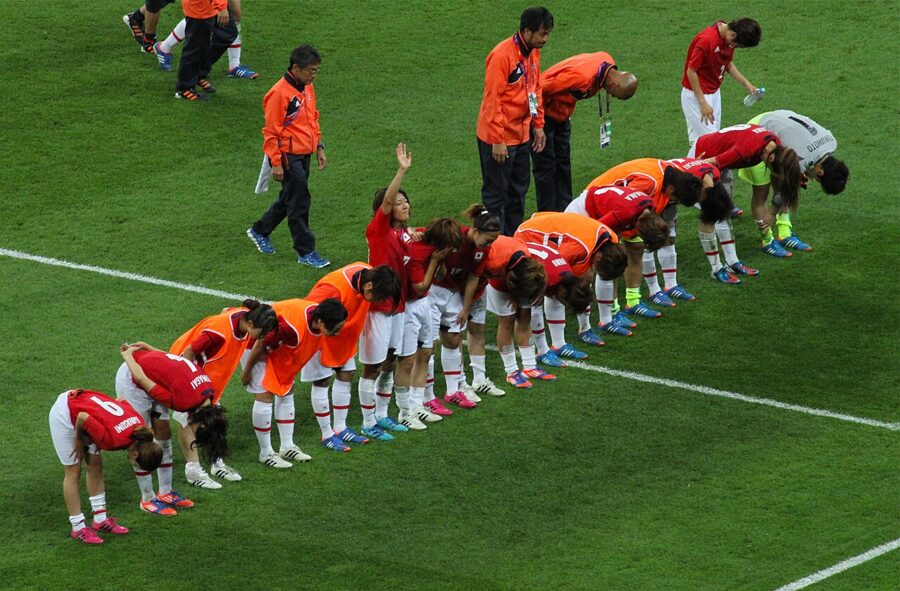
Sports teams do it too. Japanese players line up and bow to their fans after a match, win or lose, and at the 2019 Rugby World Cup in Japan several visiting teams copied the hosts and bowed to the crowd. Overseas viewers sometimes read a bow after a defeat as an apology, when it is a thank-you for the support.

The deer of Nara who bow
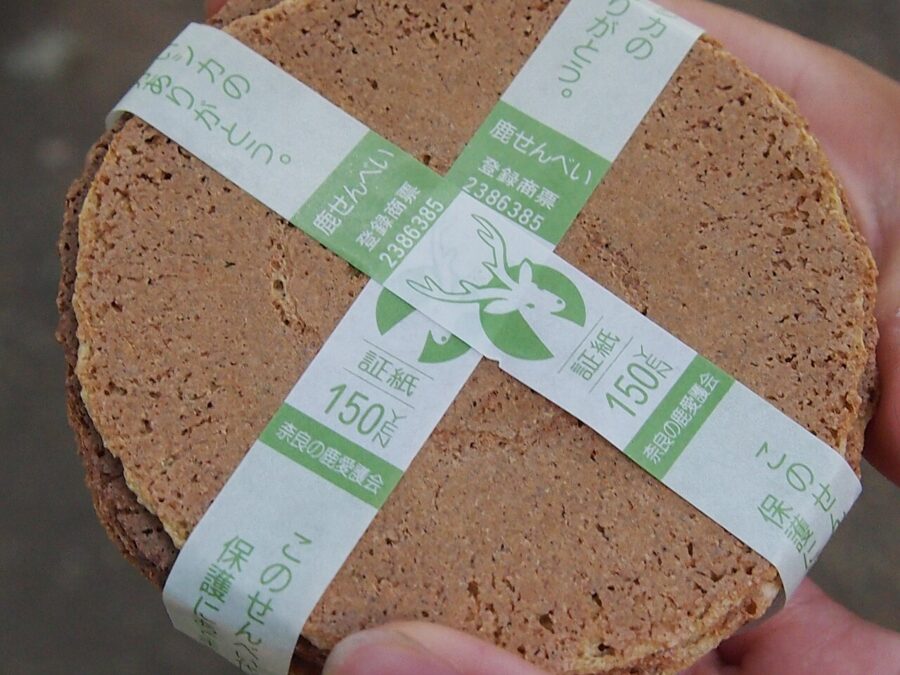
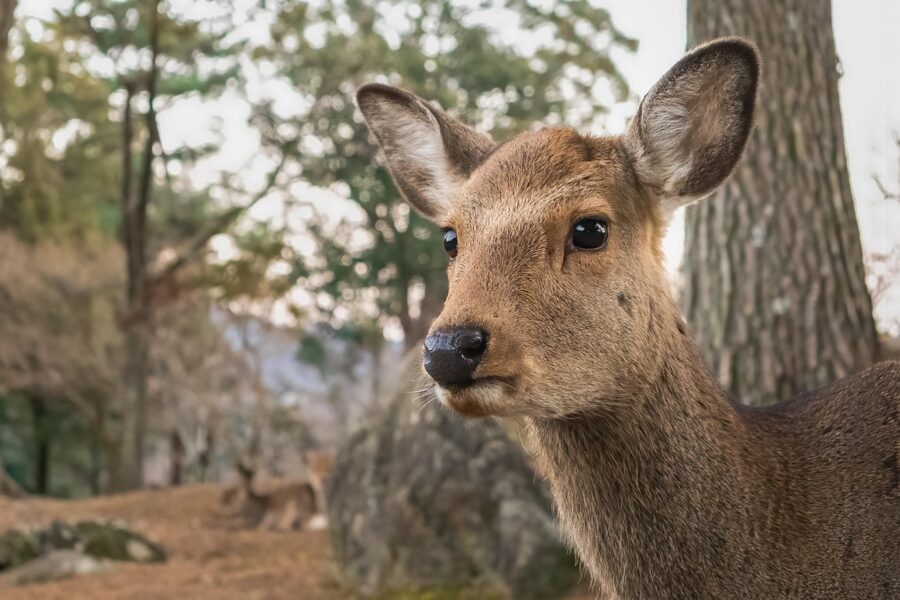
Nara Park is home to 1,687 wild sika deer, as counted in July 2026, protected as a national natural monument, and many of them bow. Hold up a 鹿せんべい (shika senbei), the deer cracker sold from stands around the park, and a deer may dip its head at you, sometimes several times over.
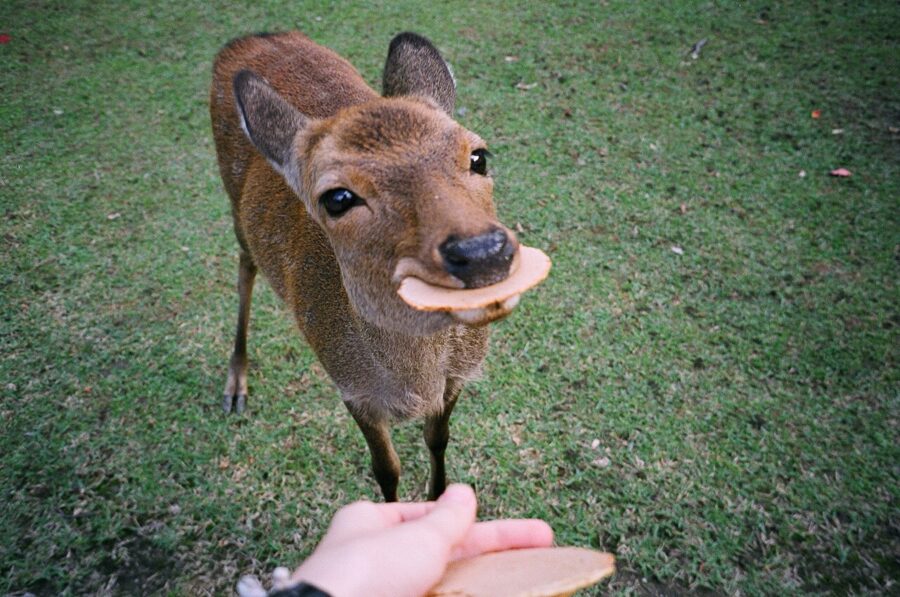

The Nara Deer Preservation Foundation, which looks after the herd, asks for one thing in return: when a deer bows, hand over the cracker promptly. Holding it back, or pretending to have one, stresses the deer and can make it aggressive, and children, whose faces are at deer height, are the most likely to be butted. However tame they look, these are wild animals, and the foundation asks you not to touch them.
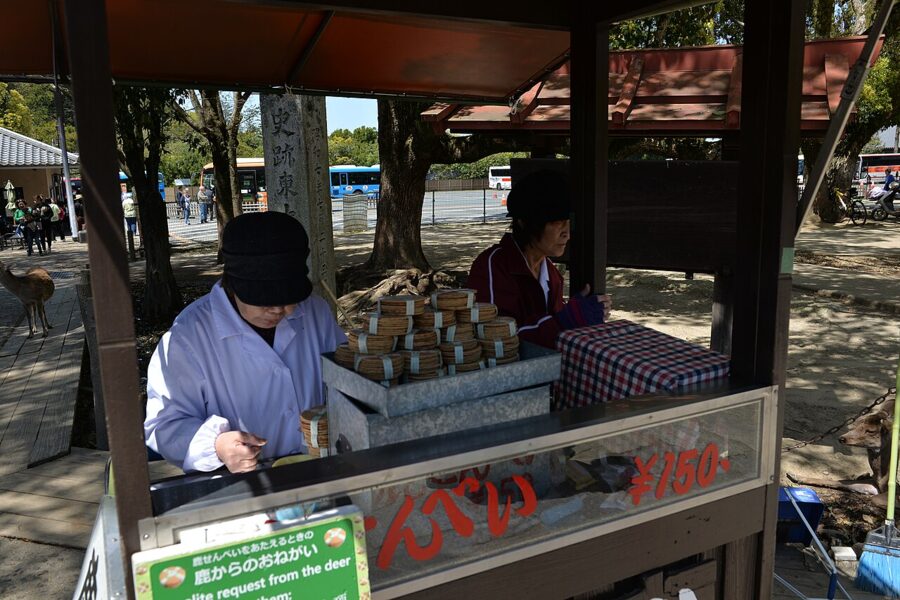

The crackers are a snack, not a meal. The foundation says they are made mainly of rice bran with no sugar or spices, and asks that nothing else be fed to the deer. In autumn the stags are in rut and short-tempered, which is why the foundation removes their antlers every year.

Mistakes, and the bow on the news
Most mistakes come from trying too hard. Bowing over and over, the quick bobbing called ペコペコ (pekopeko), reads as nervous, and one bow is enough. The other classic error is looking up at the person while you bow, which tilts your eyes into the upward glance Japanese manners books warn against.
Take your hands out of your pockets first, or any bow turns into a shrug. Stop walking for anything deeper than a nod: the passing eshaku can be made on the move, but a full bow while striding past someone looks like a stumble. On the phone, do as you like; Japanese people nod to callers who cannot see them, and nobody counts it as a mistake.
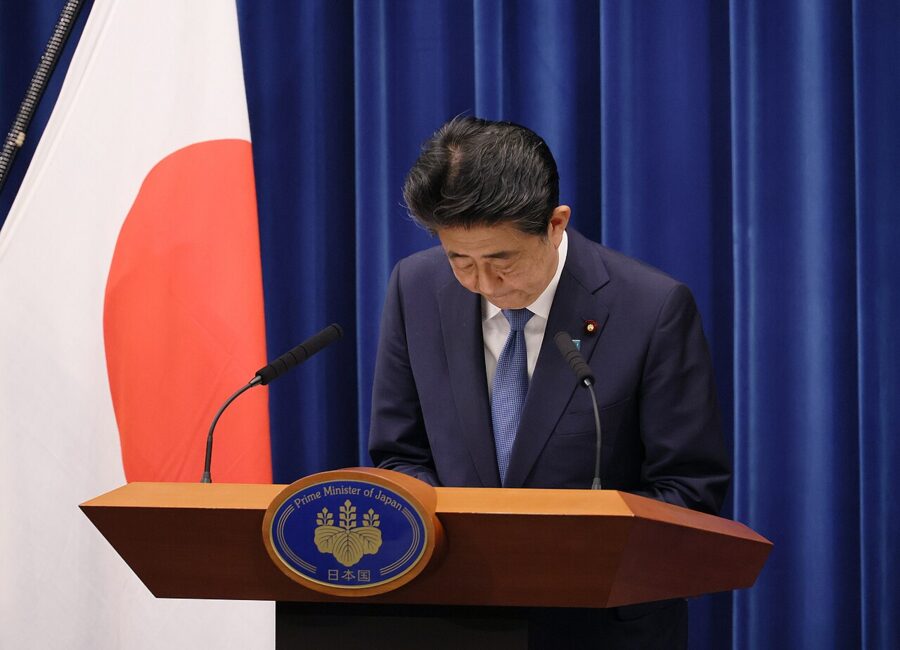
The deepest bows most people see are on television. When a company or a politician apologizes in public, the people at the table stand, bow to saikeirei depth or deeper and hold it for several seconds while the cameras run, and the length of the hold is part of the message. Everyday apologies are smaller: a sumimasen with a short bow covers bumping someone on a train.

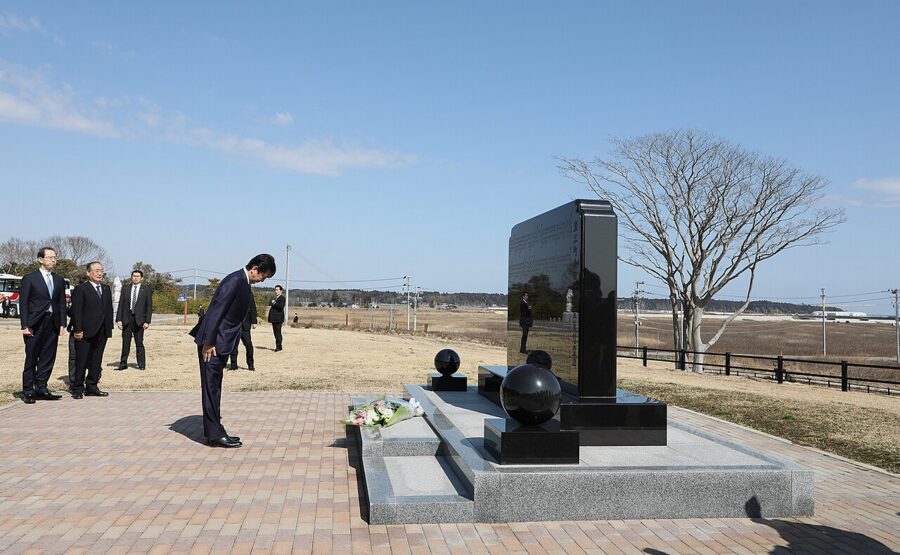
A silent bow, 黙礼 (mokurei), belongs to memorials and moments of silence: deep, still and without a word. Beyond saikeirei lies 土下座 (dogeza), kneeling with the forehead to the ground. It was once the posture of someone begging a powerful superior for their life, and today it lives mostly in dramas and comedy.

Back on the train, the conductor is still bowing at the door of the car. Let it pass. Save your own bow for the person who hands you your change, and make it a nod with arigatō.