
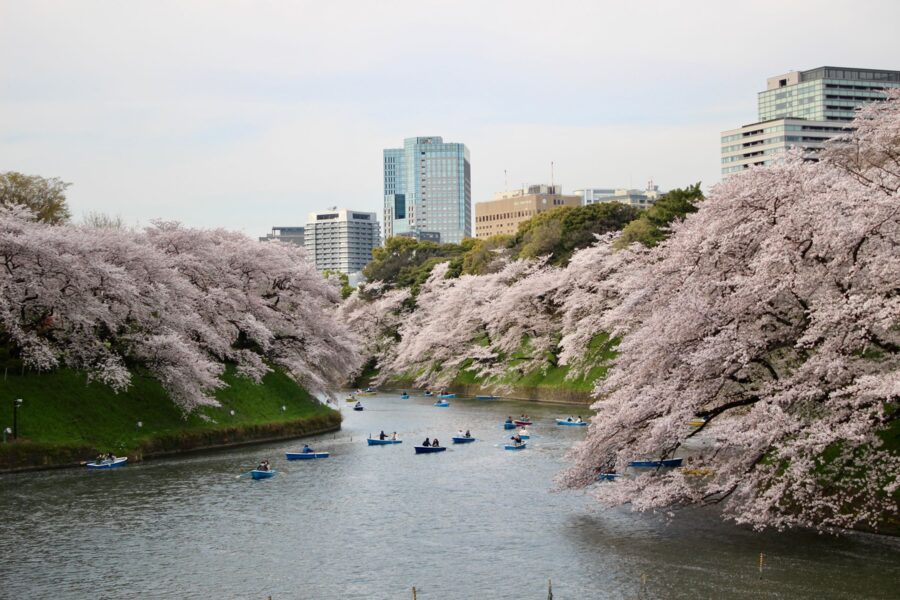
At about 2 p.m. on March 19, 2026, a staff member from the Tokyo weather office walked up to one cherry tree in the grounds of Yasukuni Shrine and counted the open flowers. The rule needs five or six. That afternoon there were 61, and Tokyo’s cherry blossom season officially began, five days ahead of the average.
Key facts Average opening
- Naha*
- Jan 16
- Fukuoka
- Mar 22
- Tokyo
- Mar 24
- Hiroshima
- Mar 25
- Kyoto
- Mar 26
- Osaka
- Mar 27
- Sendai
- Apr 8
- Aomori
- Apr 22
That small ritual explains how the whole season works: the forecasts, the crowds and the hotel scramble. The trees flower in a wave that starts in Okinawa in January and reaches eastern Hokkaido in May. Each city gets roughly a week of good viewing, and nobody knows the exact week until a few weeks before.
The word you will hear everywhere is 花見 (hanami), “flower viewing”: the picnic, the stroll, the evening drink under the branches. The flower is 桜 (sakura), one of the first kanji worth learning before a spring trip, because it is on every poster, menu and station banner from March.


When the trees flower: the cherry front
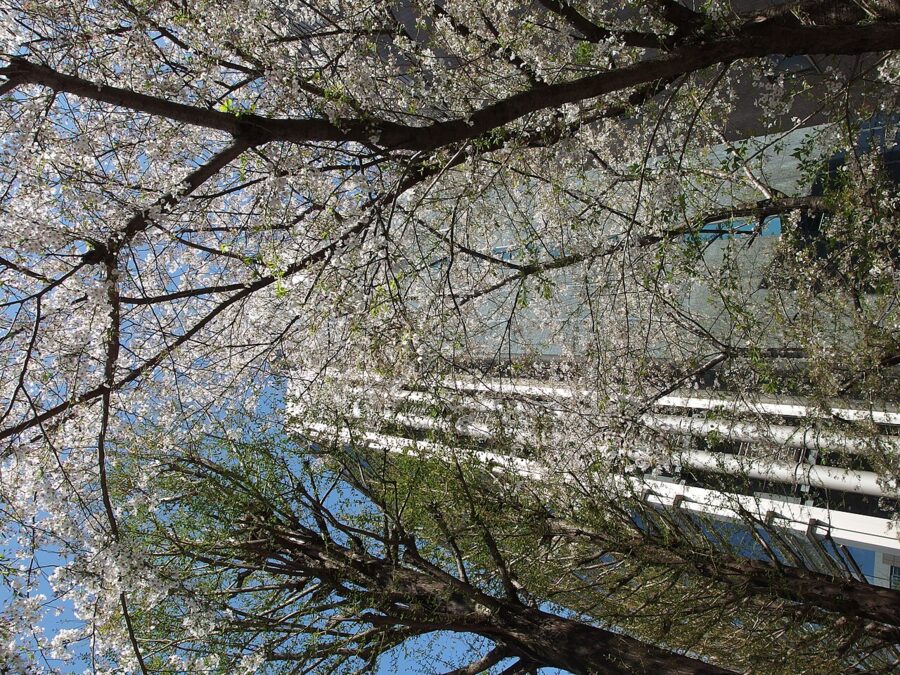
Japanese weather reports draw the season as a line on a map, the 桜前線 (sakura zensen), or cherry blossom front. The Japan Meteorological Agency (JMA) gives its average path: Okinawa in mid-January, Kyushu, Shikoku, Kansai and Tokyo in late March, Hokuriku and southern Tohoku around April 10, and the far north and east of Hokkaido in mid-May.
The table gives JMA’s averages for the opening day (開花, kaika) and full bloom (満開, mankai) beside what happened in 2026. The averages are 1991 to 2020 normals from JMA’s table of opening dates and its full bloom table.
| City | Average opening | Average full bloom | 2026 opening | 2026 full bloom |
|---|---|---|---|---|
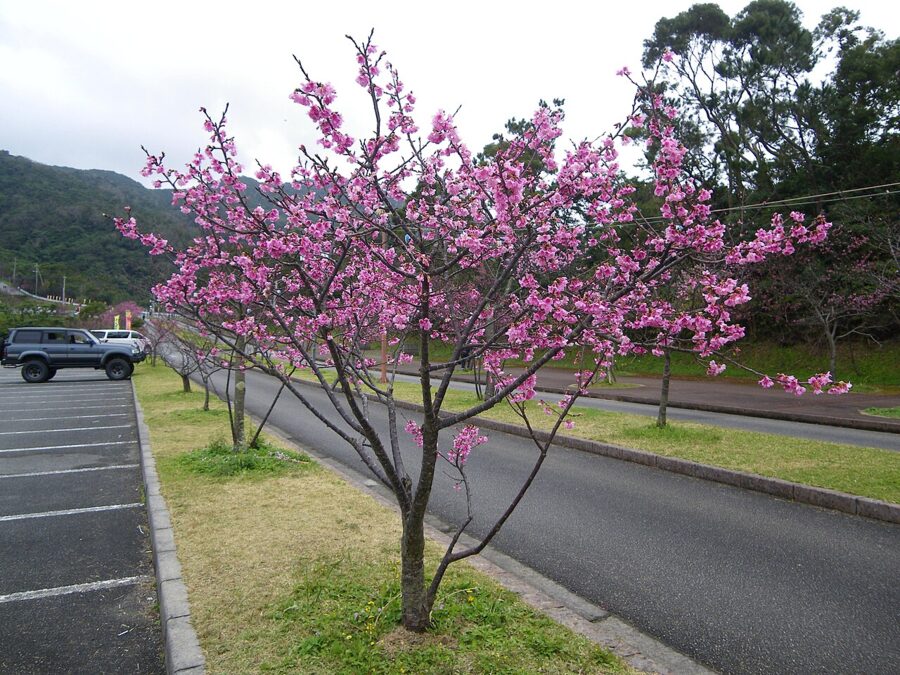
| Naha* | Jan 16 | Feb 4 | Jan 18 | Feb 3 |
| Fukuoka | Mar 22 | Mar 31 | Mar 24 | Apr 3 |
| Tokyo | Mar 24 | Mar 31 | Mar 19 | Mar 28 |
| Hiroshima | Mar 25 | Apr 3 | Mar 19 | Mar 30 |
| Kyoto | Mar 26 | Apr 4 | Mar 23 | Mar 30 |
| Osaka | Mar 27 | Apr 4 | Mar 26 | Apr 3 |
| Sendai | Apr 8 | Apr 13 | Mar 31 | Apr 4 |
| Aomori | Apr 22 | Apr 26 | Apr 13 | Apr 16 |
| Hakodate | Apr 28 | May 2 | Apr 18 | Apr 20 |
| Sapporo | May 1 | May 6 | Apr 18 | Apr 24 |
*Naha observes the Taiwan cherry, which flowers in winter; every other city on the list observes the Somei Yoshino variety.

Fukuoka is on average only two days ahead of Tokyo, and Kagoshima, at the bottom of Kyushu, averages March 26, two days behind it. The reason is that cherry buds need a real winter chill to wake up, a process called 休眠打破 (kyūmin daha, breaking dormancy). A mild southern winter leaves them sluggish, so the front does not march neatly north.
How much it moves from year to year
An average is a guide, not a date. Tokyo’s opening day has fallen anywhere from March 14 (2020, 2021 and 2023) to March 29 (2024) in the last seven seasons, and the latest since records began in 1953 was April 11, 1984. Build a trip around one date and you can easily land a week early or late.
The 2026 season ran early almost everywhere. Tokyo reached full bloom on March 28, Sapporo opened thirteen days ahead of its average, and the Japan Weather Association declared the front finished at Nemuro, on Hokkaido’s eastern tip, on May 6, ten days early.

How the forecasts work
Japan has one official cherry observation and several companies competing to predict it. Knowing which is which saves confusion when the news starts in February.
The sample tree and the two words that matter
Each weather office keeps a 標本木 (hyōhonboku, sample tree). By JMA’s standard, the opening day is the first day five or six flowers are open on it, and full bloom is the first day about 80 percent of its buds have opened. JMA’s observation notes explain the 80: nobody can confirm that every bud on a big tree has opened.
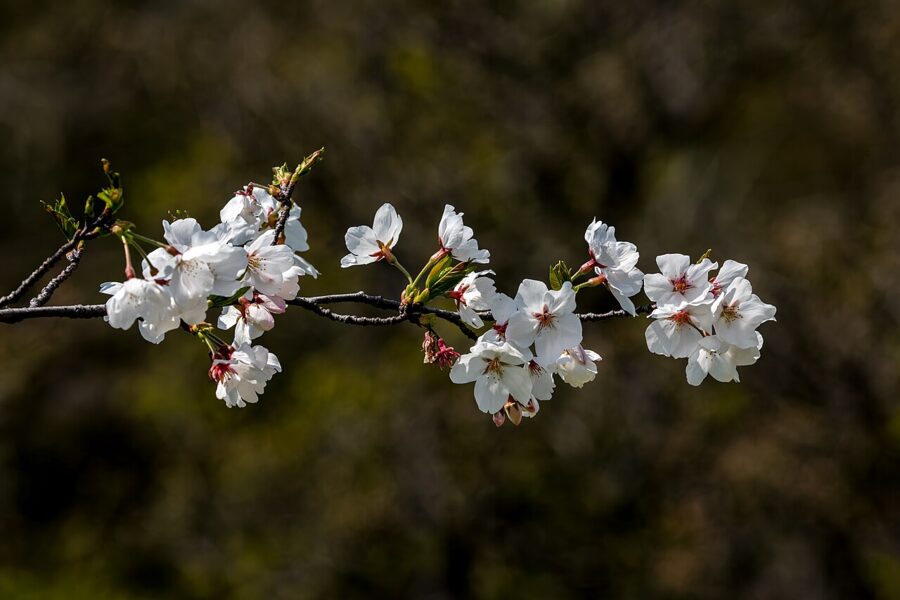

The sample tree is a Somei Yoshino almost everywhere, chosen because it grows nationwide and lets one year be compared with another. Parts of Hokkaido use the Ezo mountain cherry instead, and the southern islands the Taiwan cherry. When the count is reached, the office announces it, and television calls it a 開花宣言 (kaika sengen, opening declaration).

The private forecasters
JMA issued cherry forecasts every spring from 1955. In a December 2009 announcement it said private companies now provided forecasts of the same standard, so it would stop from spring 2010 and keep only the observations.
Three companies lead. Weathernews builds its forecast partly on bud photos sent in by app users and plans to post 2027 information in February. The Japan Weather Association runs the cherry pages on tenki.jp, and Weather Map runs a cherry forecast site that also logs each official opening.
Early forecasts move. In late February 2025, Weathernews predicted Tokyo would open on March 21 and the Japan Weather Association said March 22; JMA counted the flowers on March 24. A miss of two or three days a month out is normal, and the weekly updates sharpen.
Reading a forecast when you book
On JMA’s averages, full bloom comes about a week after opening in Tokyo, Kyoto and Osaka, and four or five days after it in Sendai, Aomori and Sapporo. Add a few days of full bloom and falling petals and a city has about a week to ten days of very good viewing. These are the stages the forecast sites and park signs use:
- つぼみ (tsubomi): buds.
- 開花 (kaika): opening day, a handful of flowers.
- 五分咲き (gobuzaki): half open, already lovely.
- 満開 (mankai): full bloom.
- 散り始め (chirihajime): petals starting to fall.
- 葉桜 (hazakura): leaves out, the show is over.
The word you want on a poster is 見頃 (migoro), “good to see now”. I would book around the average full bloom date for your main city with three or four days of slack either side, or plan a route that chases the front. If Tokyo has finished, the Nagano mountains and the north are often just starting.
The varieties that stretch the season
The forecasts follow one tree, but Japan grows hundreds of cherry varieties that flower at different times. Shinjuku Gyoen alone has about 900 trees of around 70 varieties, according to its cherry page. If your dates miss the Somei Yoshino peak, the others are why the trip still works.
Early: kawazu-zakura
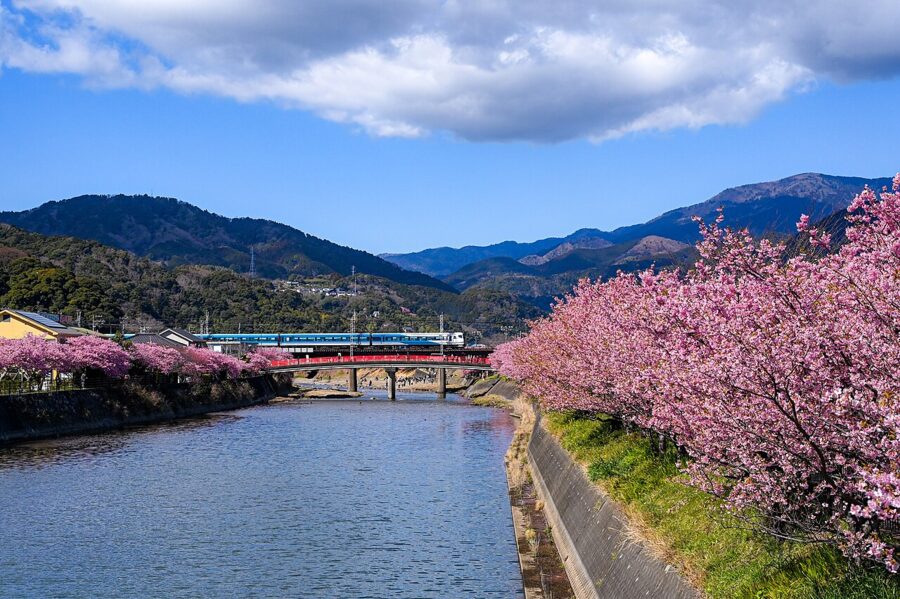
河津桜 (kawazu-zakura), named after the town of Kawazu on the Izu Peninsula southwest of Tokyo, is a stronger pink than Somei Yoshino and opens in February. The 2026 Kawazu Cherry Blossom Festival ran from February 7 to March 8, with about 8,000 trees around the town.

The main event: Somei Yoshino
Somei Yoshino dates from the end of the Edo period and, JMA notes, is a cross between the Edo higan and Oshima cherries. The trees are grafted copies of one original, so a whole city flowers within days and drops its petals together, which is what makes forecasts possible and peaks short. Hirosaki Park says more than 300 of its Somei Yoshino are over 100 years old, against a usual lifespan of 60 to 80, thanks to pruning methods borrowed from local apple orchards.
Weeping cherries
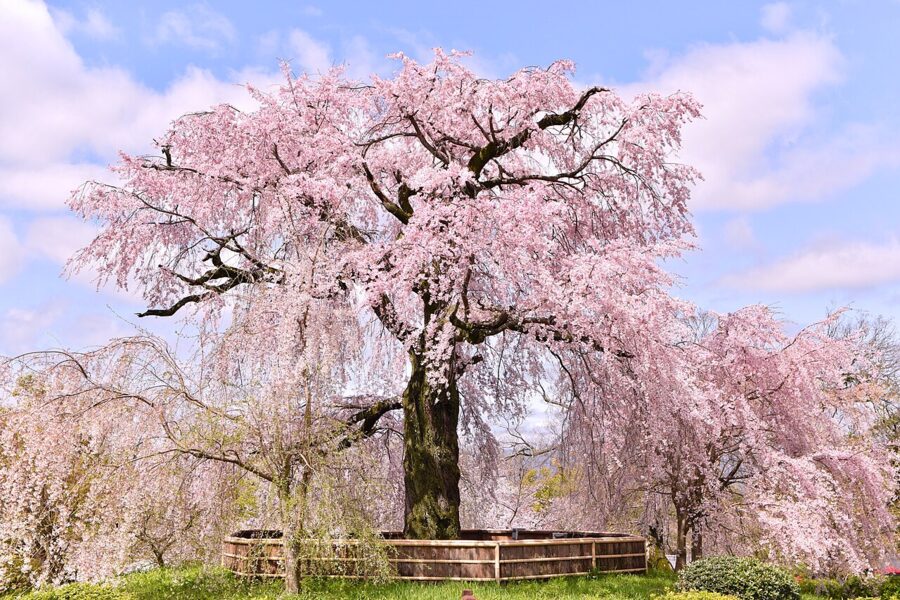
The 枝垂れ桜 (shidarezakura, weeping cherry) is a form of Edo higan with hanging branches, and it generally opens a few days before Somei Yoshino. The famous ones are single trees: Kyoto’s Gion weeping cherry in Maruyama Park, or the one at Ueno’s Kiyomizu Kannon-do, now in its ninth generation.

Late: yaezakura
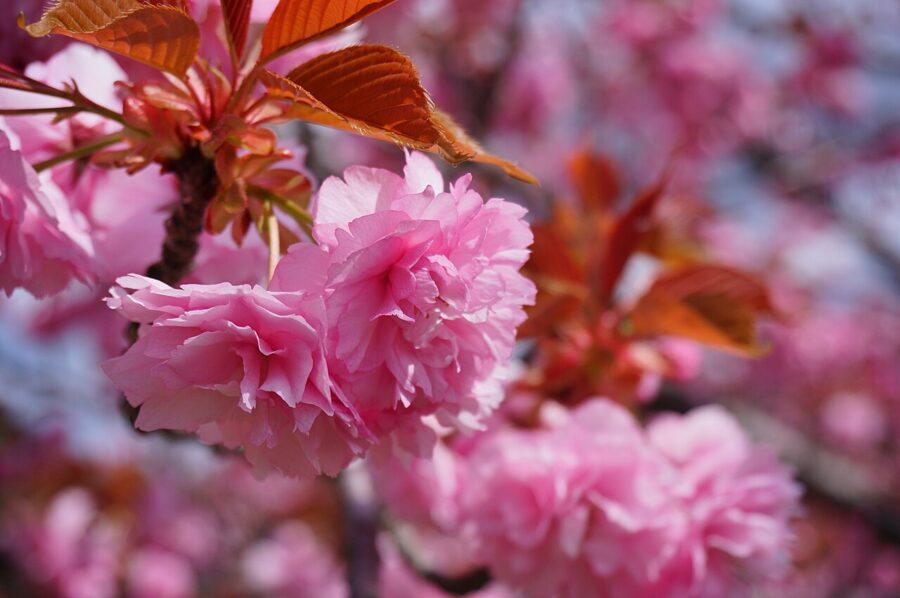
八重桜 (yaezakura, double cherry) is a group of varieties with many petals that open as Somei Yoshino finishes. In Shinjuku Gyoen, the white Ichiyo opens in early to mid-April and the deep pink Kanzan in mid to late April.

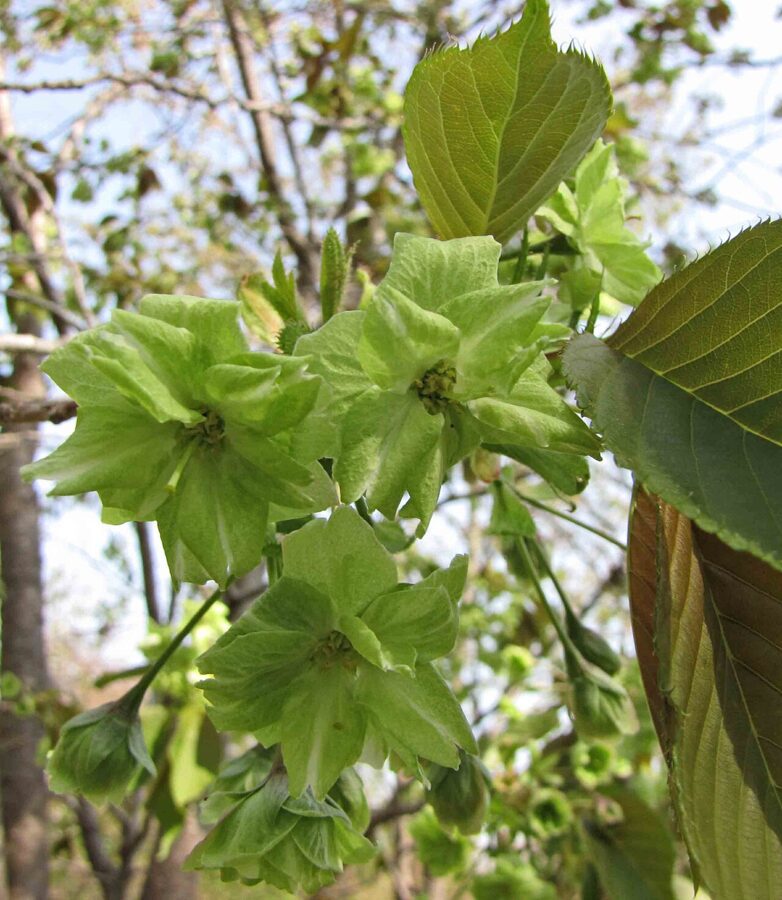
The oddest late cherry is 御衣黄 (gyoiko), with pale green flowers that develop a red streak as they age. The Japan Mint in Osaka chose it as its 2026 “flower of the year”.

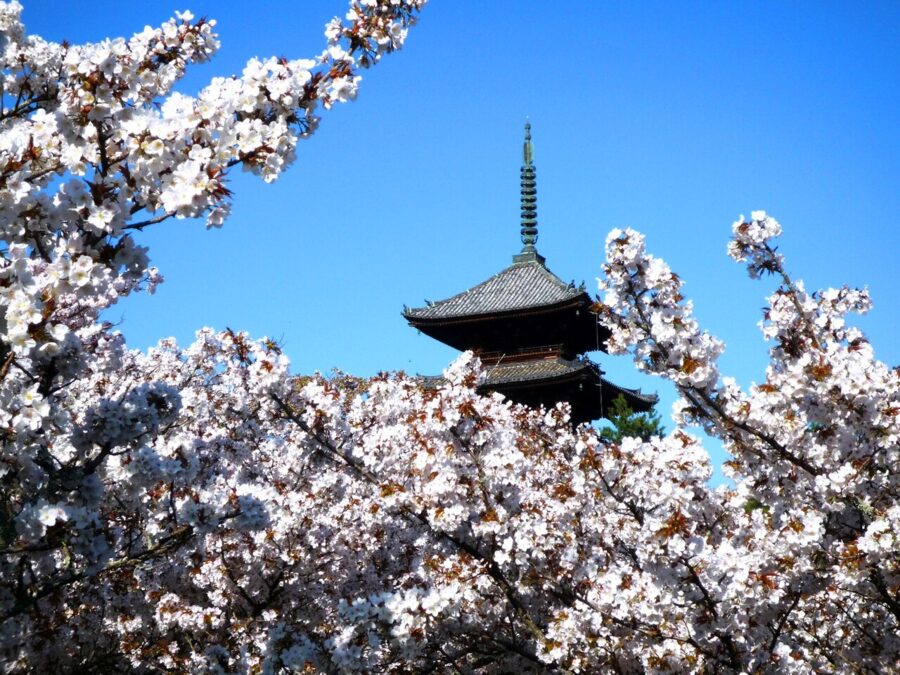
Kyoto’s late cherry is the 御室桜 (Omuro-zakura) at Ninna-ji, a grove of short trees that flowers after most of the city. The temple says it was designated a national Place of Scenic Beauty in 1924, and that the trees stay small because of clay soil, not, as long believed, rock.

Hanami manners in the parks
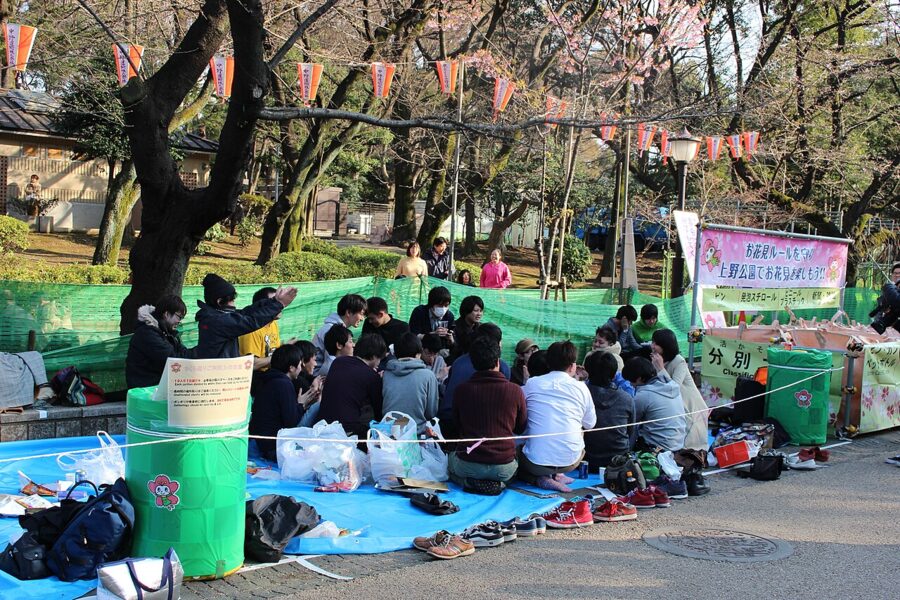
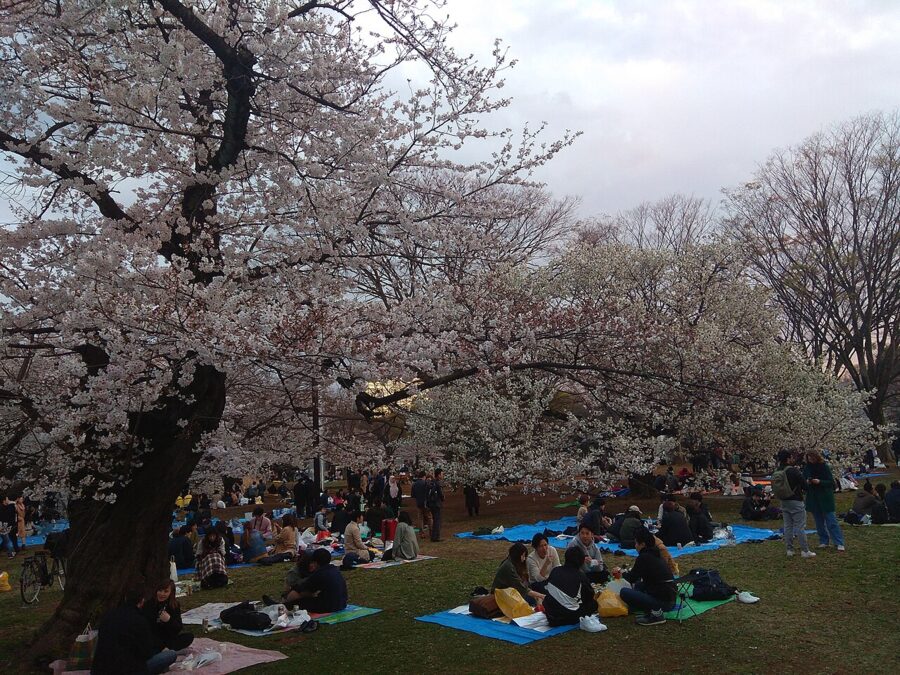
Hanami is a picnic with a few unwritten rules and some written ones. Each park sets its own, so a group welcome with beer in one park can be turned away at the next gate.
Seats
The famous ritual is 場所取り (bashotori, saving a spot): one person goes early with a big plastic sheet and guards it until the group arrives. An empty sheet with nobody beside it is frowned on, and some parks restrict saving space altogether. Shinjuku Gyoen’s rules forbid occupying a bench or patch of lawn for a long time, along with tents and parasols.

Rubbish
Japan has few public bins. The phrase on park signs is ゴミは持ち帰り (gomi wa mochikaeri, take your rubbish home), so bring a bag for everything, cans included.
Drinking, fire and noise
Drinking in public is legal in Japan from age 20, but the park decides. Shinjuku Gyoen bans alcohol and may check bags; it also bans smoking, camping stoves and loud music, and charges adults ¥500 (about US$3), as of November 2026. I would treat any city park as no-fire, keep music to headphones and read the rule board at the gate.
Do not climb the trees, shake branches for a petal shower, or pick blossoms. Cherry bark damages easily, and a broken branch lets disease in.


Night viewing
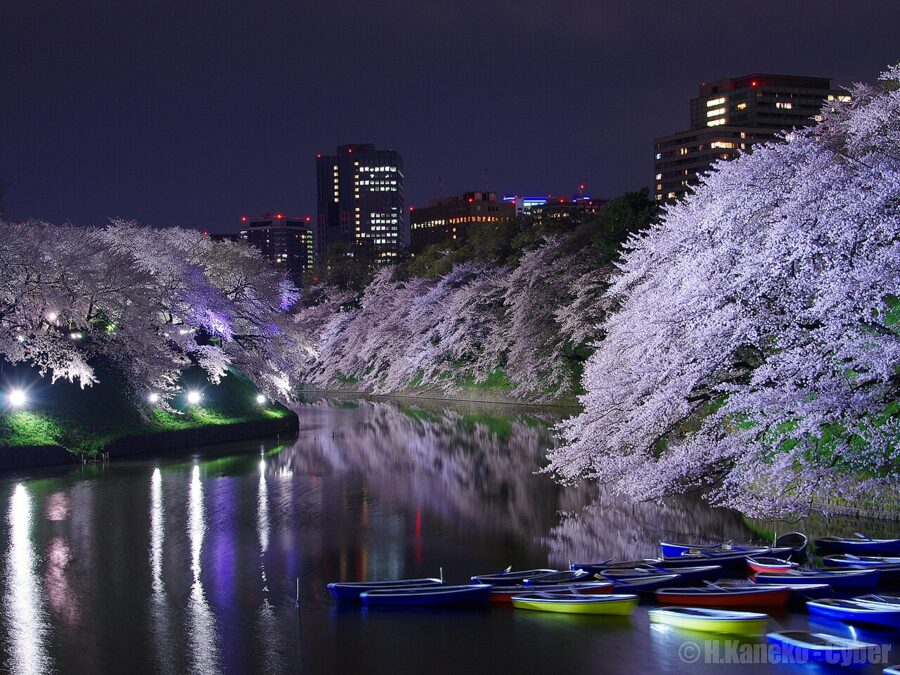
夜桜 (yozakura, night cherry blossoms) is its own tradition, with trees lit from below or hung with paper lanterns, ぼんぼり (bonbori). The word is nearly always written in hiragana. Ueno Park lights about 800 bonbori during its festival.
Japan has a word for a cold snap in cherry season, 花冷え (hanabie), and late-March evenings in Tokyo often drop below 10°C (50°F). Bring a warm layer.

Where to go, city by city
Every town has its cherry park, and the local one is often a better afternoon than the famous one. These are the places a first trip is usually built around, plus three worth a detour.
Tokyo
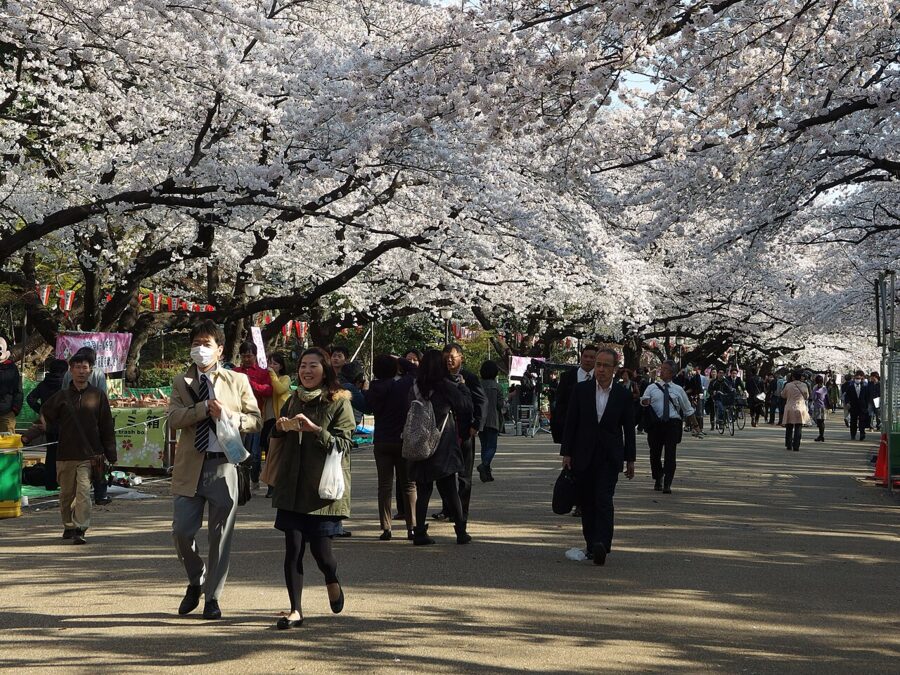
Ueno Park is the classic festive version: about 800 trees, food stalls and lanterns at night. Its 77th cherry festival ran from March 14 to April 5, 2026, and the park closes from 11 p.m. to 5 a.m., so there is no overnight seat holding.

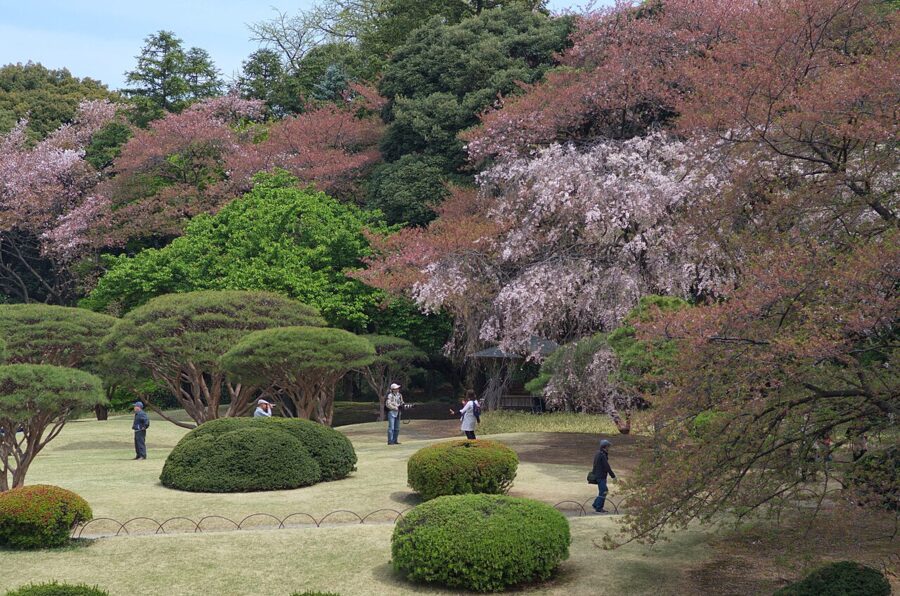
Shinjuku Gyoen is the calm alternative: ticketed, no alcohol, wide lawns, and about 300 Somei Yoshino among its other varieties. From March 15 it opens 9 a.m. to 6 p.m. (last entry 5:30 p.m.), and it stays open on Mondays from March 25 to April 24. The garden warns that peak weekends may need an advance timed ticket, so check its admission page in March.
Its Japanese garden corner, near the teahouse, has the earliest trees.

Chidorigafuchi and Yasukuni Shrine sit side by side northwest of the Imperial Palace. Yasukuni is a Shinto shrine with a politically sensitive history, worth knowing before you go.
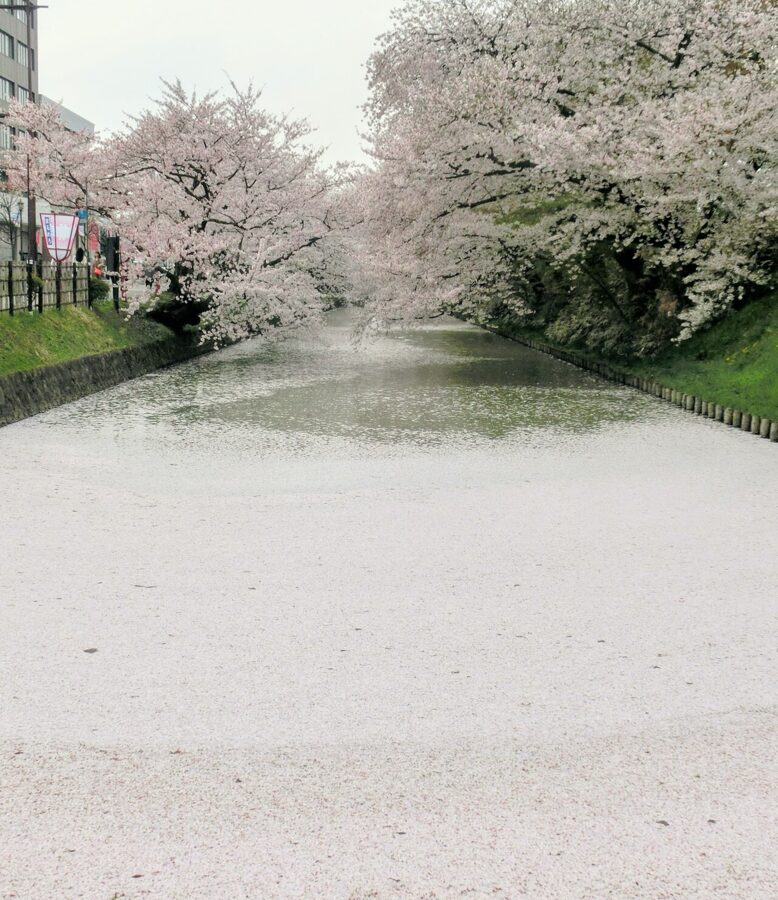
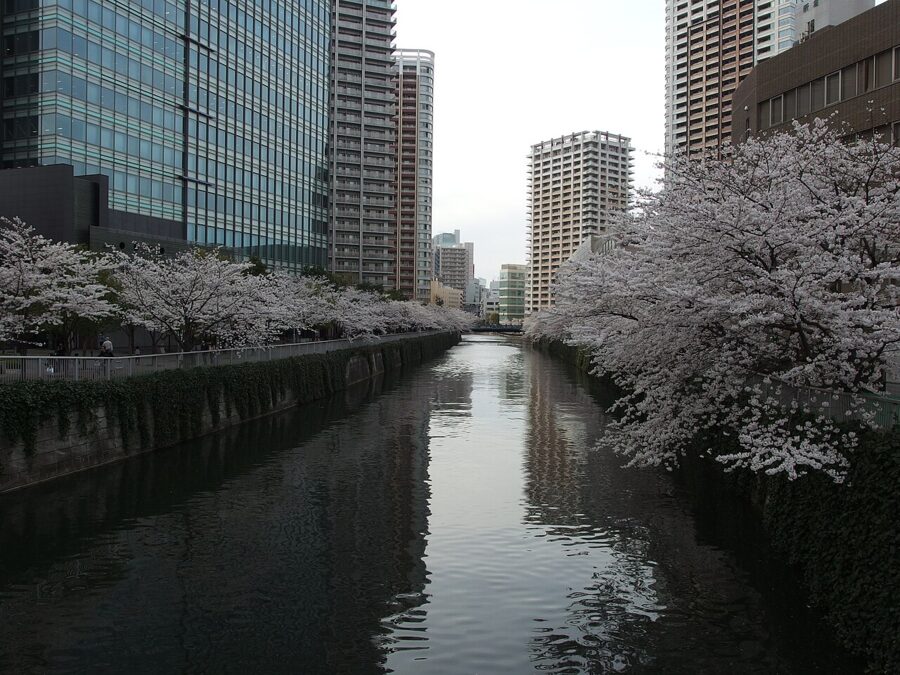
The Meguro River is a canal walk rather than a park, with trees leaning over the water and stalls along the banks. There is nowhere to spread a sheet, so stroll it at dusk.

Kyoto
Kyoto peaks a few days after Tokyo on average. Maruyama Park, behind Yasaka Shrine, is the city’s party park and home of the Gion weeping cherry. In 2026 the tree was lit from March 24 to April 8, 6 p.m. to 10 p.m., free, with bonfires on some nights; the city’s event listing notes they are cancelled under dry-weather or wind warnings.
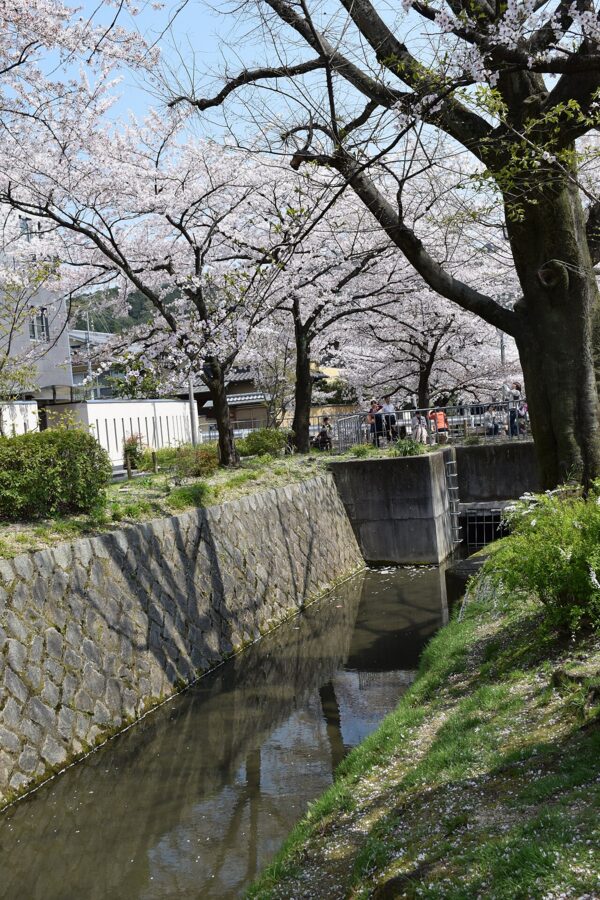
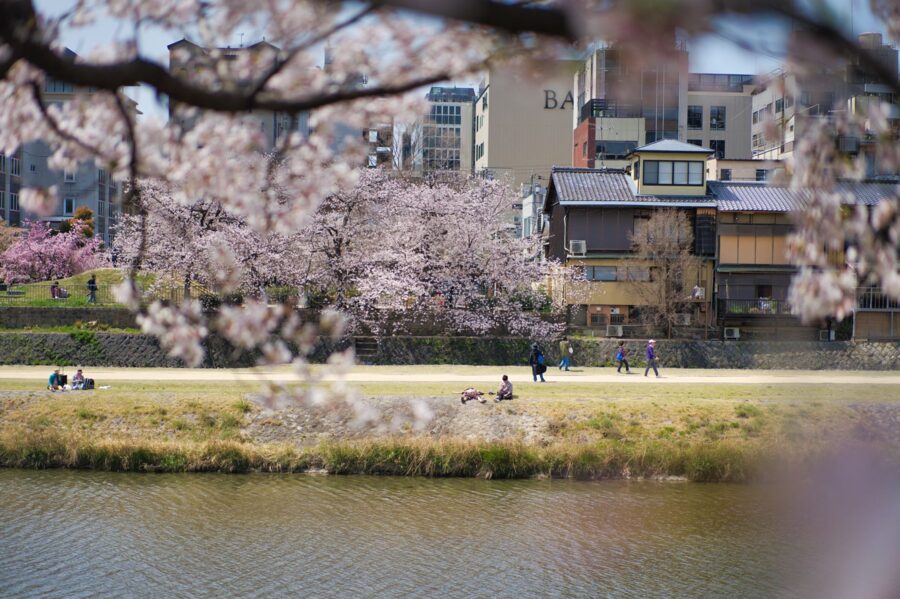
The Philosopher’s Path follows a canal at the foot of the northern Higashiyama hills, between Ginkaku-ji and the Nanzen-ji area. The banks of the Kamo River are where Kyoto families picnic, and they cost nothing. To see people in kimono under the blossoms, walk the streets around Maruyama Park.

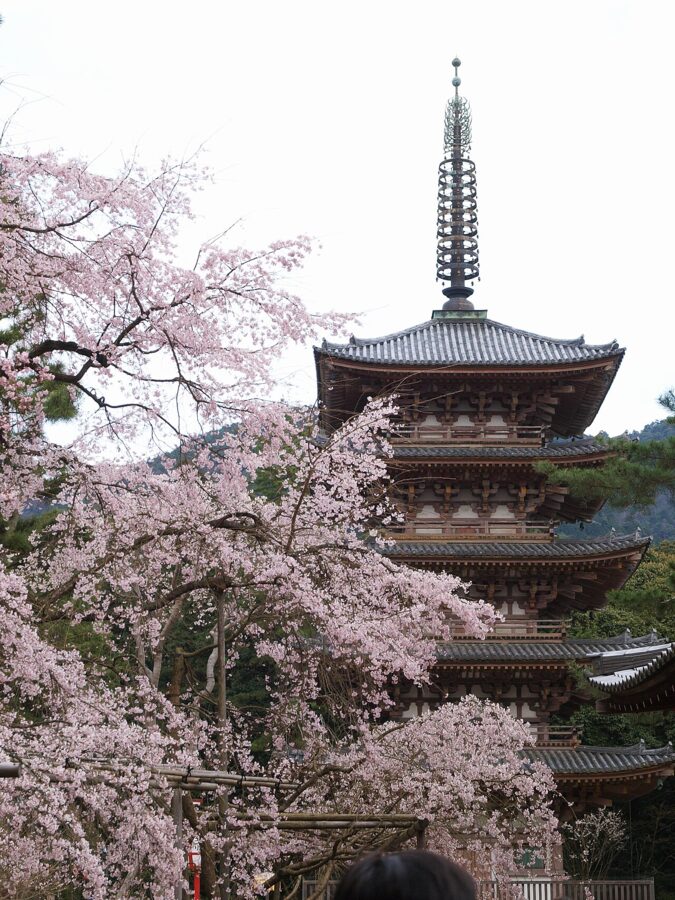
South of the center, Daigo-ji is where Toyotomi Hideyoshi held his lavish cherry party of 1598. Its weeping cherries open early, and the temple charges admission.

From March 1, 2026, Kyoto’s accommodation tax is charged per person per night, collected at the hotel, on any stay from that date:
| Room rate per person per night | Tax |
|---|---|
| Under ¥6,000 (about US$40) | ¥200 (about US$1) |
| ¥6,000 to ¥19,999 | ¥400 (about US$3) |
| ¥20,000 (about US$130) to ¥49,999 | ¥1,000 (about US$6) |
| ¥50,000 (about US$320) to ¥99,999 | ¥4,000 (about US$25) |
| ¥100,000 (about US$650) and over | ¥10,000 (about US$65) |
Osaka
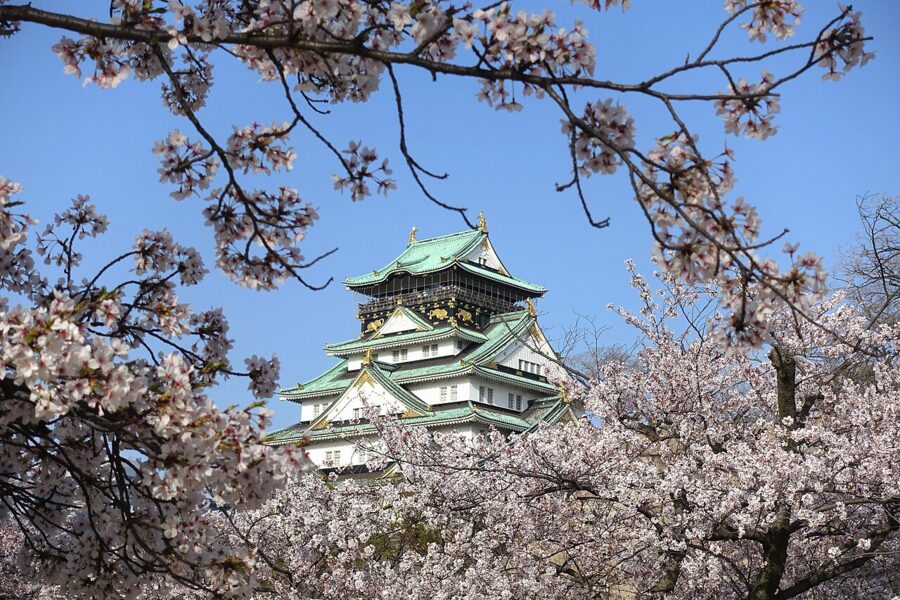
Osaka Castle Park has about 3,000 cherry trees around the moats and the keep, with the classic view from the Nishinomaru Garden on the west side.

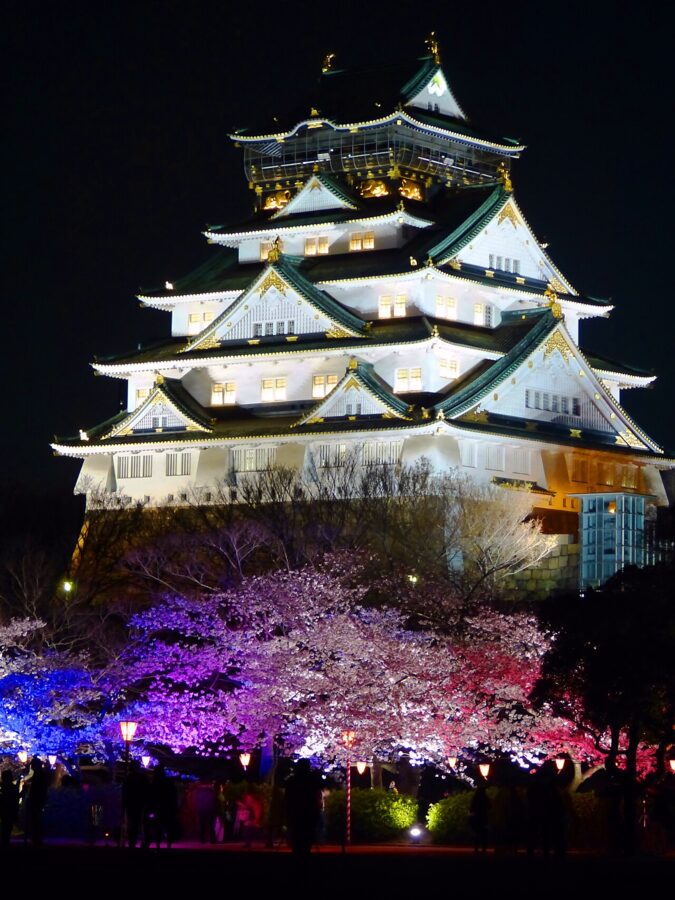

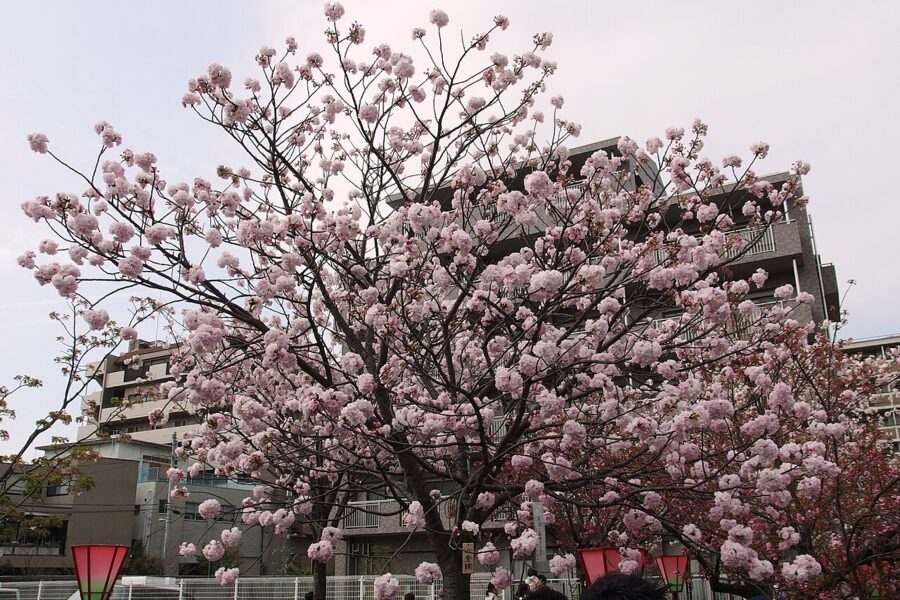
The Japan Mint’s cherry passage, 桜の通り抜け (sakura no torinuke), opens a lane through the Mint’s grounds for a week when its double cherries bloom. In 2026 it ran from April 9 to 15, with 331 trees of 140 varieties, entry by advance online booking for a time slot. The Mint’s rules allow no eating or drinking, parasols, selfie sticks or tripods.

Hirosaki
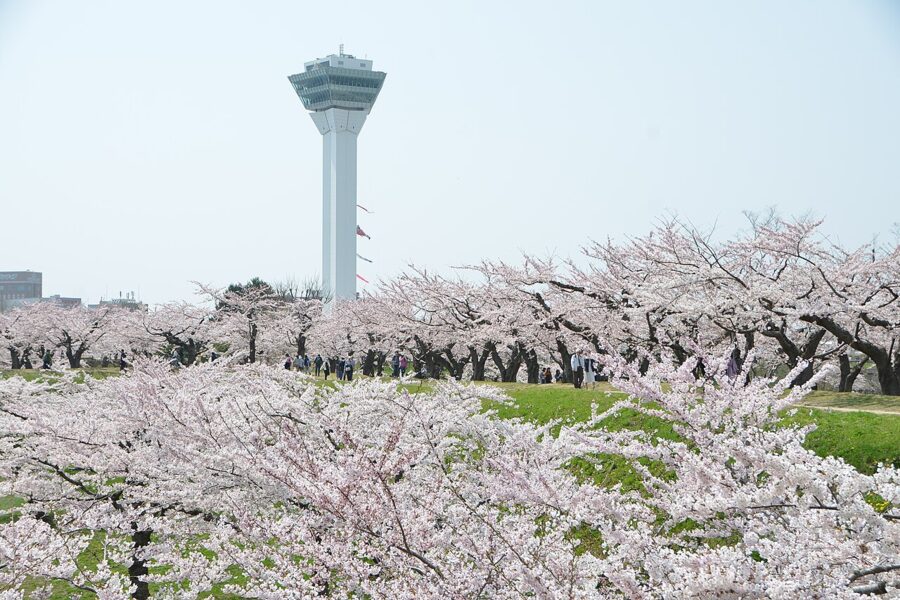
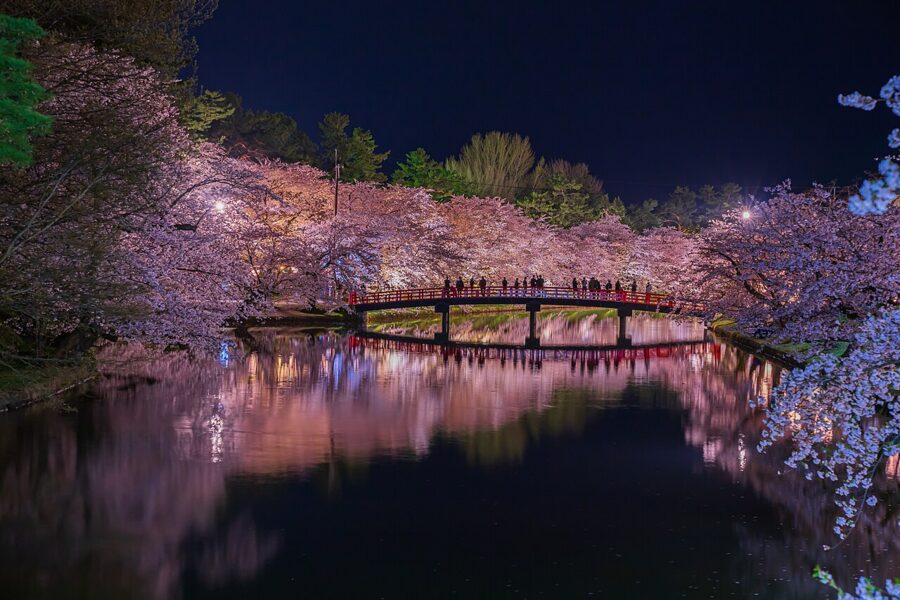
Hirosaki Park, in Aomori at the north end of Honshu, has about 2,600 trees of 52 varieties around a castle with an original Edo-period keep. Because the trees have bloomed earlier lately, the 2026 Hirosaki Cherry Blossom Festival moved a week forward, to April 10 through May 5, according to the festival calendar.
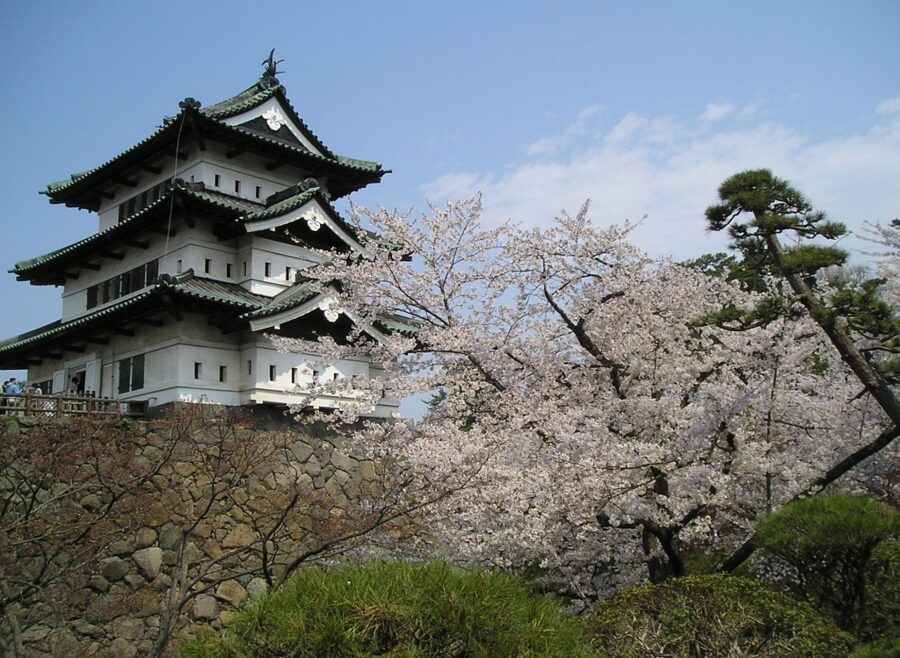

Most of the park is free. The inner and north enclosures cost ¥320 (about US$2) for adults as of November 2026, open 9 a.m. to 9 p.m. during the festival, says the park’s fee page. The festival overlaps Golden Week, so book rooms early.

Yoshino
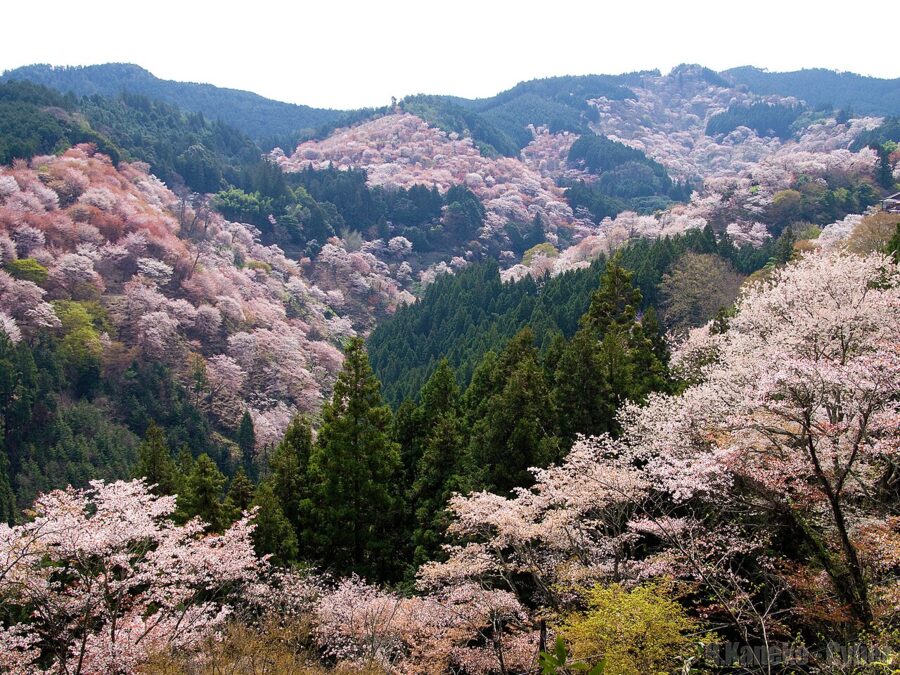
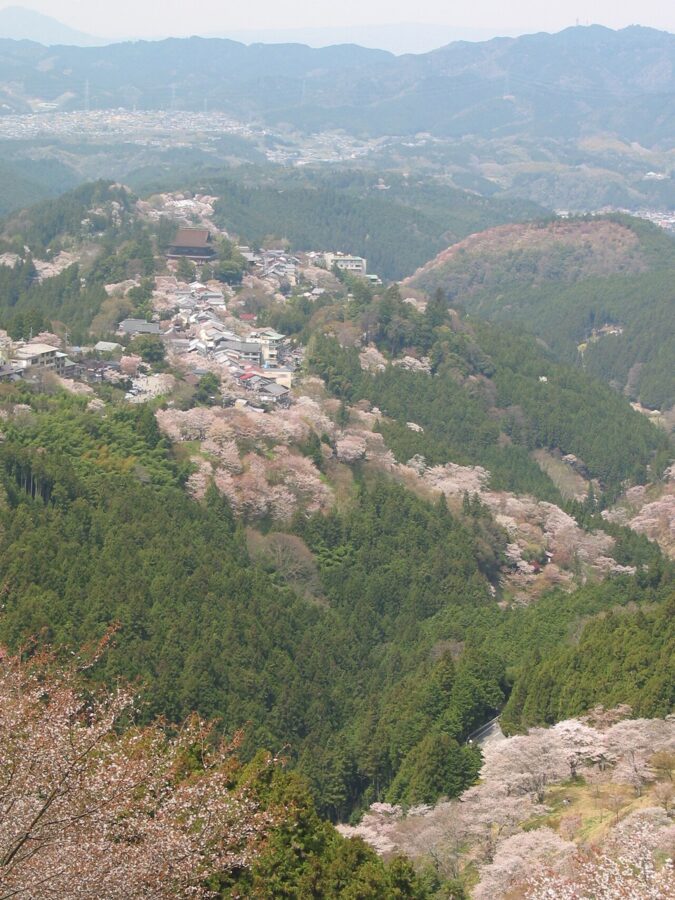
Mount Yoshino, south of Nara, has about 30,000 trees, mostly 白山桜 (shiroyamazakura, white mountain cherry), in four zones named for height: Shimo, Naka, Kami and Oku Senbon. The bloom climbs the mountain from early April, with Oku Senbon around mid-April. Take the Kintetsu line to Yoshino Station, go on a weekday, and start early.


Matsumoto
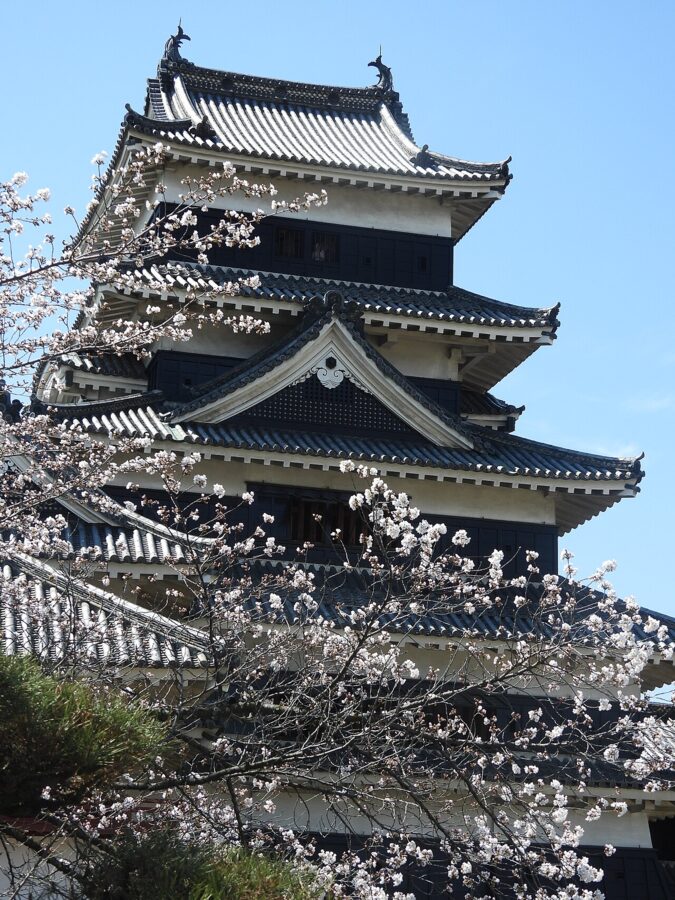
Matsumoto Castle, in Nagano, has one of Japan’s few original keeps. Nagano city, JMA’s nearest station, averages an April 11 opening, more than two weeks after Tokyo, so it suits anyone chasing the front. The castle’s night cherry event starts three days after Matsumoto’s opening and runs eight days, 5:30 p.m. to 9 p.m., with the inner garden free and the keep closed.
Crowds, holidays and hotel prices
Japanese schools break from late March into early April, the week the trees peak in Tokyo, Kyoto and Osaka and families fill the bullet trains and Tokyo Disneyland. In 2027 Vernal Equinox Day falls on Sunday, March 21, with Monday, March 22 off too, per the Cabinet Office. In the north the season meets Golden Week: April 29 and May 3 to 5. For the wider calendar, see the best times to visit Japan.
Hotel prices rise sharply in peak week, Kyoto most of all. I would book as soon as you have dates, choose free cancellation and look again when the forecast firms up; staying in Osaka, about 15 minutes from Kyoto by bullet train, often costs less. Festival stalls often take only cash, so see Japanese currency, and after dark look for 桜 on the spring menu at an izakaya.
The forecasts start again in February. Pick your city, check the averages above, and leave room either side. On a March afternoon someone will be counting flowers on one tree at Yasukuni Shrine, and when the count reaches five, the word on every screen will be 開花.